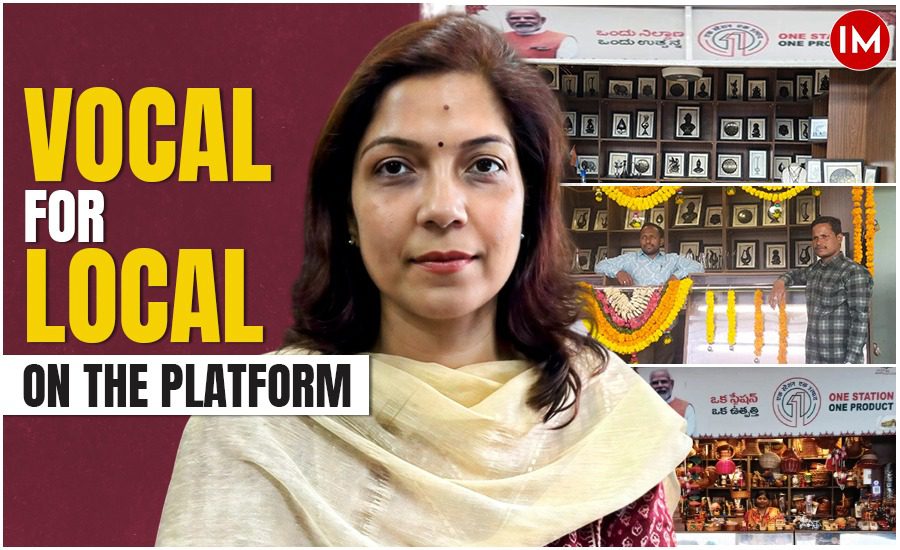
At first glance, a railway station is a place of movement – trains arriving and departing, passengers rushing past. But across stations in the Secunderabad Division, these platforms are now becoming something more meaningful: marketplaces where rural dreams find visibility, dignity, and income. Under the leadership of Shifali Kumar (IRTS), Senior Divisional Commercial Manager, the One Station One Product (OSOP) initiative has quietly transformed railway spaces into engines of rural empowerment.
Implemented in collaboration with the Society for Elimination of Rural Poverty (SERP), an autonomous body under the Telangana government, the initiative aligns seamlessly with the Government of India’s ‘Vocal for Local’ vision – connecting grassroots producers directly with a vast consumer base through Indian Railways.
BRINGING POLICY TO THE PLATFORM
OSOP is a flagship national initiative designed to promote indigenous products at railway stations while providing sustained market access to local artisans, Self Help Groups (SHGs), and MSMEs. In the Secunderabad Division, this policy was translated into action through structured coordination, on-ground engagement, and inclusive planning.
Shifali Kumar and her team worked closely with SERP officials and station supervisors to ensure that OSOP stalls were not just symbolic installations but operationally robust and economically viable. Daily coordination, troubleshooting, and monitoring ensured smooth execution across locations.
“Our objective was clear – railway stations should not only serve passengers, but also become platforms of opportunity for local communities,” says Shifali Kumar.
LOCAL PRODUCTS, LOCAL PRIDE
A key strength of the OSOP rollout was its emphasis on indigenous product selection. Each station showcased goods rooted in local culture and skills—products made by households and small-scale units that rarely find mainstream market access. From Bidri art at Bidar station to millet-based products and traditional food items at other locations, the stalls reflected the economic and cultural identity of their regions.
The marketing teams personally engaged with artisans, explaining the OSOP concept, its benefits, and the potential for income generation. This direct outreach led to strong participation and several success stories, where artisans saw steady sales and renewed confidence in their craft.
“When artisans realise that their work has value beyond their village, it changes their outlook entirely,” “Shifali Kumar notes.”
EQUITABLE ACCESS THROUGH ROTATION
One of the most inclusive features of the OSOP policy is the rotational participation model. Instead of permanent allotments, multiple local producers are given access to premium, strategically located spaces at stations for fixed durations. This ensures wider participation, prevents monopolisation, and allows more entrepreneurs to benefit from railway footfall.
By allotting visible, high-footfall areas for these stalls, the division ensured better customer engagement and higher sales potential—turning railway premises into thriving micro-markets.
MORE THAN A STALL, A LIVELIHOOD MODEL
Beyond sales figures, the OSOP initiative has delivered something more enduring: confidence, dignity, and sustainable income for rural artisans. It demonstrates how thoughtful public policy, when backed by committed leadership and strong inter-agency collaboration, can create real change at the grassroots.
Under Shifali Kumar’s stewardship, OSOP in the Secunderabad Division stands as a replicable model—one where governance meets empathy, and infrastructure becomes an enabler of rural prosperity.