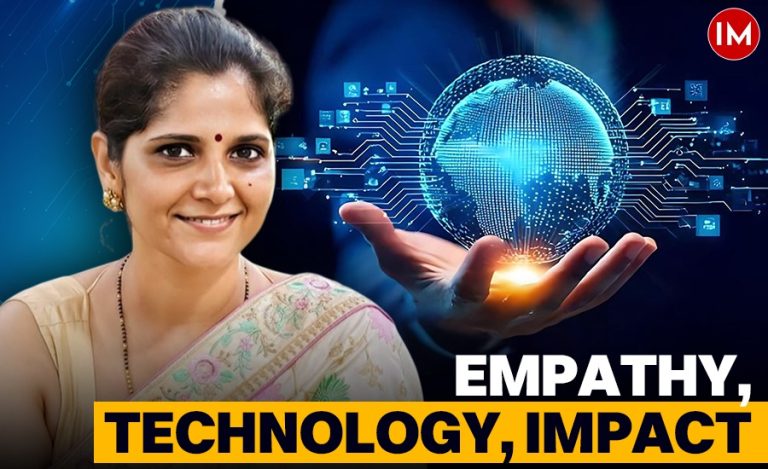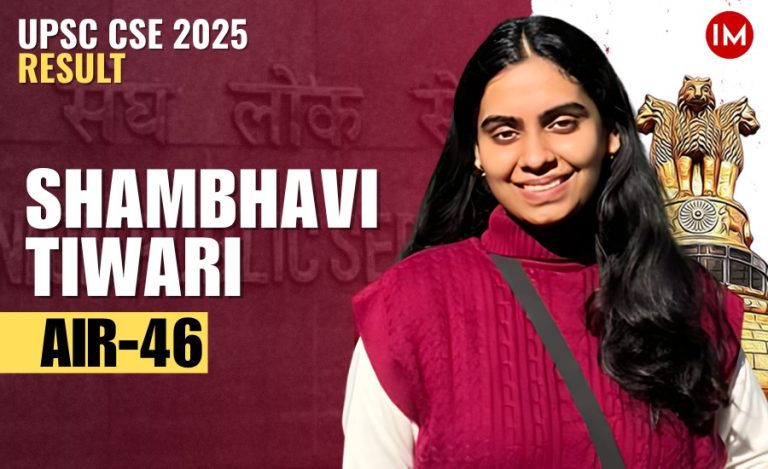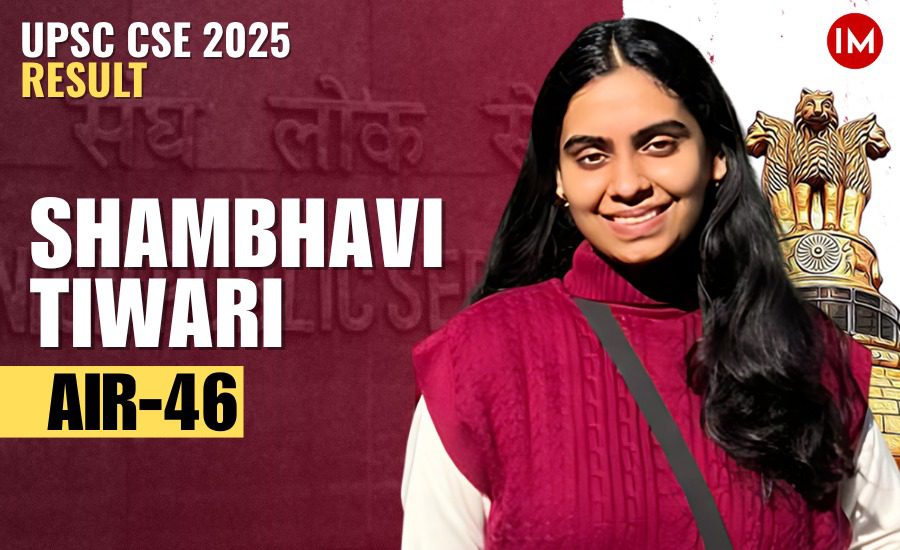
In the calm, green expanse of Pantnagar, Uttarakhand, where life moves at a quieter pace, Shambhavi Tiwari grew up in a home that quietly shaped her future.
Not in the conventional sense.
From just four months old, she was raised by her grandparents. While her father worked as a private school teacher and her mother served as an assistant professor in a government college, it was her nana and nani who became her everyday anchors.
The reason was simple: stability. And in that stability, something deeper took root.
Her grandfather, a senior scientist and former Head of Plant Pathology at Govind Ballabh Pant University of Agriculture and Technology, spent his life developing crop varieties and serving farmers through science. Watching him, a young Shambhavi began to understand service, not as a concept, but as a way of living.
“That was the moment from which the seed of public service was sown,” she shared in an exclusive conversation with Indian Masterminds.
AN ENGINEER WHO CHOSE TO UNDERSTAND SOCIETY
Shambhavi completed her schooling at Campus School, Pantnagar, before pursuing B. Tech in Electrical Engineering from the same university, graduating in 2021.
Her path, at first glance, looked technical. But somewhere along the way, her focus shifted, from machines to people.
When it came to choosing her optional subject, she made a calculated move. Anthropology, suggested during a college counselling session, offered both clarity and connection.
“It was a logical decision,” she says. “The syllabus was manageable, and it had overlap with society and social justice.”
Electrical engineering remained her academic foundation, but Anthropology became her lens to understand the world she wanted to serve.
FAILURE WAS THE BEGINNING, NOT THE END
Her UPSC journey did not open with success. The first two attempts ended at the prelims stage. No rank. No interview. Just the quiet reality of starting again.
But the shift came not from motivation, but from analysis.
In her first attempt, she made a critical mistake: memorizing Previous Year Questions instead of understanding them.
“I thought rote learning PYQs was enough,” she admits. “But later I realized I had to analyze every option and build backward linkages.”
That single correction changed everything. Her prelims score rose from around 85 to consistently above 100 in subsequent attempts.
A SETBACK THAT COST A YEAR AND CHANGED EVERYTHING
Even as her preparation improved, another challenge emerged. In one attempt, she failed CSAT.
She had scored 65, falling short because she had underestimated the paper, relying too much on her technical background. That one oversight cost her an entire year.
“I realized I was neglecting CSAT,” she says. “After that, I prepared it thoroughly.”
There was no denial. Only adjustment.
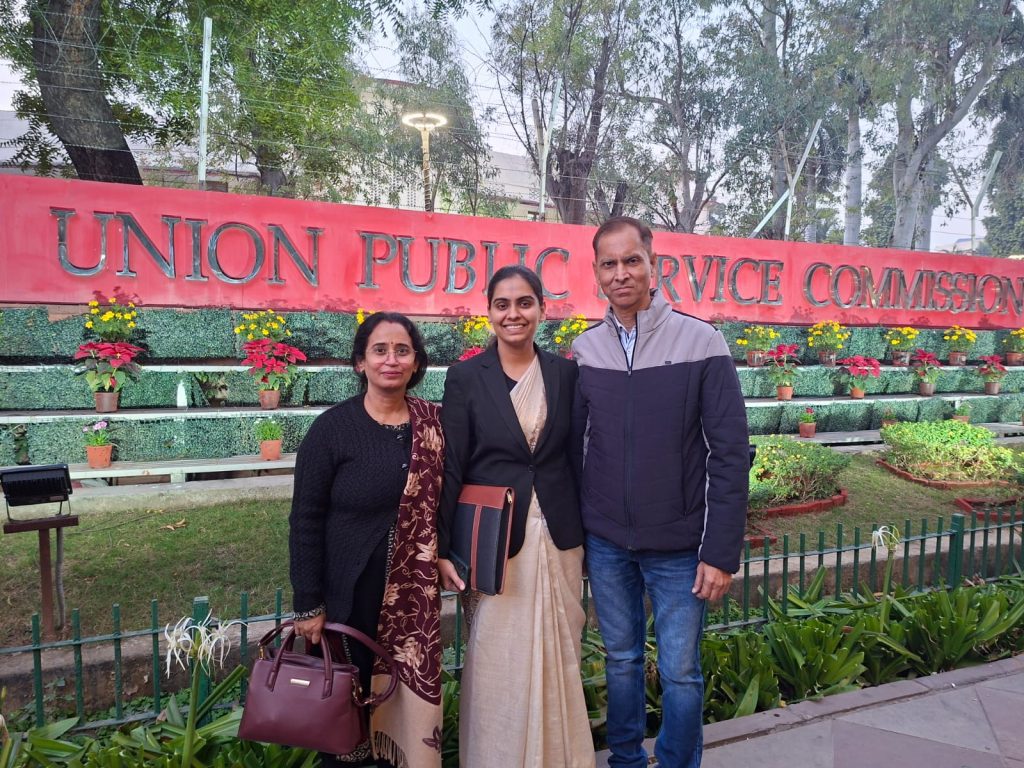
AIR 445 TO AIR 46
In her third attempt, she secured AIR 445 and entered the Indian Railway Management Service (Traffic). It was a significant milestone. But not the destination she had envisioned.
In her fourth attempt, she returned with sharper clarity, refining her notes, strengthening answer structures, and focusing deeply on conceptual understanding.
The result: All India Rank 46 in UPSC CSE 2025.
A jump that reflected not luck, but learning layered over multiple attempts.
A HOMEGROWN STRATEGY IN A DIGITAL WORLD
Unlike many aspirants who relocate to coaching hubs, Shambhavi built her preparation entirely from home.
Her approach was simple, but disciplined:
- Dependence on online resources and YouTube marathon lectures
- Deep analysis of PYQs instead of surface-level reading
- Brainstorming test series questions instead of writing endlessly
- Continuously enriching notes with missing keywords
For mains, she focused less on volume and more on clarity.
For interviews, she compensated for years of limited interaction by giving multiple mock interviews. She also received interview guidance from IPS officer Mahesh Bhagwat, who mentored her on her DAF and helped refine her approach for the personality test.
FINDING BALANCE BEYOND THE BOOKS
Even during intense preparation, Shambhavi held onto small spaces of calm.
She practiced Lipan art, inspired by traditional designs from Gujarat’s Kutch region. She maintained a terrace kitchen garden. And when she needed a mental break, she turned to dance.
These were not distractions. They were how she stayed steady.
THE OFFICER SHE WANTS TO BECOME
As she steps into public service, her priorities are grounded in lived experience.
“I want to focus on last-mile delivery and inclusion,” she told Indian Masterminds.
Her approach is shaped by empathy, by remembering what it feels like to stand on the other side of the system.
“I have to deal with people with compassion, whatever the sector may be.”
She is particularly drawn to women’s empowerment through education, seeing it as a long-term force for change.
RESTART – HER MOST POWERFUL IDEA
If one idea defines Shambhavi Tiwari’s journey, it is this: Restart.
Again. And again.
“There will be roadblocks,” she says. “But you have to restart with all your energy.”
Her advice is clear and grounded:
- Keep resources limited
- Focus on your vision
- Stay consistent
- Don’t lose self-belief
“Manifest it daily,” she adds. “And work towards making it true.”
A STORY THAT STAYS WITH YOU
From a quiet campus in Pantnagar to AIR 46, Shambhavi’s journey does not rely on dramatic moments. It moves through small corrections, difficult pauses, and repeated beginnings.
And in that repetition, she found her way forward.