Does having million of followers on social media automatically establishes a person as a ‘role model’? Or topping the UPSC Civil Services examination bestows the right to abuse authority? Or else, being appointed as District Collector entitles one an immunity to criticism and protest?
In the public imagination, India’s bureaucracy is meant to be the steel frame of the Republic—neutral, efficient, and steadfast in service of the citizen and answerable to the constitution, public and a government elected by people. Yet, time and again, that steel hardens into something less benign: an unyielding arrogance that treats dissent as insubordination and public scrutiny as a personal affront. Bureaucrats often believe they are the real power, not merely its custodians. When that belief takes root, authority slips easily into high-handedness, and governance gives way to domination.
A telling illustration unfolded in the desert district of Barmer, Rajasthan, on December 20, 2025. What began as a routine student protest against college fee hiked three folds, spiralled into a national controversy. During the protest, officials reportedly urged students to see the District Collector, Tina Dabi, as a role model—an emblem of aspiration and success. The students’ retort was irreverent but hardly revolutionary: they argued she was no Ahilyabai Holkar or LaxmiBai, the Rani of Jhansi, dismissing her instead as a “reel star”, more visible on social media than on the ground. That jibe proved costly. Police swiftly detained several students, including minors, slapping non-bailable charges that shocked civil society and ignited outrage online.
The backlash was swift enough to force a course correction. The Superintendent of Police intervened, ordered the release of the students, and issued a public apology. But the damage was done. The episode exposed how fragile the line between authority and ego can be—and how quickly the machinery of the state can be turned against citizens for something as trivial as an insult.
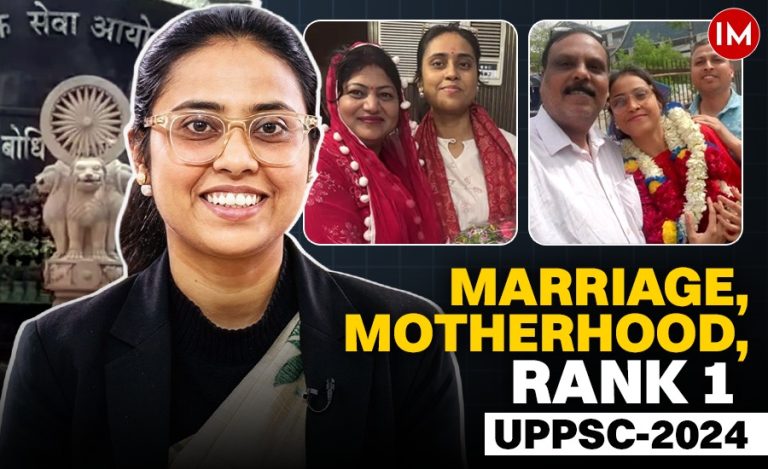
Tina Dabi is no ordinary district collector. A 2015 UPSC topper and a 2016-batch IAS officer, she has become one of the most recognisable bureaucratic faces in the country. With 1.6 million followers on Instagram, her carefully curated posts—inspection visits, motivational messages, and aesthetically framed moments of official life—have turned her into a millennial icon for civil service aspirants. Her personal life, too, has been the subject of intense public interest, further amplifying her visibility. She also has hundreds of fan pages on Facebook and YouTube.
Yet, this very celebrity has blurred the boundaries between governance and performance. Critics argue that the growing culture of “reel administration” prioritises optics over outcomes. In districts like Barmer, plagued by poor roads, fragile infrastructure, and perennial development deficits, social media stardom can easily look like self-promotion at the cost of service delivery. When criticism punctures that image, the temptation to respond with the full weight of the state becomes dangerously strong.
The outrage that followed the Barmer incident revealed a deeper unease. On social media, citizens questioned whether freedom of speech ends where bureaucratic sensitivity begins. Comparisons were drawn to earlier episodes—such as individuals being summoned or arrested for innocuous online reactions to officials’ posts. The message many took away was chilling: in the age of digital visibility, bureaucrats want applause, not accountability.
This phenomenon is not accidental. India’s bureaucracy is, at its core, a colonial inheritance—designed to command, control, and extract compliance, not to engage as equals with citizens. The discretionary powers vested in officers are enormous: land acquisition, policing, licensing, welfare distribution, and regulatory approvals often hinge on a single signature. Oversight mechanisms exist, but they are slow, internal, and frequently compromised by hierarchy and political convenience.
The Indian Administrative Service (IAS) and its sister services were designed by the British as an instrument of control, a detached elite insulated from the masses. Today, however, a new generation of officers has collapsed this distance, not through better service delivery, but through social media.
They are the “influencer-bureaucrats,” posting curated glimpses of their power—signing files, inspecting sites, and accepting bouquets—to an audience of millions. Yet, as the Barmer incident suggests, this digital celebrity has not democratized power; it has merely modernized entitlement. The “Reel Star” wants the public’s likes, but not their questions.
This blurring of lines between public servant and private celebrity is dangerous because it creates a “halo effect” that masks deep-seated abuse. When officers view themselves as brands, administrative decisions risk becoming performances.
Layered onto this is the psychological weight of the civil services examination itself. Years of grinding preparation and the near-mythical status accorded to “rankers” foster an elite mindset. Many officers genuinely believe they are exceptional—chosen guardians of the state whose judgment must not be questioned. Dissent, especially from ordinary citizens, is interpreted as disrespect.
Social media has further complicated this equation. Platforms like Instagram and X allow officers to craft near-heroic public personas. While visibility can humanise administration, it can also inflate egos. Praise flows freely; criticism feels personal. When bureaucrats mistake public office for personal brand, the response to critique can be punitive rather than reflective.
The Barmer episode is hardly an outlier. In Delhi, the 2022 Thyagraj Stadium controversy laid bare a similar sense of entitlement. Senior IAS officer Sanjeev Khirwar and his wife Rinku Dugga, also an IAS officer, were accused of clearing athletes from the stadium in the evenings so they could walk their dog. National-level sportspersons found their training disrupted, while staff complied silently, fearful of reprisals. Only after public outrage did the government act—transferring the officers, and eventually forcing the wife into compulsory retirement for misuse of authority. The incident symbolised how personal whims can trump public interest when power goes unchecked.
While the dog-walking incident was farcical, other abuses of power are far more sinister. The trajectory of Sameer Wankhede, an officer with the Narcotics Control Bureau, illustrates the perils of unchecked authority in law enforcement. Wankhede cultivated an image as a tough, anti-drug crusader, a narrative eagerly lapped up by television cameras. Yet, his investigation into the Aryan Khan case dissolved into allegations of extortion, procedural lapses, and a personal vendetta, leading to a corruption probe against the investigator himself.
Here, the celebrity status of the officer arguably shielded him initially, allowing a questionable investigation to proceed under the guise of a righteous crusade. It highlighted a terrifying reality: in a system where the process is the punishment, a fame-seeking officer can ruin lives before the truth laces up its boots.
Taken together, these episodes point to a systemic malaise. Laws meant to protect officials from frivolous prosecution often end up shielding misconduct. Departmental inquiries drag on for years. Whistleblowers face retaliation. Citizens, wary of harassment, often choose silence over resistance. The result is a culture where bureaucratic authority is feared rather than respected.
The root of this “abandoned abuse” lies in the durability of colonial-era protections. Article 311 of the Constitution, originally designed to protect honest officers from political vindictiveness, has often mutated into a shield for the incompetent and the arrogant.
Punishments are rarely severe; the dog-walking couple were merely transferred to remote regions—Ladakh and Arunachal Pradesh—a move that effectively treated strategic border states as dumping grounds for errant officials. This lack of genuine consequence breeds impunity. When a bureaucrat knows the worst outcome of a scandal is a transfer, the incentive to curb one’s ego is minimal.
Preventing such high-handedness requires more than symbolic transfers after public outrage. Structural reform is essential. First, accountability mechanisms must be made faster and more transparent. Complaints against officials should be time-bound, with independent oversight rather than purely internal reviews. Second, the discretionary powers of individual officers need clearer limits, especially in policing and regulatory enforcement.
Furthermore, the digital age has created a paradox. Social media, while fueling the narcissism of some officers, has also become the only effective check on their power. In a pre-digital era, the Barmer detentions or the Goa police harassment might have gone unnoticed. Today, the ubiquity of smartphones turns every citizen into a potential whistleblower. The “Reel Star” comment stung precisely because it pierced the curated digital veil, using the officer’s own medium to mock their authority.
Preventing this slide requires more than just punitive transfers. It demands a fundamental reimagining of the civil service’s relationship with the public. The famed “security of tenure” must be balanced with swift accountability. Independent bodies like the Lokpal need to be more than paper tigers, capable of investigating abuse of power without waiting for political clearance.
Moreover, the service needs a cultural reset. Reforms like ‘Mission Karmayogi’ aim to instill a citizen-centric ethos, but training modules cannot dismantle decades of accumulated arrogance. Technology can help—but only if used wisely. Body cameras during public interactions, digitised decision-making trails, and mandatory disclosure of reasons for coercive actions can reduce arbitrariness.
Equally important is cultural reform within the services. Training must emphasise constitutional values, empathy, and humility—not just rulebooks and authority. Officers need to be reminded, repeatedly, that they are servants of the public, not its masters.
Finally, political leadership must set the tone. As long as politicians reward pliant officers and punish independent ones, the message will remain distorted. Breaking the politician-bureaucrat nexus is crucial if integrity is to be restored.
The Barmer incident may fade from headlines, but its lesson endures. In a democracy, power is always borrowed, never owned. When bureaucrats forget this, governance mutates into coercion, and the citizen becomes a subject once again. Preventing that slide is not just an administrative necessity—it is a democratic imperative.
Today, the Indian bureaucracy finds itself in a glass house of its own making. It cannot enjoy the perks of modern celebrity while clinging to the privileges of feudal lords. If the “Steel Frame” wishes to remain relevant, it must realize that in a democracy, respect is commanded by service, not demanded by force. Until then, the smartphone will continue to be the most effective opposition to the state, one viral video at a time.