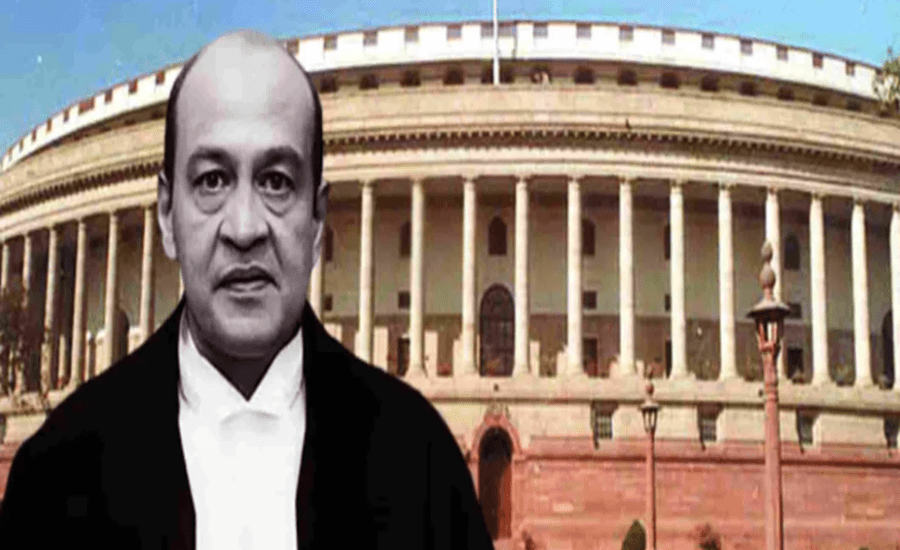
New Delhi: The appointment of ASG Raja Thakare to assist the Lok Sabha inquiry committee marks a pivotal development in the ongoing parliamentary probe into allegations against Justice Yashwant Varma of the Allahabad High Court.
The confirmation of Thakare’s role underscores the seriousness with which the Government of India is approaching judicial accountability under constitutional provisions.
This move aims to strengthen the committee’s legal support as it examines contentious allegations stemming from a high-profile cash discovery and ensuing impeachment process.
Background of Justice Yashwant Varma Cash Row
In March 2025, a dramatic and controversial discovery of large amounts of unaccounted cash occurred during a fire at Justice Yashwant Varma’s official residence in New Delhi. First responders reportedly encountered stacks of partly burnt currency in a storeroom of the bungalow, shocking judicial oversight bodies and the public alike.
Read also: Justice Yashwant Varma’s Petition Rejected; Parliamentary Panel Probe Remains Valid
The incident triggered intense scrutiny, prompting the Supreme Court to undertake internal inquiries and later, public and parliamentary attention.
A special panel set up by the then Chief Justice of India investigated the matter, fueling demands for deeper investigation and accountability.
Impeachment Proceedings and Parliamentary Action
Following the cash discovery, Parliament saw motions introduced in both Houses (Lok Sabha and Rajya Sabha) seeking Justice Varma’s removal from office under the constitutional framework for judicial accountability.
By August 12, 2025, the Lok Sabha Speaker formally constituted a three-member Inquiry Committee to examine the grounds for impeachment.
Despite procedural challenges, including a legal challenge in the Supreme Court by Justice Varma contesting the committee’s constitution, the court upheld the Speaker’s action.
The bench observed that constitutional safeguards should not paralyze the removal process and confirmed that forming an inquiry panel after the acceptance of the motion by a House is lawful.
About the Lok Sabha Inquiry Committee
The Inquiry Committee plays a central role in assessing whether the allegations against Justice Varma constitute grounds for removal under the Judges (Inquiry) Act, 1968 and constitutional provisions. It comprises:
- Justice Arvind Kumar – Supreme Court Judge
- Justice M.M. Shrivastava – Chief Justice of the Madras High Court
- Vasudeva Acharya – Senior Advocate, Karnataka High Court
Together, this panel is tasked with investigating the factual basis of the charges and preparing a report that Parliament will use to decide on impeachment.
Such a panel mirrors the constitutional checks and balances intended for accountability of even the highest judicial officers.
Who Is ASG Raja Thakare?
Additional Solicitor General (ASG) Raja Thakare is a senior legal officer in India’s law hierarchy, serving as one of the government’s top law officers below the Attorney General and Solicitor General.
His appointment to assist the inquiry committee reflects the Government’s intent to ensure a robust legal and procedural foundation during the inquiry into the impeachment motion.
Thakare’s role includes advising the committee on technical legal questions, evidence assessment, procedural compliance under the Judges (Inquiry) Act, and facilitating coherent documentation of findings. This is particularly critical given the high stakes of potential judicial removal.
Justice Yashwant Varma Cash Row: Supreme Court’s Role in Validating the Process
Justice Varma’s legal challenges sought to delay or derail the parliamentary process by arguing that the committee’s formation was procedurally flawed, especially given conflicting actions in the Rajya Sabha. However, the Supreme Court dismissed these pleas, asserting that constitutional processes should not be subverted by legal technicalities.
It upheld the Speaker’s authority to form the committee once the motion was accepted in the Lok Sabha, emphasizing the purpose of the Judges (Inquiry) Act rather than strict procedural narrowness.
Justice Yashwant Varma Cash Row: Implications for Judicial Accountability
The developments in the Varma case, including Thakare’s appointment, highlight broader debates on judicial accountability, transparency, and institutional integrity in India’s governance system.
While some see the parliamentary process as reinforcing checks on judicial power, others caution against eroding judicial independence through political pressures. The inquiry’s outcome will have lasting resonance in legal circles and public discourse.