Senior Officials and Stakeholders Participate
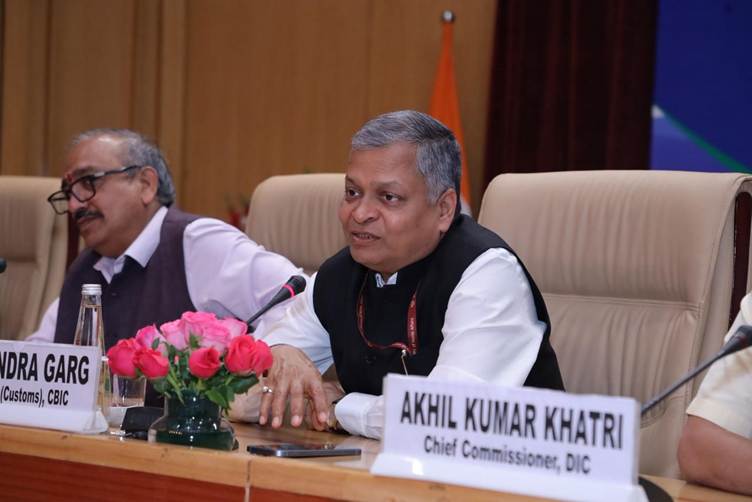
The session saw participation from key officials, including Yogendra Garg, Member (Customs), CBIC; Manish Kumar, Chief Commissioner, Delhi Customs; Sanjay Gupta; and Akhil Kumar Khatri.
Representatives from trade bodies, industry, and other key stakeholders also attended, engaging in discussions on the scheme’s benefits and operational framework.
Interactive Session Focuses on Implementation
The programme featured a detailed presentation outlining the scheme, followed by an interactive segment where participants raised queries and shared feedback. The discussions focused on practical aspects of implementation and industry concerns.
Also read: BEML Strengthens MSME Partnerships to Boost Defence Manufacturing at NDIC–AMTS 2026
Trust-Based Approach to Boost Trade Efficiency
Addressing the gathering, Yogendra Garg highlighted that the EMI Scheme is built on a trust-based compliance model. He noted that the initiative aims to reduce dwell time, enable faster clearances, and bridge the trust gap between industry and regulators.
He also encouraged stakeholders to actively utilise the scheme and contribute feedback for continuous improvement.
Enhancing Commercial Viability for Importers
Manish Kumar emphasised that the scheme would significantly improve the commercial viability of manufacturer importers. By allowing better import scheduling and easing working capital pressures, the initiative is expected to streamline business operations.
About the EMI Scheme
The EMI Scheme allows eligible manufacturer importers to defer payment of import duties. Instead of paying duties upfront, businesses can make payments on a monthly basis, improving cash flow and operational flexibility.
The scheme is inclusive, extending benefits to MSMEs, and aligns with the government’s push for domestic manufacturing under the “Make in India” initiative.
Key Benefits
- Improved liquidity for manufacturers
- Faster clearance and reduced dwell time
- Better import planning and inventory management
- Strengthened payment discipline
- Enhanced global competitiveness
- Improved supply chain efficiency
Eligibility Criteria
To qualify, applicants must meet the following conditions:
- Be a manufacturer or importer with a valid Import Export Code (IEC)
- Have filed a minimum of 25 EXIM documents in the previous financial year (10 for MSMEs)
- Maintain GST compliance with no pending returns
- Demonstrate financial solvency
- Possess a clean compliance track record
Application Process and Timeline
Applications can be submitted online through the AEO portal (www.aeoindia.gov.in), which has been operational since 1 March 2026. The process is entirely digital, requiring no physical interface.
Approved applicants can avail of the scheme across all Customs formations starting 1 April 2026. The scheme will remain valid for two years, until 31 March 2028.
Strengthening a Transparent Trade Ecosystem
Through initiatives like the EMI Scheme, CBIC aims to build a transparent, efficient, and globally competitive trade environment driven by technology, facilitation, and trust-based compliance.
Also read: CM Nitish Kumar Launches ₹810 Crore Development Projects in Nalanda, Boosts Infrastructure and Women Empowerment