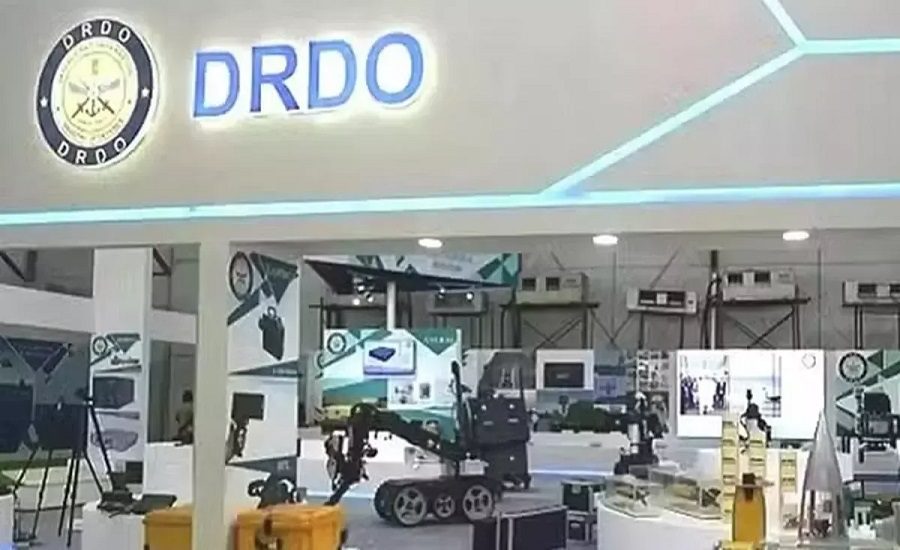
New Delhi: India’s Defence Research and Development Organisation (DRDO) has accelerated development of next-generation indigenous electronic warfare systems and stealth fighter jets to achieve spectrum supremacy by 2047. This strategic initiative aims to make India a global leader in advanced defence technologies, ensuring dominance in future battlefields where control of the electromagnetic spectrum will decide conflict outcomes.
DRDO Mission 2047: Strategic Shift in Defence Technology
At the Electronic Warfare Conference-India (EWCI) in Bangalore, DRDO’s Director General for Electronics and Communication Systems, B.K. Das, outlined India’s roadmap for future combat technology.
Read also: NASM-MR Missile Explained: Range, Variants, Timeline, Capabilities and MiG-29K Integration Details
The main focus is on homegrown EW systems and stealth-enhanced fighter aircraft. EW technologies allow military forces to detect, disrupt, and deceive enemy radar, communication, and sensor systems. Dominating this domain is crucial in modern wars where digital and electromagnetic systems are instruments of power.
Why Spectrum Supremacy Matters
The electromagnetic spectrum is the backbone of modern warfare. It includes radar, communication networks, navigation signals, and electronic sensors. In future conflicts, the side that controls this spectrum will hold a clear strategic advantage.
DRDO’s pursuit of spectrum dominance is aimed at making the Indian military more resilient, flexible, and technologically superior in hostile environments. Emerging technologies like photonics and quantum computing are being explored to boost the speed and effectiveness of EW systems.
DRDO Mission 2047: Bringing Industry, Academia, and Research Together
A major theme of the EWCI was collaboration. DRDO is working to unify industry leaders, academic institutions, and research labs to accelerate innovation. This collaborative framework supports faster testing, design refinement, and technology transfer to defence manufacturers.
Participation from global partners shows how India is opening its defence ecosystem under the Atmanirbhar Bharat (Self-Reliant India) initiative to develop cutting-edge EW capabilities.
DRDO Mission 2047: Indigenous Fighter Jet Programs
DRDO’s strategy goes beyond EW systems. It also includes indigenous stealth fighter aircraft development. The next-generation fighters would combine low detectability, advanced sensors, and powerful weapons to ensure aerial superiority in contested environments.
The Advanced Medium Combat Aircraft (AMCA) project — a fifth-generation stealth fighter — has been sanctioned and involves key partners such as Hindustan Aeronautics Ltd (HAL) and the Aeronautical Development Agency (ADA).
India’s Light Combat Aircraft (LCA) variants like Tejas Mk1 and Mk1A have already laid the groundwork. These platforms are now being used as building blocks for future designs with enhanced stealth and EW integration.
Indigenous Sensors and Radar Systems
Key components such as the Uttam Active Electronically Scanned Array (AESA) radar have also been developed indigenously. These systems are critical for early detection and targeting in both EW and aerial combat scenarios.
AESA radars provide better range, accuracy, and multi-target tracking — vital for future Indian fighters and EW aircraft to successfully operate in complex electromagnetic environments.
Consistent Funding and Government Backing
DRDO officials highlighted that funding has not been a constraint and remains robust, ensuring continuity in research, prototyping, and testing of EW and stealth platforms.
With government backing and streamlined policy support, India’s defence research ecosystem is expected to grow rapidly, pushing the nation toward technological self-reliance and global leadership by 2047.
What This Means for 2047 India Target
The combined development of EW dominance and advanced stealth fighters points to a holistic defence modernization strategy. By 2047, the Indian Armed Forces could wield a highly integrated network of sensors, jammers, aircraft, and artificial intelligence-driven systems that redefine battlefield dynamics.
This focus not only strengthens India’s defensive and deterrent posture, but also enhances its global strategic influence. The initiative promises to provide the Indian Air Force and defence units with competitive edge technologies that rival the best in the world.