During the long struggle, Indians fought for ‘Swaraj’ (self – rule) and ‘Su-raj’ (Good Governance). Swaraj was achieved at the time of Independence while work is still under progress on Su-raj.
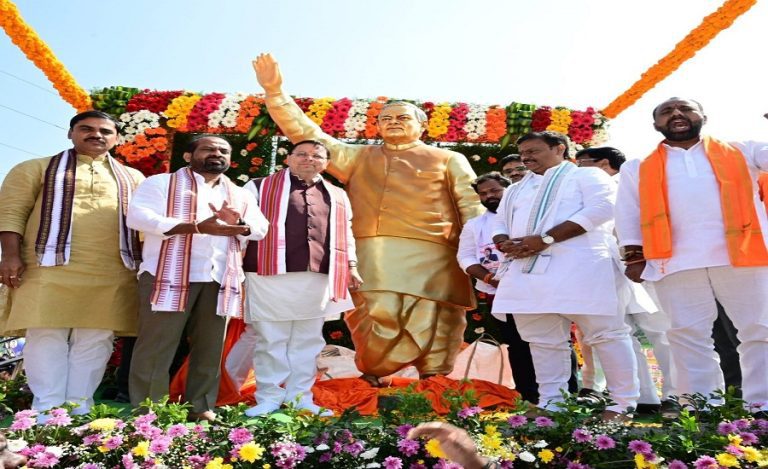
Shri Atal Behari Vajpayee’s Prime Ministership, is recognized for making significant contributions in infrastructure development (Power and Golden Quadrilateral roads projects) education (Sarva Shiksha Abhiyan) economic reforms (Fiscal Rsponsibility and Budget Management Act) and national security (Pokharan Nuclear Blast formally declaring India as the Nuclear Power). Celebrate his birthday as the ‘Good Governance Day’ is therefore befitting.
The story of Good Governance in India begins with ‘Ram Rajya’ where the king followed ‘Raj Dharma’ putting duty before self. It is said that during the reign of Ram there was no Physical/internal, Natural and Divine, External and Material sufferings to any citizen.
Kautilya’s Arthashastra says that “In the happiness of his people lies the king’s happiness, in their welfare his welfare. Whatever pleases himself, he shall not consider as good, but whatever pleases his people, he shall consider as good.” If one replaces, the king by the head of the Government, the quote still captures the essence of good governance.
It will be a good case study to find out the number of modern kings who put duty before self.
The Good Governance assures every citizen to a life of dignity, safety and security (both external and internal), and a conducive environment to grow and pursue her goals to be happy. Governance, in its most generic form, is a function of individuals, institutions and processes. Individuals with character, robust yet humane processes, and institutions with integrity enhance the quality of governance.
The process of Good Governance is routed through transparency, accountability and the rule of Law. Our governance system is based on distrust. The edifice of administration needs to be changed from distrusting citizen, a colonial legacy, to imposing trust in them. All attempts should be made towards self-disclosures, self-certification and self-enforcement of the laws by the citizens. Of course, any false disclosure and deviant behavior should have exemplary consequences.
There is tremendous scope to make incremental improvements in each and every activity of the government. My experience is that making large scale changes should be planned carefully and cautiously.
While sitting on any chair, accountability goes hand in hand with responsibility. As the head of any organization, people closely observe your behavior and attitude towards citizen.
With some give and take, 90% of the work in any office consists of employes in that office. Barely, 10% work is useful to public. Streamlining of the processes can change the situation.
In the nutshell, there is no formula for achieving good governance. It is a mix of integrity, commitment of individuals; reputation of institutions and user-friendly robust processes which determine the quality of governance.
(The author is 1984-batch Telangana cadre IAS. He retired on December 31, 2019)