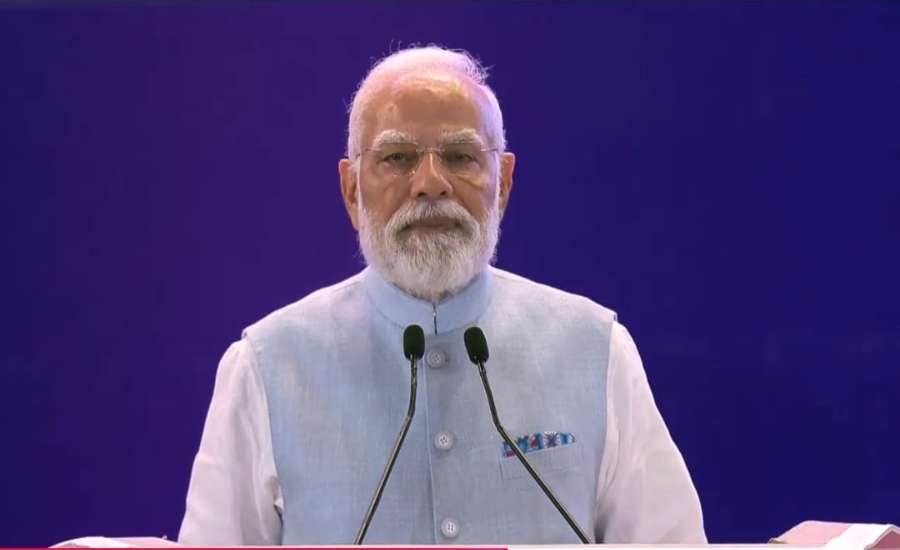
New Delhi: Prime Minister Narendra Modi is set to chair a high-level, three-day national conference with Chief Secretaries of all states and Union Territories in New Delhi, underscoring the Centre’s renewed push for deregulation, simplification of rules, and reduction of compliance burden to accelerate India’s economic transformation.
Scheduled from Friday to Sunday, the marathon meeting marks the fifth such national-level summit, bringing together top bureaucratic leadership from across the country at a single venue for intensive discussions on governance reforms, human capital development, and cooperative federalism.
PM Modi Chief Secretaries Meet: Focus on Deregulation and Ease of Doing Business
At the heart of the deliberations will be ease of doing business, a cornerstone of the government’s long-term economic strategy.
Officials said the Prime Minister will review progress made by states and central ministries in:
- Simplifying regulatory frameworks
- Reducing procedural delays
- Eliminating redundant compliances
- Encouraging private investment and entrepreneurship
The discussions are aligned with India’s broader ambition to emerge as a developed nation, where governance efficiency supports industrial growth, MSMEs, startups, and job creation.
Human Capital Development Takes Centre Stage
Beyond economic deregulation, the summit will also focus heavily on human capital development, recognising that sustainable growth depends on a skilled, educated, and healthy population.
According to officials, five core thematic areas will guide the discussions:
- Women and child welfare
- School education
- Higher education
- Sports development
- Skill development and employability
These themes reflect the government’s intent to align education and skill ecosystems with future workforce requirements, particularly in a rapidly evolving global economy.
Cabinet Secretary to Present Deregulation Roadmap
Cabinet Secretary T V Somanathan, who is spearheading the government’s deregulation drive, will make a comprehensive presentation during the summit.
His briefing is expected to cover:
- Progress achieved so far in deregulation efforts
- Bottlenecks identified across sectors
- A future roadmap to stimulate greater economic activity
The presentation will serve as a guiding framework for states to benchmark their reforms and accelerate implementation.
PM Modi Chief Secretaries Meet: States to Showcase Best Practices and Policy Innovations
The conference will also provide a platform for states to present best practices and flagship initiatives in education, skilling, and social development.
- Kerala is likely to make a presentation on higher education reforms, highlighting institutional quality and academic outcomes.
- Tamil Nadu is expected to detail its initiatives on skilling and building a future-ready workforce, focusing on industry-linked training models.
- Rajasthan will reportedly make three presentations, including on the ‘Lakhpati Didi’ scheme, school education reforms, and iStart, the state’s flagship innovation and startup promotion programme.
These presentations aim to encourage cross-learning among states and replication of successful governance models.
Beyond Meetings: Team Building and Leadership Engagement
Unlike conventional conferences, the three-day summit will also include yoga sessions, team-building exercises, and informal interactions, designed to foster collaboration, trust, and shared ownership of national development goals among senior officials.
Officials noted that keeping all participants at the venue for the entire duration helps ensure focused discussions, continuity, and deeper engagement on policy issues.
PM Modi Chief Secretaries Meet: Strengthening Cooperative Federalism
The Chief Secretaries’ conference has emerged as a key institutional mechanism for strengthening cooperative federalism, enabling direct dialogue between the Prime Minister and top state administrators.
By aligning central priorities with state-level execution, the government aims to ensure that reforms on paper translate into measurable outcomes on the ground, particularly in governance efficiency, education quality, and employment generation.