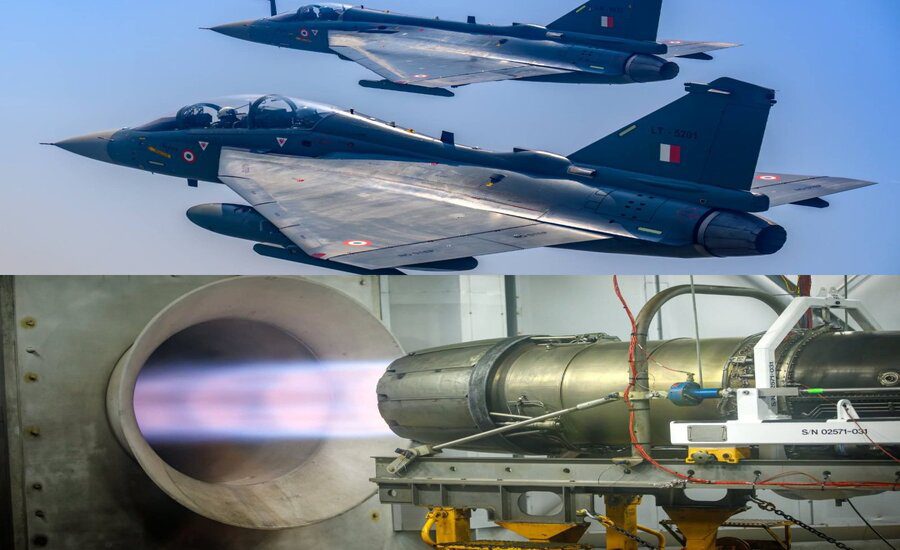
New Delhi: The defence aerospace landscape in India is witnessing a significant uptick as HAL is poised to receive the fifth GE F404-IN20 engine by mid-December 2025, a development expected to accelerate the production and induction of Tejas Mk-1A fighter jets into the Indian Air Force (IAF).
This delivery comes at a critical juncture — after repeated delays in engine supply that had slowed down the rollout of the indigenous light combat aircraft. The fresh engine arrival is likely to stabilise the manufacturing cadence at HAL and boost the overall output of Tejas Mk-1A jets.
Background of Tejas Mk-1A F404 engine delivery
The Tejas programme, initiated decades ago, represents India’s ambition for a light, indigenous, multi-role combat aircraft. The Mk-1A variant is the 4.5-generation upgrade of the older Tejas Mk-1, with improved avionics, systems, and combat capabilities.
Still, despite being under production, the Tejas Mk-1A’s rollout has faced major hurdles — the most persistent being the delayed supply of its powerplant, the F404-IN20 engine from GE Aerospace. Production disruptions at GE and supply-chain issues had left HAL waiting for engines for months, causing a backlog and interrupting the jet-rollout schedule.
To meet the requirements of the 2021 order for 83 Mk-1A jets — and the more recent 2025 follow-on order for 97 additional jets — HAL had placed large requisitions for F404 engines. In November 2025, HAL signed a fresh agreement for 113 F404-IN20 engines, covering the needs of the second batch of Mk-1A jets.
Until now, only four engines had been delivered. The fifth — arriving next week — marks the beginning of a critical phase in restoring regular supply and supporting accelerated production.
Major Significance of Tejas Mk-1A F404 engine
- The arrival of the 5th F404-IN20 engine should help HAL transition from intermittent deliveries to a more steady and predictable production rhythm.
- This helps address a major bottleneck that had stalled the aircraft assembly line, enabling HAL to synchronise airframe assembly with engine availability.
- With engine supply stabilised, HAL is better positioned to meet its target of delivering 12 Mk-1A jets by end of FY 2025-26.
- The boost in engine deliveries will aid India’s goal of building up a larger fleet of Tejas jets, contributing significantly to IAF’s squadron strength.
- The fresh 113-engine deal signed in November 2025 — along with the arrival of this engine — underlines the renewed commitment of GE Aerospace to support India’s ambitions.
- It signals a move toward long-term supply stability, quelling earlier concerns over engine shortages that had hampered the project’s pace.
- The ramp-up in Tejas Mk-1A production comes at a time when the IAF is keenly restoring its shrinking squadron strength — with older jets retiring and a demand surge for new, modern fighters. Inducting more Tejas jets will fill gaps and provide a cost-effective avenue for expanding capabilities.
- While relying on imported engines for now, the sustained production and procurement of Tejas by HAL showcases India’s growing maturity in aerospace manufacturing. The consistency of deliveries and an enlarged production base will reinforce India’s image as a credible jet-making nation.
- The ongoing engine supply from GE Aerospace underlines a strengthening defence and aerospace collaboration between India and the United States. The new agreement for 113 engines and timely deliveries reflect renewed trust and long-term cooperation in strategic sectors.
What Remains to Be Watched — Challenges Ahead
Timely and consistent deliveries: While the fifth engine is coming, it’s critical that future engine deliveries follow the promised schedule to avoid another production stall.
Weapons integration & certification: Mk-1A deliveries to IAF depend on successful weapons-firing trials, avionics integration, and certification processes.
Production scaling at HAL: HAL will need to ramp up capacity and streamline assembly, quality control, and delivery logistics to actually translate engine supply into operational jets — which is no small feat.
Outlook: What the Coming Months Could Bring
- If deliveries continue smoothly, and HAL manages to maintain a steady build rate, the next 12–18 months could mark a turning point for the Tejas Mk-1A program. The combination of fresh engines, a clear production roadmap, and strong institutional support may enable the IAF to begin inducting new Mk-1A jets sooner than anticipated — strengthening India’s air combat capabilities significantly.
- The fresh engine supply also sets a foundation for future expansion: as HAL works through its current orders, the lessons learned and improved manufacturing discipline may pave the way for production of next-generation variants (e.g., Mk-2), eventually contributing to a more self-reliant Indian aerospace ecosystem.
Read also: Shock to China-Pakistan: India Now Owns Latest Israeli Air Lora & Ice Breaker Missile Technology