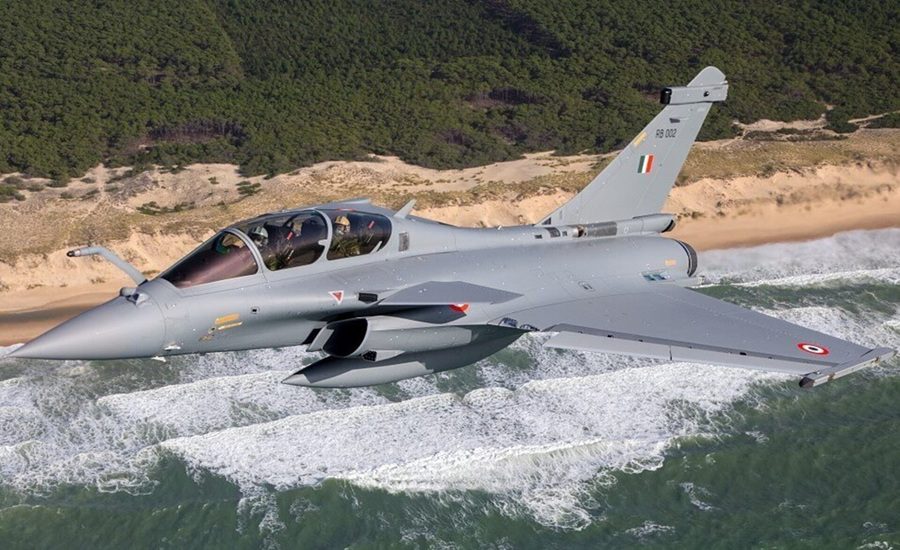
New Delhi: India is preparing for one of its biggest defence procurement decisions in recent years as the 114 Rafale fighter jets deal is likely to come up for approval at the upcoming Defence Acquisition Council (DAC) meeting.
The move is expected to significantly strengthen the Indian Air Force’s combat strength at a time when squadron levels are at a historic low. Alongside this, the DAC may also approve the acquisition of six additional P-8I Poseidon aircraft for the Indian Navy, enhancing India’s maritime surveillance and anti-submarine warfare capabilities.
114 Rafale Deal: Big Push Ahead of French President’s India Visit
When French President Emmanuel Macron lands in New Delhi in mid-February, defence cooperation is expected to dominate discussions. By then, the DAC—chaired by the Defence Minister—may have already cleared the massive ₹3.25 lakh crore proposal for 114 Rafale fighter jets.
While President Macron is scheduled to attend an artificial intelligence summit, the strategic defence partnership between India and France is likely to remain a key backdrop to the visit.
What Is the Defence Acquisition Council (DAC)?
The is the highest decision-making body in the Ministry of Defence for capital acquisitions.
Once the DAC clears a proposal, it is sent to the Cabinet Committee on Security (CCS), headed by the Prime Minister, for final approval. This process ensures political oversight and strategic alignment for all major defence purchases.
What is the Importance of 114 Rafale Deal
The Indian Air Force faces a serious shortfall in fighter squadrons.
- Required strength: At least 42 fighter squadrons
- Current strength: Around 30 squadrons
- Lowest level: In several decades
The induction of 114 Rafale jets would add six to seven new squadrons, providing a major boost to air combat capability. However, even this will not be enough to fully meet operational requirements.
The Rafale is already in service with the IAF, and its proven performance reduces training, maintenance, and integration risks.
Role of LCA Tejas in Filling the Gap
To bridge the remaining gap, the IAF is counting on the indigenous LCA Tejas programme.
A typical Tejas squadron consists of:
- 20 aircraft, including
- 4 reserve jets
However, production delays have slowed induction. Despite this, Tejas remains critical for long-term self-reliance and reducing dependence on imports.
Indian Navy’s Maritime Surveillance Boost
Alongside the fighter jet proposal, the DAC is also expected to consider the Indian Navy’s requirement for six more P-8I Poseidon aircraft.
It currently operates 12 P-8I aircraft, which have become the backbone of long-range maritime patrol missions.
These aircraft are developed by and customised for Indian operational needs.
Why the P-8I Poseidon Is So Critical
The P-8I is considered a “first responder” platform due to its wide operational role:
- Long-range maritime patrol
- Anti-submarine warfare
- Intelligence, surveillance, and reconnaissance
- Monitoring adversary naval movements
The existing fleet has clocked over 40,000 mishap-free flight hours and has been operational for more than a decade, underscoring its reliability and effectiveness.
Push for Indigenous Marine Gas Turbine Engines
Beyond aircraft acquisitions, the DAC may also take up a strategic proposal to develop indigenous marine gas turbine engines for Indian warships.
This capability is essential if India wants full control over naval propulsion systems and reduced dependence on foreign suppliers.
Key organisations involved include:
- Gas Turbine Research Establishment
- Hindustan Aeronautics Limited
- Bharat Heavy Electricals Limited
Strategic Importance for India
If approved, these decisions will:
- Strengthen air dominance capabilities
- Enhance maritime security across the Indian Ocean
- Support indigenisation and defence self-reliance
- Improve readiness against regional security challenges
Together, the Rafale and P-8I acquisitions represent not just procurement, but a long-term strategic investment in India’s national security.