Kandla: The Union Minister for Ports, Shipping and Waterways (MoPSW), Sarbananda Sonowal, virtually flagged off the steel-cutting ceremony for India’s first all-electric green tug at Deendayal Port Authority (DPA) in Kandla on Wednesday.
The project marks a major milestone in India’s shift toward sustainable and energy-efficient maritime operations, aligning with the country’s broader decarbonisation objectives in the port sector.
Key Features of the All-Electric Green Tug
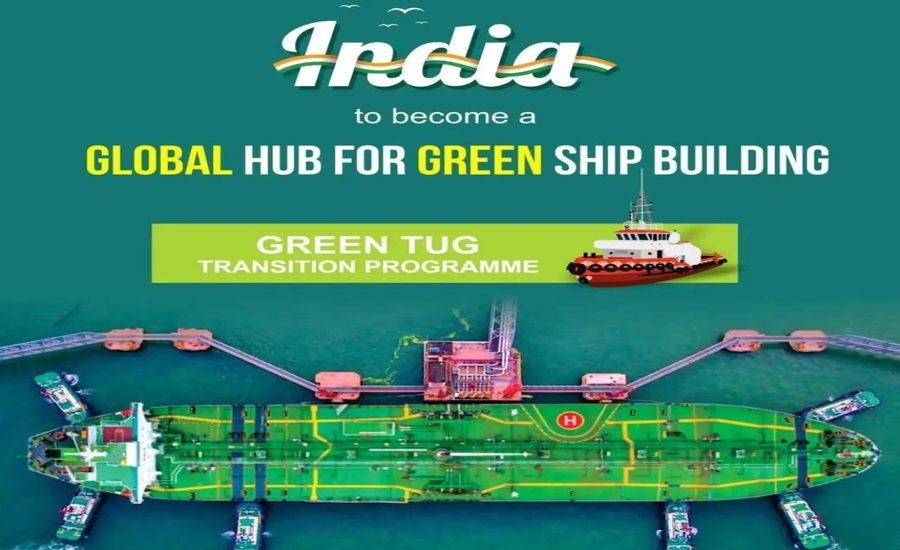
The newly designed green tug under the Green Tug Transition Programme (GTTP) will boast –
- 60-ton bollard pull capacity
- Silent operations with zero carbon emissions
- Optimised energy efficiency
- Advanced navigation systems and low-maintenance design
Officials highlighted that the tug is expected to reduce operational costs and carbon intensity significantly, setting a benchmark for fleet modernisation across major Indian ports.
Green Tug Transition Programme: Phase 1
The GTTP, launched by the Ministry of Ports, Shipping and Waterways, aims to induct 50 green tugs by 2030.
Phase 1 (2024–2027): 16 green tugs to be deployed
- Two tugs each at DPA, Paradip Port Authority, Jawaharlal Nehru Port Authority (JNPA), and V.O. Chidambaranar Port Authority (VoCPA) One tug each at the remaining eight major ports
- Currently, four major ports — DPA, VPA, JNPA, and VoCPA — have already awarded work orders for one tug each, with DPA formally initiating construction as the first port to begin the project.
Significance for India’s Ports
The induction of all-electric tugs is expected to –
- Reduce greenhouse gas emissions from port operations
- Promote next-generation fleet modernisation
- Increase operational efficiency and cost-effectiveness
This initiative reflects India’s commitment to achieving sustainable growth in the maritime sector while modernising port operations to global standards.