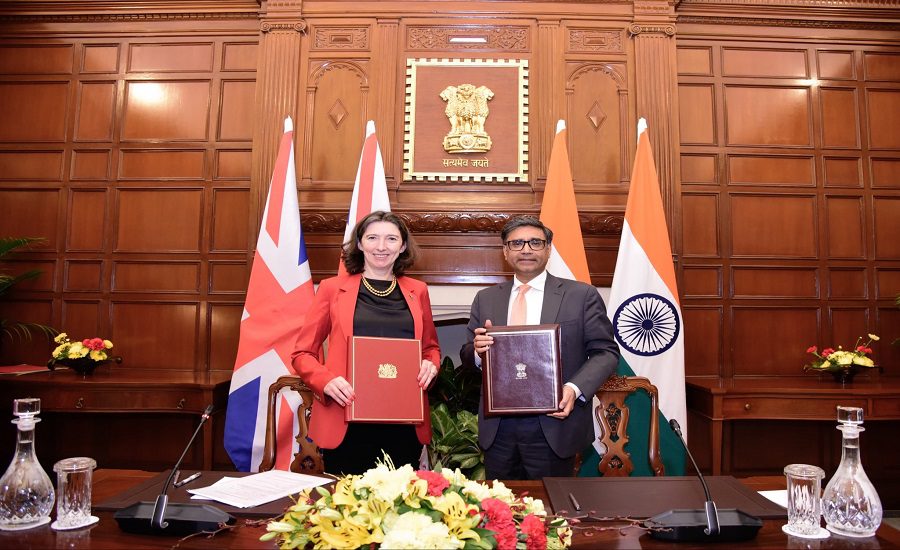
New Delhi: India and the United Kingdom on Tuesday signed a landmark Social Security Agreement aimed at eliminating double social security contributions for employees on temporary overseas assignments, a move expected to significantly boost talent mobility and business competitiveness between the two countries.
Agreement Signed in New Delhi
The agreement was signed in New Delhi by Foreign Secretary Mr. Vikram Misri and Ms. Lindy Cameron CB OBE, the British High Commissioner to the Republic of India, on behalf of their respective governments.
The pact addresses a long-standing concern for businesses and skilled professionals working across borders by preventing the requirement to contribute simultaneously to the social security systems of both countries.
Boost to Talent Mobility and Ease of Doing Business
By eliminating overlapping social security contributions, the agreement is expected to:
- Enhance cross-border movement of skilled professionals
- Reduce employment and compliance costs for companies
- Improve ease of doing business between India and the UK
The benefits will be particularly significant for employees on short-term international assignments, allowing them to remain covered under their home country’s social security system during overseas deputation.
Economic and Strategic Impact
Officials said the agreement would strengthen economic cooperation and encourage greater professional exchanges between India and the UK. It is also expected to enhance the global competitiveness of enterprises from both countries by creating a more predictable and business-friendly regulatory environment.
The pact aligns with broader bilateral efforts to deepen collaboration in trade, services, and human capital development, reinforcing the growing India–UK strategic partnership.
Strengthening the India–UK Partnership
The signing of the Social Security Agreement marks another important milestone in India–UK relations, reflecting shared priorities in facilitating workforce mobility and supporting globally integrated labour markets. By promoting smoother talent movement, the agreement is expected to support innovation, productivity, and long-term economic growth in both nations.
Read also: From Trade to Critical Minerals: What Jaishankar–Rubio Meeting Reveal About India–US Priorities