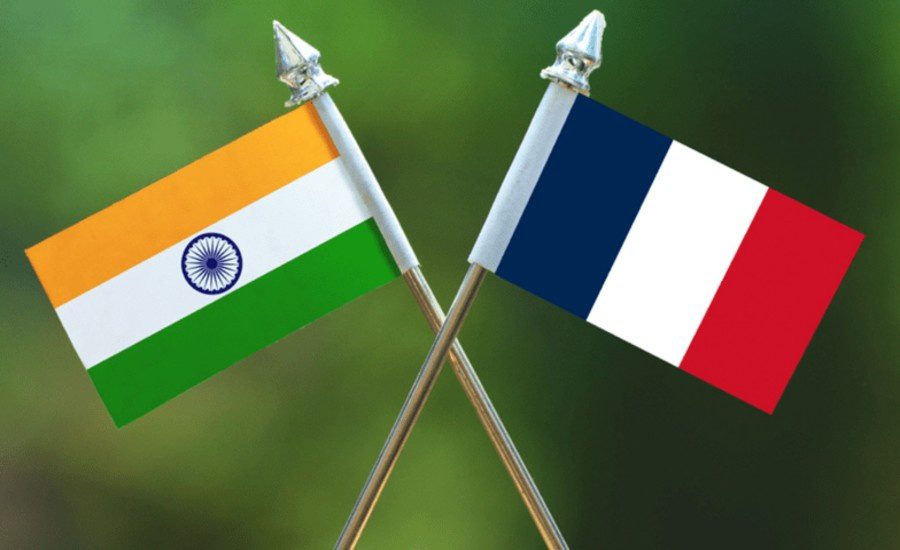
New Delhi: The Indo-French ocean-space collaboration marks a major step in expanding scientific and strategic cooperation between India and France.
This pact, driven by shared interests in ocean observation and space technologies, aims to strengthen data collection, environmental monitoring, and climate resilience across their maritime domains.
The agreement brings together India’s premier ocean institute and France’s advanced space agency to reshape how both countries study and protect the seas.
Details of Indo-French Ocean-Space Collaboration
Indian National Centre for Ocean Information Services (INCOIS) and France’s Centre National d’Études Spatiales (CNES) have agreed to enhance their collaboration under a new pact focusing on ocean-space synergies. The partnership builds on decades of friendship and aims to harness both satellite and in-situ observational systems for better ocean monitoring.
Read also: Inside Indian Maritime Shipbuilding Strategy: Rajnath Singh Invites World to Build Ships in India
Officials from both countries have emphasised that this collaboration reflects a shared commitment to scientific excellence, environmental stewardship, and sustainable management of marine resources. It underscores growing strategic ties in the Indian Ocean region, an area of vital economic and security importance for both nations.
Importance of Indo-French Ocean-Space Collaboration
Oceans cover over 70% of the Earth’s surface and are central to climate regulation, weather patterns, food security, and global trade routes. But monitoring oceans at scale is challenging due to their vastness and dynamic nature.
This is where the combined strength of space and ocean science becomes important:
- Satellite data can reveal surface temperatures, currents, sea level changes, and large-scale patterns.
- In-situ instruments such as buoys, gliders, and research vessels can validate and enrich satellite data with detailed local measurements.
By integrating these systems, India and France aim to produce more accurate, real-time insights into ocean behaviour — with applications ranging from disaster warnings to fisheries management.
Key Objectives of the Indo-French Ocean-Space Collaboration
The pact focuses on several major areas:
Space-Enabled Ocean Monitoring
CNES brings expertise in satellite earth observation, particularly through missions like Jason and SWOT, which track sea levels, currents, and coastal dynamics. INCOIS will integrate this satellite data into its forecasting and ocean state services.
Oceanographic Fleet Integration
India’s oceanographic vessels and sensor arrays will be synchronised with satellite observations to enhance coverage and precision. This blending of data streams will support improved prediction models for cyclones, heatwaves, and climate shifts.
Data Sharing & Capacity Building
Both nations intend to establish streamlined protocols for sharing ocean and space data. CNES is expected to support training programmes to help Indian scientists improve satellite data analytics and interpretation.
Impact of the Indo-French Ocean-Space Collaboration
The new pact aligns with India’s blue economy goals, which aim to sustainably harness ocean resources worth billions by 2030. Strong ocean observation capabilities will help tackle illegal fishing, protect marine biodiversity, and manage coastal resilience.
From a strategic perspective, enhanced ocean-space cooperation strengthens India and France’s mutual interests in the Indian Ocean region — a key part of France’s Indo-Pacific strategy. France maintains overseas territories and naval assets in the Indian Ocean, reinforcing its commitment to maritime security and environmental stability.
Building on a Longstanding Partnership
India and France share a rich history of scientific cooperation:
- Space collaboration between India’s ISRO and France’s CNES spans over fifty years, producing joint missions like Megha-Tropiques and SARAL.
- The two countries elevated their ties in February 2026 to a Special Global Strategic Partnership, encompassing defence, technology, energy, and space cooperation.
- Maritime drills like the Varuna naval exercises showcase military and scientific interoperability in shared waters.
This latest pact expands that framework further into environmentally critical ocean-space domains.
Looking Ahead: Ocean Stewardship with Space Intelligence
With climate change accelerating oceanic threats — from rising sea levels to increased storm intensity — the combined capabilities of INCOIS and CNES promise better preparedness and mitigation strategies. The agreement could pave the way for co-developed missions, including next-generation ocean satellites and advanced autonomous monitoring systems.
In an era where the stability of the seas matters to global food security, economic growth, and climate resilience, this Indo-French collaboration stands as a model of bilateral scientific diplomacy.