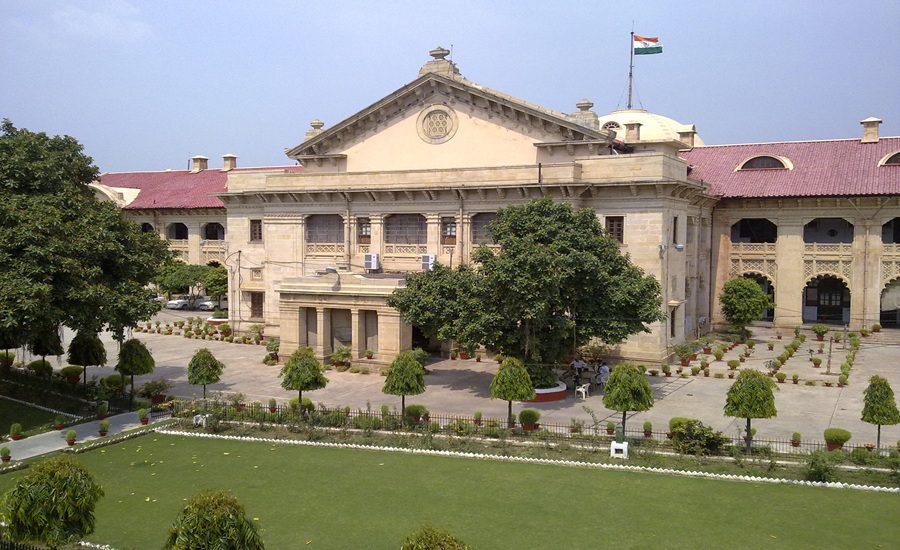
Lucknow: In a landmark decision, the Allahabad High Court (Lucknow Bench) has outlined comprehensive procedural requirements that the Uttar Pradesh State Government must strictly adhere to before removing an elected Nagarpalika President under Section 48 UP Municipality Act, 1916.
Background of Section 48 UP Municipality Act
The case arose after Irfan Ahmad, elected President of the Nagar Palika Parishad in Bhinga, District Shravasti, was removed from office by the State Government on October 29, 2025. His removal followed allegations from multiple complaints accusing him of corruption, financial misuse of power, awarding tenders to close associates, and purchasing bricks from a kiln owned by his father.
Read also: Explained: Why Allahabad High Court Is Unhappy With UP DGP’s CCTV Storage Policy
The government relied on preliminary inquiry committee reports and issued a show-cause notice before issuing the removal order.
Challenging this decision, Ahmad contended that the process breached Section 48(2-A) of the 1916 Act and violated natural justice, as the proceeding lacked a full formal inquiry including charge framing, witness examination, and evidence presentation opportunities.
Key Legal Clarifications by the Allahabad High Court on Section 48 UP Municipality Act
The bench of Justice Shekhar B. Saraf and Justice Manjive Shukla undertook a detailed review of statutory provisions and procedural fairness standards before issuing its ruling.
The Court held that any removal under Section 48 UP municipality act must not be a superficial or perfunctory administrative action but must satisfy rigorous procedural criteria.
1. Mandatory Appointment of an Inquiry Officer
The Court held that a designated Inquiry Officer must be appointed when the State Government initiates proceedings against a sitting President of a Nagar Palika.
The officer must prepare a formal charge sheet detailing all allegations, evidentiary materials relied upon, witness lists, and specific misconduct or financial irregularities alleged.
2. Right to Written Response
Once formal Articles of Charge are framed, the delinquent elected representative must be given an opportunity to submit a written response, denying the allegations or explaining them. The respondents (government authorities) are obliged to provide all documentary evidence relied upon by them.
3. Notice to Appear and Defend
The Inquiry Officer must fix a date for the appearance of the delinquent to answer charges, ensuring that the accused has the opportunity to personally and legally defend himself against each charge.
4. Examination & Cross-Examination of Witnesses
Evidence offered by prosecution witnesses must be recorded in the presence of the accused, who must also be given the right to conduct examination, cross-examination, and re-examination of all prosecution witnesses. This ensures that testimonies are tested rigorously in accordance with established principles of fair trial.
5. Right to Present Defence Evidence
The delinquent must have full opportunity to produce defence evidence, including calling defence witnesses, as part of a balanced inquiry.
The Court stressed that without this process, the inquiry is incomplete and cannot justify a removal order.
6. Inquiry Report and Government Action
Only after completion of the above procedural steps should the Inquiry Officer prepare a final report, which must be furnished to the delinquent and then forwarded to the Government for any further action, including potential removal or penalty.
Court’s Rationale of Section 48 UP Municipality Act
In its judgment, the High Court observed that an elected representative is the embodiment of the democratic will of the people and thus occupies a higher constitutional status than a regular government servant.
As such, a mere show-cause notice and consideration of a reply cannot satisfy the statutory mandate if they circumvent detailed procedural safeguards.
The Court underscored that if a government servant cannot be summarily removed without due process, an elected office bearer certainly deserves equal or stronger procedural protection. Because in the present matter, no formal Inquiry Officer, charge framing, witness examination, or evidence recording process was followed, the removal order was held to be contrary to law and principles of natural justice.
Outcome: Quashing of the Removal Order
The High Court consequently quashed and set aside the October 29, 2025 removal order, directing the competent authority to conduct a full-fledged inquiry as defined in its judgment, grant due opportunities to the petitioner to defend himself, and thereafter proceed as per the law.
The Court also referred to earlier judicial pronouncements reinforcing that preliminary inquiry evidence cannot be used as a substitute for a formal inquiry when the delinquent was not involved in that preliminary process.
Broader Implications for Local Bodies in Uttar Pradesh
This legal ruling has far-reaching implications for municipal governance in Uttar Pradesh. It affirms that State Government action to remove elected municipal leaders must strictly align with statutory processes and constitutional norms, thereby protecting local democracy and preventing arbitrary administrative overreach.
This clarity may impact ongoing and future removal proceedings involving Nagar Palika Presidents and other elected local body officials under the Section 48 UP municipality act, and ensures that natural justice is not bypassed in the name of administrative expediency.