With French President Emmanuel Macron’s India visit scheduled from February 18 to 20 for the Artificial Intelligence Summit, attention has shifted to a major defence decision that could be taken just ahead of his arrival. The Defence Acquisition Council (DAC) is expected to meet next week, where the long-pending proposal to procure 114 Rafale fighter jets may be placed for approval.
DAC Meeting to Be Chaired by Defence Minister
According to defence sources, the DAC—chaired by Defence Minister Rajnath Singh—is likely to meet in the second week of February. While several large procurement proposals will be on the agenda, the most significant among them is the Rafale deal, estimated to be worth ₹3.25 lakh crore.
Approval of Necessity the Key Step
Sources said the proposal will seek Acceptance of Necessity (AoN), a crucial stage in the defence procurement process. Once AoN is granted, the project will move into the technical and commercial negotiation phase. The proposal has already received clearance from the Defence Procurement Board last month and, after DAC approval, will be placed before the Cabinet Committee on Security (CCS) for final clearance.
What the Rafale Deal Includes
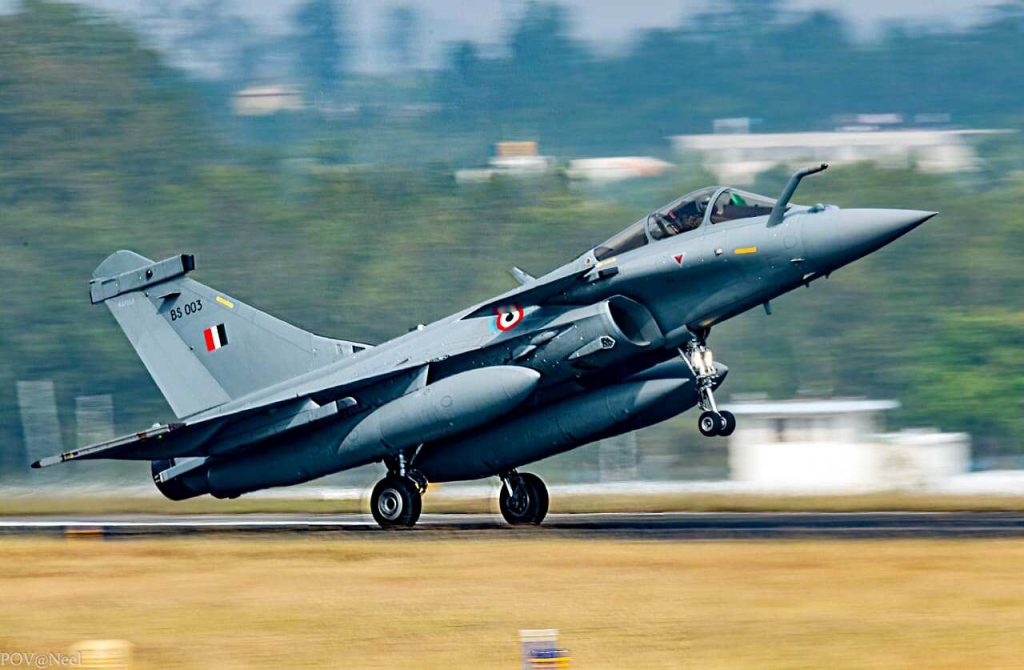
The deal envisages the induction of 114 Rafale fighter jets into the Indian Air Force. Of these, 18 aircraft will be delivered in fly-away condition directly from France, while the remaining jets will be manufactured in India.
Reports indicate that up to 60 percent indigenous content will be incorporated, with nearly 80 percent of the aircraft produced domestically in partnership between Dassault Aviation and Indian private-sector companies.
The Indian Air Force is expected to receive 88 single-seater and 26 twin-seater Rafale jets under the proposal.
Why the Deal Is Urgent
The Indian Air Force is currently operating with around 30 fighter squadrons, well below its sanctioned strength of 42 squadrons. The shortfall comes at a time of rising security challenges from China and Pakistan, compounded by growing strategic coordination between Beijing and Islamabad and evolving regional dynamics.
The Rafale, a 4.5-generation multirole fighter, is considered one of the most capable aircraft in the IAF’s inventory. Equipped with Meteor beyond-visual-range missiles, SCALP cruise missiles and precision-guided munitions, the jet has already demonstrated its operational effectiveness.
Once the deal is concluded, the IAF’s Rafale fleet will rise to around 150 aircraft, while the Indian Navy will also operate 26 carrier-capable Rafales.
Bridging the Capability Gap
The urgency of the Rafale acquisition is further driven by delays in indigenous programmes. India’s fifth-generation fighter project, the Advanced Medium Combat Aircraft (AMCA), is still some years away, with the vendor shortlisting process ongoing.
Meanwhile, production of the Tejas Mk1A has been slowed due to delays in the supply of engines from US-based GE Aerospace. In this context, expanding the Rafale fleet is seen as a practical and proven solution to bridge the capability gap.
With President Macron’s visit approaching, defence watchers believe the trip could provide political momentum to give the Rafale deal its final shape.