Arunachal Pradesh: The Indian Air Force forest fire operation in Arunachal Pradesh has once again highlighted the critical role of the armed forces in disaster response.
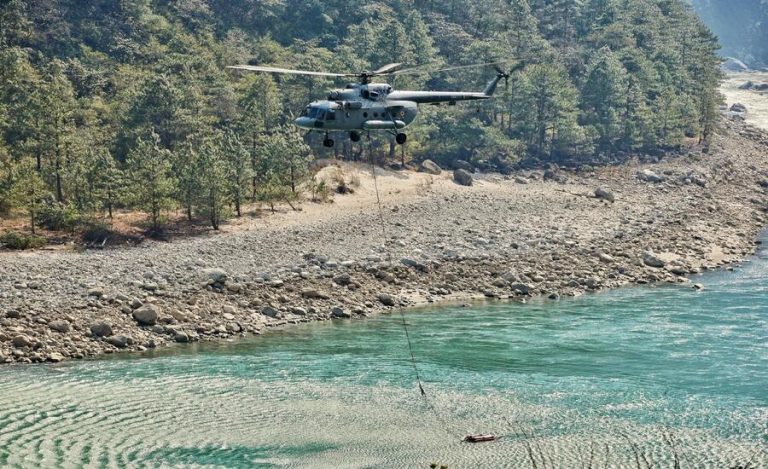
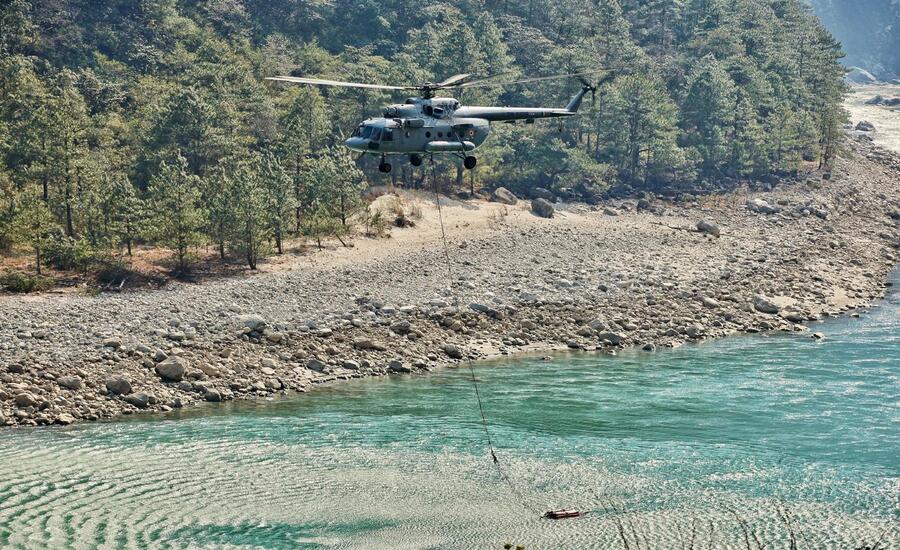
Operating at nearly 9,500 feet in the challenging terrain of the Lohit Valley, the deployed its Mi-17V5 helicopters to combat raging forest fires. Despite thin Himalayan air and unpredictable weather, IAF crews dropped 12,000 litres of water in a high-risk aerial firefighting mission, aiming to protect lives, forests, and fragile ecosystems in one of India’s most ecologically sensitive regions.
Details of MI-17V5 Helicopter Rescue in Lohit Valley
Arunachal Pradesh, known for its dense forests and biodiversity, faces recurring forest fires during the dry season. The Lohit Valley, located in eastern Arunachal, is particularly vulnerable due to steep slopes, limited road access, and strong mountain winds that allow fires to spread rapidly.
Forest fires here not only endanger wildlife and vegetation but also threaten nearby villages, water sources, and long-term ecological balance. Ground-based firefighting is extremely difficult, making aerial intervention the most effective option.
IAF Deploys Mi-17V5 Helicopters in High-Altitude Conditions
To tackle the situation, the Indian Air Force deployed helicopters, specially suited for multi-role operations including disaster relief.
Flying at nearly 9,500 feet, IAF crews carried out multiple sorties and dropped around 12,000 litres of water over fire-affected zones. High-altitude flying significantly reduces engine efficiency and lift capability, making such missions technically demanding and risky.
Yet, the pilots and crew executed the operation with precision, ensuring accurate water release over the fire hotspots.
MI-17V5 Helicopter Rescue in Lohit Valley: Challenges of Aerial Firefighting in the Himalayas
Aerial firefighting in the Himalayan region presents unique challenges:
- Rarefied air reduces helicopter performance
- Steep terrain limits safe flying paths
- Sudden weather changes affect visibility
- Strong winds can spread fires unpredictably
Despite these obstacles, the Indian Air Force maintained operational effectiveness, showcasing its ability to adapt to extreme environments while supporting civilian authorities.
Protecting Fragile Ecosystems and Local Communities
The Lohit Valley lies within a region known for rare flora and fauna. Forest fires can cause irreversible damage to biodiversity and soil quality, leading to landslides and long-term environmental degradation.
Battling forest fires at nearly 9,500 feet in Arunachal Pradesh’s Lohit Valley. #IAF Mi-17V5 helicopters dropped 12,000 litres of water in the rarefied Himalayan air, showcasing exceptional courage, precision and a commitment towards protecting lives and fragile ecosystems.… pic.twitter.com/5SXBm7M5he
— Indian Air Force (@IAF_MCC) January 29, 2026
By intervening quickly, the IAF helped limit the spread of the fire, protecting both ecosystems and human settlements. Such missions underline the Air Force’s expanding role beyond defence—acting as first responders during natural disasters.
Indian Air Force’s Expanding Role in Disaster Response
Over the years, the Indian Air Force has played a vital role in disaster management across India—whether during floods, cyclones, earthquakes, or forest fires. From evacuations to aerial supply drops, its rapid response capability often becomes the backbone of relief operations in remote areas.
This Lohit Valley operation adds to a long list of humanitarian missions, reinforcing the IAF’s commitment to national service beyond combat roles.
Read also: Inside the Indian Army’s ‘Bhairav’ Force: How 100,000 Drone Warriors Are Transforming Modern Warfare