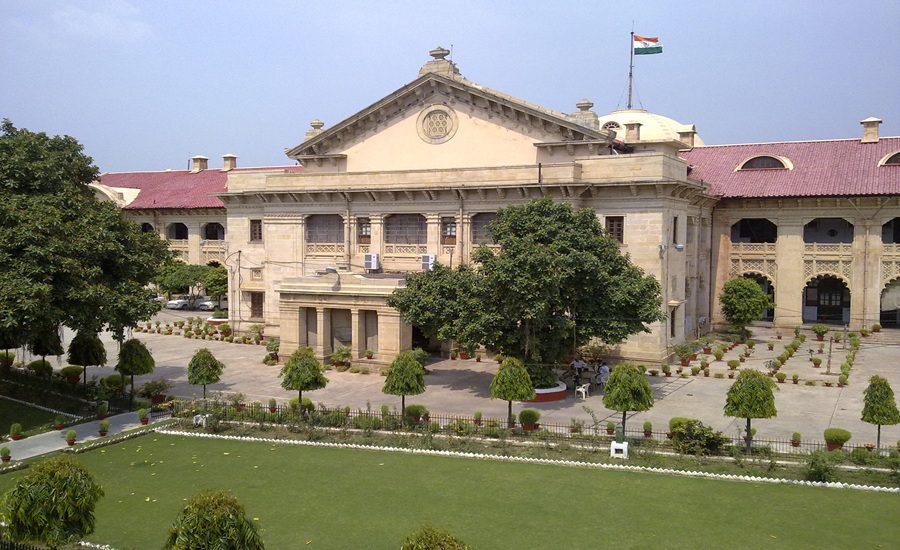
Lucknow: The Allahabad High Court has raised serious legal and constitutional concerns over punitive demolitions of private property in Uttar Pradesh, even after a Supreme Court order restricting such actions.
The Bench asked whether the State’s demolition actions are a “colourable exercise of power,” suggesting possible misuse of executive authority beyond constitutional limits.
This issue has intensified debates about legality, fundamental rights, and state accountability in India’s justice process.
Background of Punitive Demolitions in UP
Since 2024, the Supreme Court ruled that demolitions of private property by authorities must comply with strict procedural safeguards and cannot be used as punitive measures against individuals without due process. These guidelines—often referred to in media as the Supreme Court’s stance against “Bulldozer Justice”—emphasise the protection of citizens’ rights and require notice, reasonable opportunity, and fair hearings before any demolition.
Despite these directions, multiple reports suggest that demolition activities continue in UP, especially following criminal accusations against individuals, prompting legal challenges in the courts.
Punitive Demolitions in UP: Allahabad High Court Raises Critical Questions
In a hearing on February 2, 2026, a Division Bench of Justice Atul Sreedharan and Justice Siddharth Nandan flagged several worrying patterns related to recent demolition actions across the state.
Key Observations by the Court
- The State appears to demolish structures soon after alleged offences, sometimes with notices issued immediately after FIRs are filed.
- Notices for demolition were often combined with claims of fulfilling statutory requirements, raising questions about how genuinely legal procedure was followed.
- The Court noted the need to balance the government’s authority with citizens’ fundamental rights under Article 14 (Equality Before Law) and Article 21 (Right to Life and Personal Liberty) of the Indian Constitution.
Questions Framed by the Bench
- Has the Supreme Court’s judgment in November 2024 been fully complied with, especially regarding key procedural paragraphs?
- Does the authority to demolish truly justify immediate demolitions, or should the State act as parens patriae (protector of citizens)?
- Are post-offence demolitions a colourable exercise of executive power?
- How can courts balance statutory demolition powers with residents’ fundamental rights?
- Can a “reasonable apprehension” of demolition itself be a ground for legal action? If so, what standards apply?
Case Triggering This Proceedings
The current matter was brought before the High Court through a writ petition by Faimuddeen and others, who claimed that their relative, Aafan Khan, was named in an FIR under several laws including POCSO, IT Act, and the UP Prohibition of Unlawful Religious Conversion Act.
The petitioners alleged that although they were not co-accused, local authorities and groups colluded to seal and potentially demolish their properties in Hamirpur, including residential and commercial structures. They sought judicial intervention to prevent the authorities from executing the anticipated demolitions.
Punitive Demolitions in UP: Expert Arguments and Legal Representation
Senior Advocate SFA Naqvi, assisted by advocates Shamsuddin Khan, Syed Ahmed Faizan, and Zaheer Asghar, represented the petitioners in court.
The bench scheduled further hearing of the matter on February 9, 2026, committing to deeper consideration of the complex legal questions involving state action and fundamental rights.