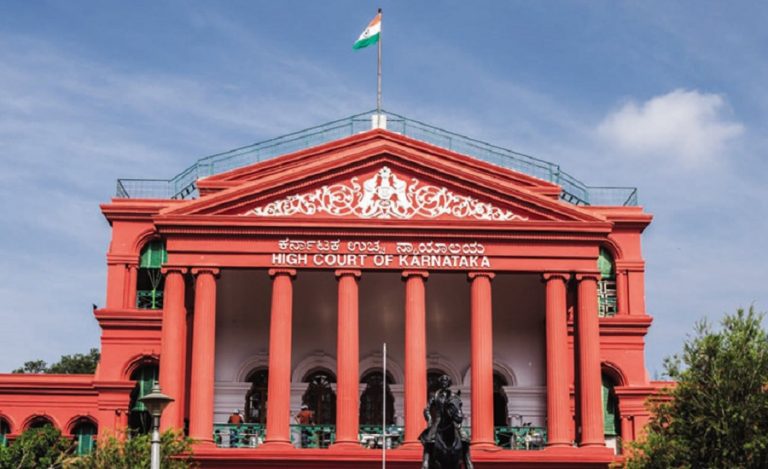
Jaipur: A Division Bench of the Rajasthan High Court , comprising Sanjeev Prakash Sharma (Acting Chief Justice) and Baljinder Singh Sandhu (Justice), upheld the appointment of Padmesh Mishra as Additional Advocate General (AAG) for the State of Rajasthan before the Supreme Court of India (SC).
The challenge against his appointment was based on the alleged failure to meet the minimum legal-practice experience prescribed under the Rajasthan State Litigation Policy 2018 (RSLP), 2018. The Bench, however, ruled that “the art of advocacy is not bound by years of experience,” and rejected a writ of quo warranto against the appointment.
This ruling reaffirms that expert legal representation is not strictly tethered to years on the bar — a judgment that holds significance for state-governments’ discretion in appointing law officers.
Background of the Padmesh Mishra AAG Appointment Case
On 23 August 2024, the Government of Rajasthan appointed Padmesh Mishra as Additional Advocate General to represent the State before the Supreme Court.
The appointment was challenged by another practicing advocate, Sunil Samdaria, who filed a writ petition (quoting Clause 14.4 of the RSLP 2018) arguing that Mishra did not have the “minimum of 10 years’ practice” as required under the policy.
According to the petitioner, Mishra had been enrolled in the bar only in 2019 — giving him around 5–6 years of legal practice, far short of the stipulated minimum.
The plea also questioned the addition of Clause 14.8 to RSLP 2018, contending that the clause was introduced hastily to favor Mishra and bypass the experience requirement.
Initially, a single-judge bench rejected the petition, holding that RSLP is only a policy — a guideline rather than binding law — and hence the 10-year experience requirement was not mandatory.
Key Legal Questions: What the Court Had to Decide in Padmesh Mishra AAG Appointment
- Is the post of Additional Advocate General a “public office” requiring statutory/constitutional safeguards? The petitioner argued that the AAG post is a public office, and therefore the minimum eligibility criteria under RSLP must apply.
- Is the 10-year experience requirement under RSLP mandatory for appointment? Or does the government retain discretion to bypass it based on expertise? The case also turned on whether the amendment (Clause 14.8) granting the State government discretion to appoint “any counsel” for AAG roles after evaluating expertise was valid.
- Whether courts should interfere via a writ (quo warranto) with executive-branch choices of law officers, especially where policy provisions are involved. The challenge raised fundamental questions about judicial review of executive appointments in the domain of government litigation.
Key Findings & Reasoning of Court
The Division Bench dismissed the challenge and upheld the appointment.
Its decision rested on the following key findings:
- The 2018 Litigation Policy is only a guideline, not a statutory rule with binding effect. RSLP was meant to direct how the State should function as a litigant, but was not intended to create enforceable legal rights.
- The Court emphasized that it is not for the judiciary to second-guess the State’s decision as to which advocate should represent it, particularly where the selection involves appraisal of expertise rather than mechanical eligibility.
- On the nature of the AAG post: unlike the post of Advocate General (AG), which has constitutional roots (Article 165), the Court held that AAGs and other government counsels are not “public office-holders” in the strict legal sense; rather, they are professional engagements on behalf of the State.
- The Court also rejected the argument that the recent insertion of Clause 14.8 in the RSLP was a surreptitious attempt to favor a particular individual. It held that such executive-policy changes are within the prerogative of the State government, and absent convincing evidence of arbitrariness or mala fide exercise, judicial interference would be inappropriate.
Most notably, the Bench declared:
> “Art of presentation of a case and art of advocacy is not bound by years of experience.”
The Court acknowledged that though years of practice might help in assessing a lawyer’s knowledge, they may not necessarily reflect advocacy skills, courtroom ability, or suitability to represent government litigants.
Accordingly, a writ of quo warranto — which challenges a person’s right to hold a public office — does not lie in this case. The appointment was therefore declared valid, lawful, and neither arbitrary nor whimsical.
Key Implications of this Judgment
- The ruling reinforces the discretion of state governments in choosing their legal representatives. Governments need not be strictly bound by rigid experience-thresholds when appointing AAGs or other counsels; they can evaluate on the basis of perceived merit, expertise, and suitability.
- It potentially opens up opportunities for younger or less-experienced advocates to serve in high-stakes government litigations — including before the Supreme Court — if they are deemed capable by the State.
- The judgment might invite a shift in mindset among lawyers: rather than merely chasing seniority or long bar-experience, there might be more focus on capability, readiness, and advocacy skills.
- However, it also raises concerns about transparency and fairness: discretionary appointments without fixed eligibility criteria may lead to perceptions (or risks) of nepotism, favoritism, or lack of equal opportunity for many advocates with long-standing practice.
- The Court’s reluctance to interfere signals judicial deference to executive choices in the domain of government litigation and legal representation.
- The ruling draws a clear distinction between guideline-policies and statutory law, underscoring that not every policy framed by the State acquires enforceability unless embedded in a statute or Rule made under constitutional provision.
Major Criticisms & Counterarguments (Voices of Concern)
While the judgment has been lauded by some as a progressive recognition of skill over seniority, several concerns remain voiced by critics:
Risk of arbitrary selections: With no compulsory yardstick, there remains a risk of selections based on personal connections rather than objectively measurable merit.
Erosion of equal opportunity: Lawyers who have spent years building practice may feel disadvantaged if young appointees with limited practice get high-profile government assignments.
Lack of transparency: Absence of clear eligibility norms or evaluation criteria may lead to opacity in decision-making, potentially affecting public trust.
Nepotism perception: Given that the appointee is the son of a sitting Supreme Court judge, some may view the decision as lending itself to bias or favoritism — even if legally correct.
Importance of Padmesh Mishra AAG Appointment Case for Future Appointments
The ruling may serve as a precedent or persuasive authority for future appointments of government counsels, both in Rajasthan and potentially other States.
Whenever litigation policies prescribe “minimum experience,” such prescriptions may no longer be treated as mandatory preconditions — provided the court upholds the discretion of the Executive to choose based on perceived competence.
Over time, we may see more young advocates in high-stakes government roles, possibly altering the traditional seniority-centric culture in government litigation.
However, whether this leads to greater fairness, efficiency, or transparency will depend largely on how States exercise their discretion — and whether they evolve objective, open criteria for selection.
Read also: Big Relief for Retirees: Supreme Court Flags Finance Act 2025 in Landmark Pension Parity Case