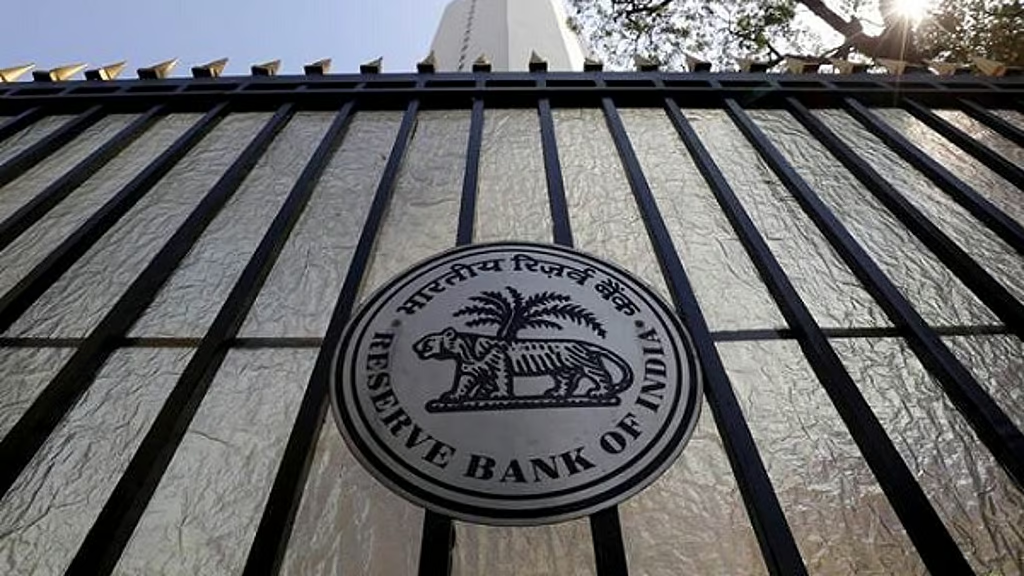
Mumbai: Reserve Bank of India on Friday injected ₹65,322 crore of transient liquidity into the banking system through a six-day variable rate repo (VRR) auction, aimed at easing short-term liquidity pressures in the financial system.
The move comes at a time when liquidity conditions have tightened due to advance tax payments and GST-related outflows.
Funds infused at 5.26% cut-off rate
According to the central bank, the liquidity was injected at:
- Cut-off rate: 5.26%
- Weighted average rate: 5.29%
The operation was conducted under RBI’s liquidity adjustment framework to ensure adequate availability of short-term funds in the banking sector.
Auction amount lower than notified ₹75,000 crore
Although the notified auction amount was ₹75,000 crore, actual acceptance stood at ₹65,322 crore, indicating lower uptake than the full offered amount.
This happened despite a recent decline in surplus liquidity across the banking system.
Banking system still remains in surplus liquidity
RBI data indicates that overall liquidity in the banking system remained in surplus at approximately ₹48,698.38 crore as of March 26.
The surplus, however, has narrowed in recent days mainly because of:
- advance tax collections
- GST payments
- temporary quarter-end cash outflows
Over ₹2 lakh crore infused recently through VRR auctions
In recent days, RBI has injected ₹2,08,208 crore through multiple VRR auctions of varying tenures to manage short-term liquidity requirements.
These operations are designed to address temporary mismatches in banking liquidity without altering the broader monetary stance.
₹3.5 lakh crore durable liquidity infused since January
Apart from short-term liquidity support, RBI has also infused ₹3.50 lakh crore of durable liquidity since January 2026through open market operations (OMO) involving purchases of government securities.
This larger liquidity support aims to ensure smooth transmission of monetary policy and maintain orderly market conditions.
Why VRR auctions matter
Variable Rate Repo auctions allow banks to borrow short-term funds from RBI against government securities, helping the central bank fine-tune liquidity conditions quickly.
These tools are especially important during periods of:
- tax payment cycles
- quarter-end balance adjustments
- temporary liquidity tightness
Focus remains on stable money market conditions
The latest liquidity operation reflects RBI’s continued focus on maintaining stable money market rates and ensuring sufficient liquidity in the banking system without creating excess volatility.