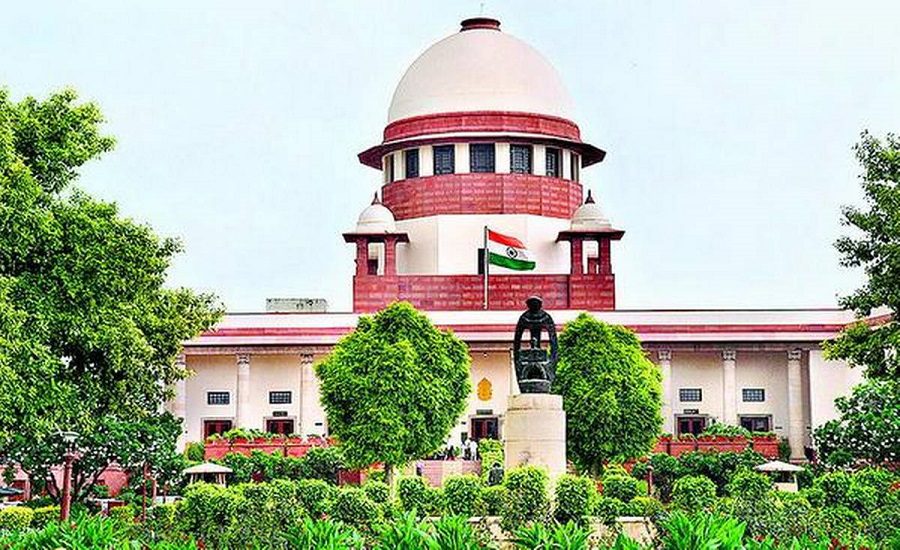
New Delhi: In a significant judgment impacting recruitment law and public employment across India, the Supreme Court of India has held that candidates listed in a waiting or reserve list do not have an automatic right to appointment if the validity period of the list has lapsed.
The ruling, delivered on 16 January 2026, reaffirms established service jurisprudence and clarifies the limited legal rights of wait-listed candidates under statutory recruitment rules.
Details of the Supreme Court Expired Reserve Lists Appointment Ruling
A Constitution Bench of the Supreme Court comprising Justice Dipankar Datta and Justice Augustine George Masih delivered the judgment in a batch of appeals filed by the Rajasthan Public Service Commission (RPSC).
Read also: Supreme Court Makes Police Reporting Mandatory in Student Suicide and Unnatural Death Cases
These appeals challenged earlier decisions of the Rajasthan High Court that had directed appointments from reserve lists in three recruitment processes despite the lists having expired.
The central dispute arose from:
- Junior Legal Officer (JLO) Recruitment 2019
- Assistant Statistical Officer (ASO) Recruitment 2018
- Junior Legal Officer Recruitment 2013–14
In each instance, candidates who were placed on a waiting or reserve list sought appointment after some selected candidates did not join the department or had their appointments cancelled.
The Rajasthan High Court had ordered the appointing authorities to consider these wait-listed candidates, but the Supreme Court has now overturned those directions.
Key Legal Principles Explained
The Supreme Court reiterated that a reserve or waiting list is not an independent or perpetual source of recruitment. Such lists are created to maintain a pool of eligible candidates for a limited time — usually defined by specific recruitment rules — but do not confer indefinite rights.
Appointment from these lists can be made only when the governing recruitment rules expressly permit it, and only within the statutory time frame.
Under the applicable Rajasthan State Service Rules, the validity of a reserve list is strictly limited to six months from the date the original select list is forwarded to the appointing authority. Once that period expires, the list ceases to be operative.
No “Indefeasible Right” to Appointment Post-Expiry
The Supreme Court emphatically ruled that mere inclusion in a reserve list does not give a candidate an indefeasible legal right to appointment after the list expires. In legal terms, a vested right in public employment arises only where statutory provisions or rules expressly grant it.
In this context:
- A reserve list candidate can be considered for appointment only during the validity period prescribed by law.
- Once the list expires, all legal claims to appointments based on that list fall away.
This reiterates long-standing service jurisprudence that a selection panel or reserve list is strictly time-bound, and cannot be extended indefinitely or used as a basis for appointments many years later.
RPSC’s Independent Right to Appeal Upheld
One of the legal questions before the Supreme Court was whether the Rajasthan Public Service Commission (RPSC) had the right to file an appeal against High Court directions ordering appointment from expired lists — especially since the State Government had not appealed.
The Court held that the RPSC is a constitutional authority under Articles 315 and 320 of the Indian Constitution, entrusted with conducting recruitment and advising the government on personnel matters.
As such, the Commission has the locus standi (right to be heard) to challenge orders that directly affect its statutory functions.
This is crucial because it allows constitutional bodies like state PSCs to defend the integrity of statutory recruitment procedures even in the absence of a state government appeal.
What are the Impact of Supreme Court Expired Reserve Lists Appointment Ruling
This judgment clarifies that recruitment authorities:
- Cannot be compelled to make appointments once a reserve list has expired.
- Must ensure that all recruitment actions including filling of vacancies are completed within the validity period prescribed by rules.
- This helps maintain orderly hiring cycles and prevents appointment claims from dragging on long after the recruitment process has closed.
Protection of Recruitment Integrity
The Court’s emphasis on the time-bound nature of reserve lists helps preserve the fairness of public employment processes. Allowing indefinite use of expired lists would:
- Obstruct new candidates preparing for future recruitments.
- Create systemic backlogs in filling vacancies.
- Undermine statutory recruitment cycles.
By grounding the rule in statutory validity periods, the Supreme Court ensures that recruitment remains transparent and predictable.
Balance Between Merit and Legal Certainty
The judgment also reinforces the principle that courts must interpret recruitment rules strictly and in accordance with statutory intent, not simply in a “practical or purposive” way to benefit individual litigants.
That means judicial intervention is appropriate only when the law clearly supports the candidate’s claim — which was not the case here.
Read also: Explained: Why the Supreme Court Is Seeking Government Views on Creamy Layer in SC/ST Reservations