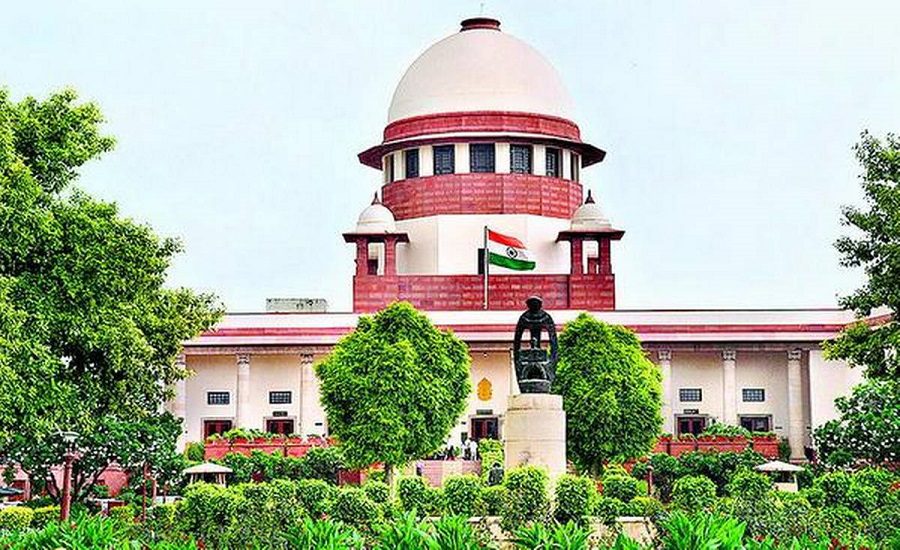
Bhopal/New Delhi: The Supreme Court of India on Thursday directed a Special Investigation Team (SIT) probe into the unnatural death of Nilesh Adivasi, a Scheduled Caste youth from Madhya Pradesh, who died under suspicious circumstances in July 2025. The order was passed by a bench comprising Chief Justice of India Surya Kant and Justice Joymalya Bagchi.
The decision comes amid conflicting claims from the victim’s wife and brother regarding the circumstances of his death. The Court emphasized the need for a fair and impartial investigation and sought the SIT’s report within one month.
SIT Composition and Investigation Guidelines
The Supreme Court directed the Director General of Police (DGP), Madhya Pradesh, to constitute a three-member SIT with the following structure –
- Head: IPS officer of MP cadre, rank of SP, with no roots in Madhya Pradesh
- Member 2: Young IPS officer, also not from MP
- Member 3: Preferably a woman officer, rank of DySP
The SIT will take over all records and FIRs related to the case and commence investigation immediately. The Court emphasized that the SIT must ensure the protection of witnesses, including the victim’s wife Rewa Adivasi and brother Neeraj Adivasi, to prevent any intimidation or influence.
Stay on Arrest of Accused
The Supreme Court granted an interim stay on the arrest of Govind Singh Rajput, the accused in the case, pending further investigation. The SIT may seek custodial interrogation if grave incriminating evidence is found.
During the hearing, it was clarified that the petitioner Govind Singh Rajput is not the MLA of the same name, avoiding confusion as there are two individuals with this name in Madhya Pradesh politics.
Senior Advocate Maninder Singh, representing Rajput, argued that the FIR was filed by the wife and that the brother was unrelated. The CJI noted the petitioner’s political influence could affect the case. Mr Singh clarified that the petitioner is not MLA Govind Singh Rajput but another person with the same name, causing confusion, as the MLA is a State Minister.
Conflicting Accounts of the Death
The case involves contradictory narratives –
- Wife’s version: The victim was allegedly harassed by a former Home Minister of Madhya Pradesh and associates, which drove him to suicide.
- Brother’s version: The accused, Govind Singh Rajput, and others are responsible for the unnatural death.
Chief Justice Surya Kant noted, “The ultimate issue is whether the victim committed suicide, was forced to commit suicide, or was murdered.”
The Court observed that the local police investigation had not reached a logical conclusion, highlighting the necessity for a neutral and professional SIT investigation.
Background of FIR
The FIR was lodged on September 4, 2025, at Malthon Police Station under –
- Section 108 IPC (abetment of suicide)
- Sections under SC/ST Act: 3(2)(i)(v)
The victim had been allegedly abducted, and videos surfaced showing him injured in a hotel room, intensifying concerns over foul play.
Supreme Court Order Summary
The Court’s directions include –
- Immediate constitution of a three-member SIT within two days
- SIT to take over complete investigation and FIRs
- Completion of investigation preferably within one month
- Interim stay on the accused’s arrest, with custodial interrogation possible only after court permission
- Protection of the victim’s family and witnesses
- Consideration of all possibilities surrounding the death, including suicide, abetment, or murder
Significance
The Supreme Court’s order reflects the judiciary’s proactive stance in cases where local investigations may be influenced by powerful individuals. By mandating an external, impartial SIT, the Court aims to ensure justice for the victim while upholding the rule of law.
Read also: SIT Prolongs Investigation in IPS Y Puran Kumar Death, Questions Remain Over SC/ST Act Compliance