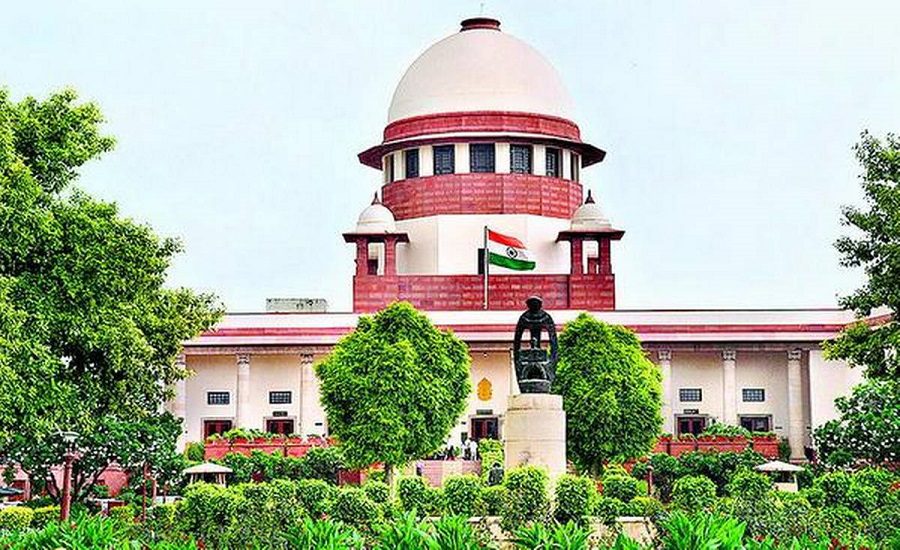
New Delhi: In a landmark procedural reform aimed at enhancing judicial efficiency and ensuring speedy justice delivery, the Supreme Court of India has issued a Standard Operating Procedure (SOP) that mandates strict timelines for the submission of oral arguments in all cases before the Court.
The SOP, released on 29 December 2025, comes into effect immediately and reflects the judiciary’s intensified focus on effective court management, equitable allocation of court working hours, and timely disposition of justice — a cornerstone of constitutional jurisprudence in India.
What are the Objective of Oral Arguments SOP of Supreme court
Judicial delays have long burdened India’s legal system, contributing to pendency, backlog, and prolonged uncertainty for litigants. The Supreme Court’s introduction of a timeline-based SOP specifically for oral arguments aims to curb procedural delays by setting clear expectations for counsels and bench alike.
The SOP is seen as part of a broader administrative reform under the guidance of Chief Justice of India Surya Kant, supported by all sitting Supreme Court judges, to instill a culture of punctuality and accountability in Court proceedings.
What are the Key Highlights of the New Oral Arguments SOP of Supreme Court
The SOP introduces three principal mechanisms designed to streamline oral advocacy and ensure uniform compliance:
1. Pre-Hearing Submission of Oral Argument Timeline
All Senior Advocates, arguing counsels, and Advocates-on-Record (AoRs) are now required to submit a proposed timeline for their oral arguments at least one day before the scheduled hearing.
These timelines must be filed through the Court’s online portal used for submitting Appearance Slips, ensuring procedural uniformity and digital tracking of submissions.
2. Limited Written Submissions Prior to Hearing
In addition to oral time estimates, counsels must also file a brief written note or written submission — not exceeding five pages — at least three days before the hearing date.
This written note, which must be served on the opposing party in advance, is designed to provide the bench with a clear framework of arguments, thereby reducing the need for lengthy oral discourse.
3. Mandatory Adherence to Fixed Timelines
Perhaps the most significant mandate in the SOP is that all counsel must strictly adhere to the timelines fixed by the Court and conclude their oral arguments within the allocated slots.
The Court has emphasized that any deviation from the fixed schedule will not be entertained, signaling a zero-tolerance approach to procedural overrun and court time misuse.
Contextual and Procedural Reforms Supporting the SOP
This SOP aligns with recent clarifications by the CJI that urgent case listings must be made only in writing, through official mentioning slips — and not by oral petitions in court.
The reform follows a notable practice in which benches of the Supreme Court have discouraged prolonged oral submissions after the Court has indicated its inclination or reached a tentative judicial view. Bench rulings have repeatedly underscored that continued insistence after the Court’s indication serves no purpose and affects courtroom dignity and decorum.
Judicial Efficiency: Balancing Client Duty with Court Time
The SOP reflects the Supreme Court’s acknowledgment of the delicate balance that advocates must maintain between vigorously representing clients and respecting the Court’s time constraints — a balance the judiciary considers crucial for orderly and dignified justice delivery.
By reinforcing the principle that litigation must be conducted within fixed procedural boundaries, the Supreme Court seeks to uphold the age-old legal maxim: “justice delayed is justice denied.”
What are the Implications of Oral Arguments SOP of Supreme Court
Legal experts view this SOP as a significant step toward improved judicial productivity and reduced pendency, especially in a context where delays have traditionally hampered litigant confidence and raised concerns about access to timely justice.
While this SOP directly affects Supreme Court proceedings, its impact may signal institutional expectations for other courts — including High Courts — to adopt similar procedural discipline in oral and written advocacy.