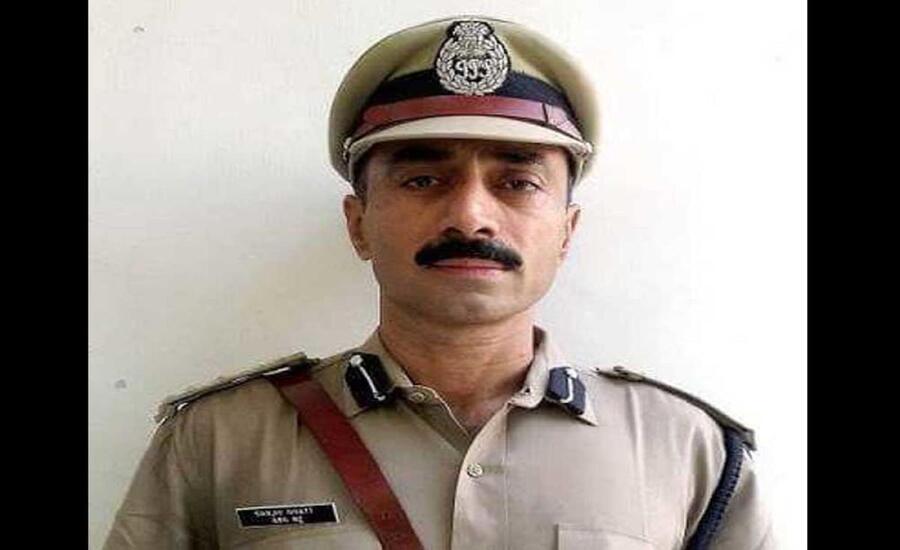
New Delhi: The Supreme Court of India on Thursday, December 11, 2025, refused to grant relief to former Indian Police Service (IPS) officer Sanjiv Bhatt by dismissing his plea to suspend the 20-year prison term he is serving in a 1996 drug planting case.
The top court’s refusal underscores the judiciary’s stance on upholding serious criminal convictions, even pending further legal challenges.
A bench comprising Justices J.K. Maheshwari and Vijay Bishnoi heard arguments from both sides before concluding that Bhatt’s request did not merit suspension of his sentence. The court suggested that the former IPS officer should instead seek an early final hearing of his appeal against the conviction in the normal course.
Background of the 1996 Drug Planting Case
The origins of the case trace back nearly three decades to 1996 in Banaskantha district of Gujarat, when Bhatt was serving as the District Superintendent of Police, Palanpur. According to prosecution allegations, Bhatt and other police officials framed a Rajasthan-based lawyer, Sumer Singh Rajpurohit, by planting opium in his hotel room and arresting him on drug possession charges.
The incident stemmed from a dispute over property between Rajpurohit and local interests. Prosecutors argued that the drugs were planted to pressure him in connection with that dispute. The Rajasthan police later clarified that Rajpurohit had been falsely accused.
Bhatt was ultimately convicted in March 2024 by a sessions court in Palanpur under multiple provisions of the Narcotic Drugs and Psychotropic Substances (NDPS) Act as well as sections of the Indian Penal Code (IPC), and sentenced to 20 years’ imprisonment.
1996 Drug Planting Case: Arguments Before the Supreme Court
As part of his plea for suspension of sentence, Bhatt’s counsel, Senior Advocate Kapil Sibal, submitted that his client had already undergone more than seven years of imprisonment in the case and therefore should be granted interim relief. The defence also highlighted that Bhatt’s conviction pertained to a non-commercial quantity of drugs.
Representing the State, Senior Advocate Maninder Singh strongly opposed the suspension, asserting that the conviction involved a conspiracy to plant opium exceeding one kilogram, a serious offence under the NDPS Act.
However, the Supreme Court bench was not inclined to entertain the request, prompting the rejection of Bhatt’s plea. Instead, the court encouraged Bhatt to pursue his legal remedies through an earlier final hearing of his appeal against conviction.
Concurrent Legal Troubles: Custodial Death Case
This is not the first time the Supreme Court has denied relief to Sanjiv Bhatt. He is also serving a life sentence in connection with a separate 1990 custodial death case from Jamnagar, Gujarat, in which he was convicted by a sessions court and the conviction upheld by the Gujarat High Court.
Earlier in April 2025, the Supreme Court had similarly rejected his plea for bail and suspension of sentence in that custodial death matter, reaffirming the high bar for interim relief in serious criminal convictions.
Legal Implications and Observations
The Supreme Court’s refusal to suspend Bhatt’s sentence in the NDPS case highlights several broader legal principles:
Stringent Approach Under NDPS Legislation: Convictions under the NDPS Act carry significant penalties and courts generally adopt a strict lens before granting suspension or bail due to the serious societal harms associated with narcotics offences.
Interplay of Multiple Convictions: Bhatt’s ongoing incarceration in the custodial death case added complexity to his plea, potentially influencing judicial caution in permitting interim relief.
Judicial Encouragement for Expedited Hearing: Rather than suspend the sentence, the court’s suggestion of an expedited hearing on the merits signals a preference for resolving substantive appeals over granting procedural reprieves.
Legal observers suggest the latest Supreme Court ruling will likely strengthen judicial resolve against interim relief in high-profile criminal cases unless compelling grounds are demonstrated.
Next Steps for Sanjiv Bhatt in 1996 Drug Planting Case
With the plea for suspension of sentence dismissed, Bhatt will continue serving the 20-year term in the 1996 drug planting case at the present location unless his legal team succeeds in:
- Securing an early hearing of his appeal against the conviction and sentence, or
- Obtaining relief through other higher judicial or constitutional remedies.
- Bhatt’s legal battles span decades and encompass several high-profile convictions, reinforcing both the longevity and complexity of his judicial proceedings.
Read also: Gujarat High Court Rejects Sanjiv Bhatt’s First-Class Prisoner Status Plea