https://indianmasterminds.com

ADVERTISEMENT
ADVERTISEMENT

Who Can Investigate Corruption Cases Against Central Officers? Supreme Court Explains the Law

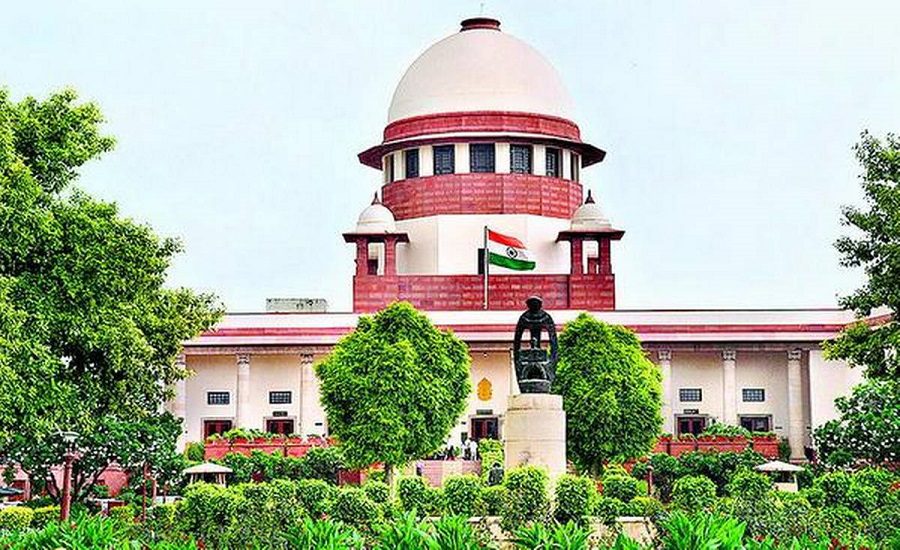
The Supreme Court of India has ruled that a state agency can investigate corruption cases against Central Government officers without prior CBI permission, reinforcing state powers under the Prevention of Corruption Act.
Supreme Court Ruling on Prevention of Corruption Act
Indian Masterminds Stories

New Delhi: The Supreme Court of India has delivered a landmark judgment affirming that a state agency can investigate corruption cases against Central Government officers under the Prevention of Corruption Act, 1988.

The verdict makes it clear that state police and anti-corruption units do not need prior approval from the Central Bureau of Investigation (CBI) before probing or filing charges against central government employees.

The ruling overturns the understanding that central investigative agencies have exclusive rights over such probes. It opens the door for state authorities to independently pursue corruption allegations involving central officers, so long as the alleged offences fall within territorial and statutory jurisdiction.

Background of the Supreme Court Ruling on Prevention of Corruption Act

The Supreme Court was hearing a challenge to a decision of the Rajasthan High Court that upheld the authority of the State Anti-Corruption Bureau (ACB) to register and investigate a corruption case against a central government employee stationed in Rajasthan. The petitioner had argued that only the CBI, under the Delhi Special Police Establishment Act, could investigate offences committed by central officers.

Read also: Disproportionate Assets Case: ACB Questions Relatives of Suspended IAS Vinay Kumar Chaubey Over Alleged Black Money

The Supreme Court examined the interplay between the Prevention of Corruption Act (PC Act), 1988 and the Code of Criminal Procedure (CrPC), 1973, holding that state police agencies have lawful powers to investigate corrupt conduct wherever it occurs within their territorial limits.

Key Legal Findings on Supreme Court Ruling on Prevention of Corruption Act

The Supreme Court clarified that the CBI does not have exclusive jurisdiction to probe corruption cases involving central government officers. This means states can act independently without waiting for a CBI sanction or directive.

2. Statutory Basis Under the PC Act and CrPC

The bench noted that the Prevention of Corruption Act, 1988, does not expressly restrict investigations by state agencies when the offence occurs within the state’s territorial jurisdiction.

Combined with Sections 4 and 156 of the Code of Criminal Procedure, which allow police to investigate cognizable offences, this empowers state police to act.

3. Validity of Chargesheets by State Agencies

Chargesheets filed by state agencies against central government officials will not be deemed invalid merely because the CBI was not involved in the investigation. This fosters greater autonomy for states in anti-graft actions.

What are the Implications Supreme Court Ruling on Prevention of Corruption Act

State police forces and state anti-corruption bodies such as the Anti-Corruption Bureau (ACB) can directly act against allegations of bribery and other corrupt practices by central officers within state boundaries. This adds speed and flexibility to law enforcement.

Reduced Dependency on Central Agencies

Previously, many states depended on the CBI to initiate and conduct investigations, which often led to delays or jurisdictional disputes. Now, state agencies can proceed on their own, provided they follow due procedure under law.

Potential for Increased Probes Nationwide

The judgment could lead to an increase in corruption probes involving central officials, particularly in states with robust anti-corruption units. States with well-staffed vigilance departments may now lead inquiries independently.
Read also: Drug Inspector Recruitment Explained: Why the Supreme Court Barred States From Changing Drug Inspector Qualifications


Indian Masterminds Stories
ADVERTISEMENT
ADVERTISEMENT
Related Stories
ADVERTISEMENT
ADVERTISEMENT
NEWS
Himachal-Pradesh-Police_resized
Himachal: Dharamsala Police Book IAS Officer, 7 KCC Bank Officials for Caste Discrimination
IFS Trainees Meet Odisha Chief Secretary
IFS Trainees Meet Odisha Chief Secretary Anu Garg in Bhubaneswar, Gain Insights on State Development and Governance
mou
Maharashtra Secures Record USD 173 Billion Investment MoUs on First Day of Davos 2026
Powergrid1 Power Grid
Power Grid Approves ₹913.99 Crore Investment for Cold Spare Transformers Across Regions
Tiger Deaths in Madhya Pradesh
Why Are Tigers Dying in MP? High Court Acts After 54 Deaths Spark Poaching and Safety Concerns
Supreme Court Ruling on Prevention of Corruption Act
Who Can Investigate Corruption Cases Against Central Officers? Supreme Court Explains the Law
India UAE FATF Cooperation
India and UAE Join Forces Under FATF to Crack Down on Terror Financing and Illicit Money Flows
DRDO Surya Laser Weapon
DRDO Surya Laser WeaponExplained: Range, Technology, Capabilities, and Strategic Impact
ADVERTISEMENT
ADVERTISEMENT
Videos
Desh Deepak Verma
The Dhaba Deal That Helped Flip The Ledger of UPSRTC 
Col M Shashidhar
 Lessons From Operation Sindoor & Operation Absolute Resolve 
Dr
Why an MBBS Doctor Chose IAS and Cleared UPSC in Her First Attempt | Dr. Akshita Gupta Video Interview
ADVERTISEMENT
UPSC Stories
IAS Avdhija Gupta UPSC
She Cried, She Learned, She Returned: The Unbreakable UPSC Journey of IAS Avdhija Gupta
From three consecutive Prelims failures to securing AIR 43, IAS Avdhija Gupta’s UPSC CSE-2024 journey...
UPSC Logo Explained
Why the UPSC Centenary Logo Matters: A Visual Guide to 100 Years of Civil Services
The UPSC centenary logo marks 100 years of India’s civil services. Decode its symbols and trace the journey...
Bhilai Steel Plant Diploma Engineer to CGPSC 2024 Deputy Collector – Yashwant Dewangan
Lost Father at 17, Worked Full-Time: Bhilai Steel Plant Diploma Engineer to CGPSC 2024 Deputy Collector – Yashwant Dewangan
Yashwant Kumar Dewangan, a BSP diploma engineer from Korba, overcame personal and professional challenges...
Social Media
One-Horned Rhino Calf
Watch: First One-Horned Rhino Calf of 2026 Takes Birth at Jaldapara National Park, IFS Officer Shares Rare Footage
A newborn one-horned rhinoceros calf was spotted at Jaldapara National Park on January 1, 2026. IFS officer...
venomous banded krait
Rare Night Encounter: IFS Officer Spots Highly Venomous Banded Krait During Forest Patrol, Internet Amazed
An IFS officer’s night patrol video of a highly venomous banded krait has gone viral, highlighting India’s...
elephant rescue Karnataka
Heroic Karnataka Elephant Rescue: How a 28-Hour “Impossible Mission” Became a Triumph of Wildlife Care, IFS Parveen Kaswan Shares Video
A trapped elephant was rescued after 28 hours in Karnataka through a massive, expertly coordinated Forest...
ADVERTISEMENT
ADVERTISEMENT
ADVERTISEMENT
Latest
Himachal-Pradesh-Police_resized
Himachal: Dharamsala Police Book IAS Officer, 7 KCC Bank Officials for Caste Discrimination
IFS Trainees Meet Odisha Chief Secretary
IFS Trainees Meet Odisha Chief Secretary Anu Garg in Bhubaneswar, Gain Insights on State Development and Governance
ADVERTISEMENT
ADVERTISEMENT
ADVERTISEMENT
ADVERTISEMENT
ADVERTISEMENT
ADVERTISEMENT
ADVERTISEMENT
Videos
Desh Deepak Verma
Col M Shashidhar
Dr
ADVERTISEMENT
ADVERTISEMENT