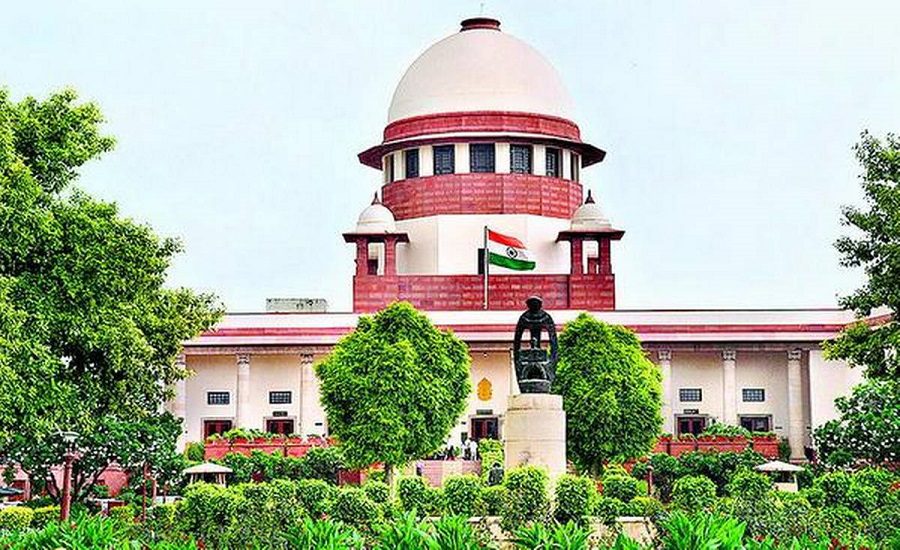
New Delhi: The Supreme Court of India (SC) on December 5, 2025 delivered a stern warning: if the Kerala State Government and the Governor of Kerala (in his capacity as Chancellor of state universities) fail to reach a consensus on the appointment of Vice Chancellors (VCs) for two State universities – APJ Abdul Kalam Technological University (KTU) and University of Digital Sciences Innovation and Technology (UDSIT) – the Court will step in and make the appointments itself.
Background of the Supreme Court vs Kerala Governor Row
The tussle over the VC appointments of KTU and UDSIT has its roots in a prolonged stalemate between the Kerala government and the Governor. In August 2025, the Supreme Court – confronted with this deadlock – formed a “search-cum-selection” committee headed by Justice Sudhanshu Dhulia, a retired judge of the Supreme Court, tasked with shortlisting candidates for the two Vice-Chancellor positions.
Read also: Kerala Government Suspends Two IAS Officers for Indiscipline, Including Popular ‘Collector Bro’
The Court’s 18 August order laid out a detailed procedure: the committee was to propose a panel of names (in alphabetical order), which would be sent to the Chief Minister for recommendation. The Chancellor was to appoint VCs strictly in the order of preference recommended by the Chief Minister – unless the Chancellor raised specific objections backed by reasons and evidence, in which case the matter would be referred back to the Court.
Despite this clear framework, the process stalled. The immediate cause was disagreement over the names. The Chancellor purportedly selected candidates from the list submitted by the committee, but the State Government (through the Chief Minister) objected to at least one name — triggering the current deadlock.
Earlier, in November 2024, the Chancellor had appointed interim VCs – Dr. K. Sivaprasad and Dr. Ciza Thomas – for KTU and UDSIT respectively; the appointments were challenged and subsequently quashed by the Kerala High Court for failing to adhere to statutory norms requiring recommendation from the State Government.
What Went Wrong: Governor’s Claim of “Incomplete Records”
A further complication emerged when the Governor — responding to the Court — claimed that the file forwarded by the State Government contained “incomplete records,” rendering him unable to act on the recommendations of the Search Committee. According to the Governor’s plea, essential documents were missing: evaluation criteria, the full list of applicants, their qualification certificates, eligibility details, as well as the Committee’s deliberation records and supporting material.
This assertion was met with sharp criticism by the Supreme Court. During a hearing on November 28, the bench — led by Justice JB Pardiwala — observed that the report of the retired judge was not a mere “ordinary piece of paper” and must be treated with due seriousness.
When asked why he had not examined the report, the Governor’s counsel replied that the “entire record” had not yet been received. The Court expressed astonishment at this claim, reminding that the file had already been forwarded by the Chief Minister after receiving the Committee’s recommendations. The bench ordered the Chancellor to take a reasoned decision on the VC appointments, failing which the Court would step in.
Supreme Court’s Ultimatum: Consensus or Court-Driven Appointment
With consensus unresolved, the SC today issued a clear ultimatum. Presiding justices — Justice Pardiwala along with Justice PB Varale — stated that if the State Government and the Governor fail to agree by Tuesday, the Court will itself appoint the Vice Chancellors.
The bench has scheduled the next hearing for Thursday, effectively giving both sides a narrow window to break the deadlock. Otherwise, the Court’s intervention will mark a significant departure from conventional deference to executive discretion in educational administration.
Meanwhile, the Chancellor had reportedly proposed two names — Dr. Ciza Thomas for KTU and Dr. Priya Chandran for UDSIT — but the State Government’s objection to Dr. Thomas compounded the impasse.
Implications of Supreme Court vs Kerala Governor Row for Governance, Academia, and Federal Norms
The Supreme Court’s readiness to directly appoint Vice Chancellors if consensus is not reached signals deeper implications:
Judicial intervention as fallback: Courts may evolve as de facto arbiters when constitutional offices like Governor and State Government repeatedly deadlock, especially in educational governance.
Erosion of traditional conventions: The Governor’s claim of incomplete records underscores tensions between constitutional formality and practical governance. The Court’s impatience suggests that procedural excuses will no longer suffice.
Impact on university functioning: Prolonged vacancies or administrative limbo hinder policy direction, academic planning, faculty appointments, research grants — ultimately affecting students and institutional efficiency.
Precedent for other states: The outcome could influence how similar standoffs are resolved elsewhere, especially where State governments and Governors (or Chancellors) clash over appointments.
What Happens Next: The Road Ahead
The next scheduled hearing on Thursday will likely be pivotal. If no consensus emerges by Tuesday — per the Court’s timeline — the SC may unilaterally appoint Vice Chancellors. Even if consensus is reached, the decision must be consistent with the Court’s August order and accompanied by reasoned justification.
Either way, the matter is likely to set jurisprudence for future university governance disputes, and could reshape the delicate balance between state governments’ prerogatives and constitutional oversight.
Read also: IAS vs. IAS Row: Kerala Government Suspends IAS Officers for Misconduct, Says Action is Not Final