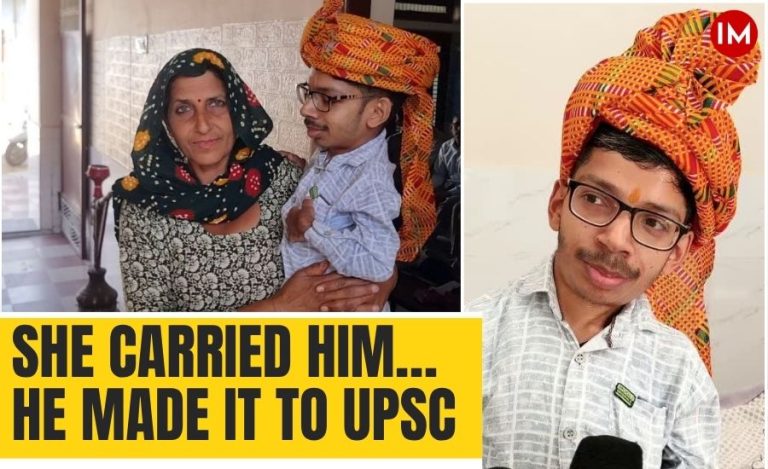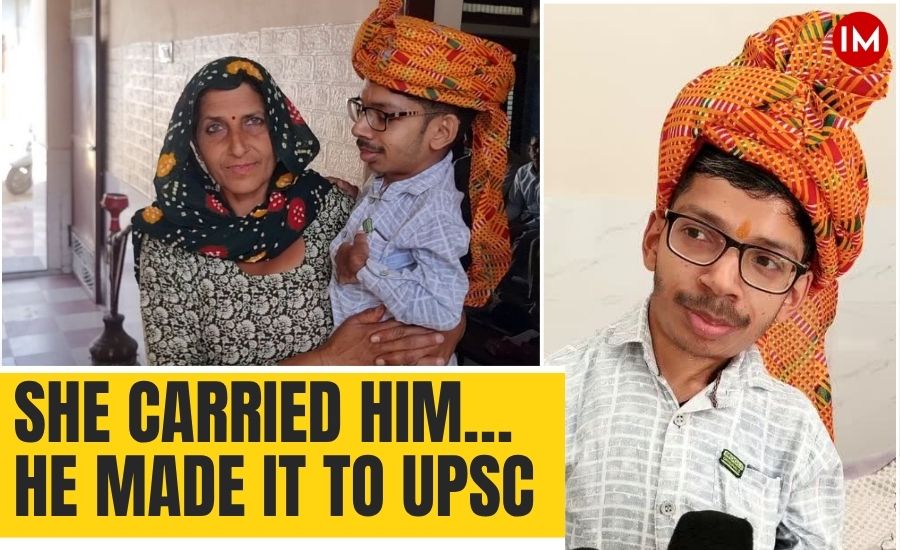
On a quiet March morning, when the results of the UPSC Civil Services Examination 2025 were declared, Nitish Kumar did not erupt in celebration. Instead, he paused. For a few seconds, he simply stared at his name on the list—All India Rank 847—and let the moment sink in. Then, almost instinctively, he folded his hands in gratitude.
But even before the reality of success fully registered, one thought rose above everything else—he had to tell his mother.
In many success stories, parents are a source of support. In Nitish’s story, his mother was not just support—she was his strength, his mobility, and, in many ways, his path forward.
A CHILDHOOD MARKED BY CHALLENGES
Born in Khatoti Kala village in Haryana’s Mahendragarh district, Nitish’s early years were not defined by carefree play or routine schooling. Around the age of four or five, he began experiencing severe physical difficulties. Walking, something most children take for granted, slowly became a struggle.
What followed was a long, uncertain phase. His parents, with limited resources, did everything they could—visiting doctors, seeking treatments, and holding on to hope. Yet, for years, there was no clear solution.
Relief came in an unexpected way. Acting on local advice, his family took him to a spiritual centre in Jodhpur. While not a complete recovery, his condition improved enough to allow him to focus on something that would eventually change his life—education.
LEARNING WITHOUT CLASSROOMS
Unlike most children, Nitish’s education did not begin in a classroom. It began at home.
Confined by physical limitations, he developed a quiet but powerful relationship with books. Newspapers became his window to the world. Without formal teaching, he slowly learned to read, absorbing information with curiosity and discipline.
His turning point came when visiting teachers, in the village for census work, noticed his eagerness to learn. Recognising his potential, they convinced his family to enrol him in school.
From Class 7 onwards, Nitish began attending a government school in his village. It was a late start by conventional standards, but he made up for lost time with determination. For senior secondary education, he joined a private school in Narnaul, where the administration extended financial support by waiving his fees—an act of kindness that played a crucial role in his journey.
He later pursued higher education in nearby institutions, eventually completing his postgraduate degree in Hindi. Each step forward was not just academic progress—it was a victory over circumstances that constantly tried to hold him back.
THE WEIGHT HIS MOTHER CARRIED
Behind every milestone in Nitish’s life is a story of extraordinary devotion—his mother’s.
For years, mobility remained a major challenge. Travelling to school, exams, or any necessary place was not a simple task. In many cases, it meant his mother physically carrying him.
This was not a one-time act of sacrifice; it was a routine. Day after day, year after year, she ensured he never missed an opportunity because of his condition. Alongside managing household responsibilities, she became his constant companion—helping him with daily activities, arranging study materials, and, most importantly, protecting his spirit from discouragement.
Her belief in him was unwavering. And for Nitish, that belief became a responsibility.
He did not just want to succeed—he wanted to make her sacrifices meaningful.
CHOOSING THE HARDEST PATH
For many aspirants, the UPSC examination is a dream. For Nitish, it became a mission.
He began preparing during his college years. However, the journey was far from smooth. Limited mobility meant he could not relocate to cities known for coaching institutes. Instead, he turned to online learning, adapting his preparation to what was possible rather than what was ideal.
His first few attempts did not go as planned. Failure came not once, but four times.
Yet, each setback became a lesson.
Initially, he struggled with understanding the depth of the examination—especially the importance of analysing previous years’ question papers and tackling the CSAT section effectively. Over time, with guidance from mentors, he refined his strategy.
He shifted his focus from collecting more study material to mastering fewer resources. Revision became his strongest tool. Instead of constantly chasing new information, he revisited the same content multiple times, strengthening clarity and retention.
Practice through test series helped him improve answer writing, while consistent reading of newspapers ensured he stayed connected with current affairs.
THE ROLE OF INNER STRENGTH
Beyond strategy and study plans, what sustained Nitish through years of preparation was inner stability.
Despite repeated failures, he rarely allowed self-doubt to take root. A strong support system at home, particularly his mother and extended family, kept him grounded.
He also turned to spirituality for balance. Teachings from the Bhagavad Gita, along with meditation and chanting, helped him maintain focus and composure during difficult phases.
This combination of emotional support and mental discipline created a resilience that no failure could break.
THE MOMENT THAT MADE IT ALL WORTH IT
When the results finally came, it was not just an individual achievement—it was a shared victory.
At the time, his mother was in the fields, working as she had done countless times before. When Nitish informed her about his success, the moment carried the weight of years of silent struggle, sacrifice, and hope.
For him, the rank was important—but what mattered more was what it represented.
It was proof that her efforts had not gone in vain.
LESSONS FROM THE JOURNEY
Looking back, Nitish identifies three key lessons from his UPSC journey.
First, patience is essential. Civil services preparation is not a sprint but a long, demanding process that tests endurance as much as intellect.
Second, failure is not the opposite of success—it is part of it. What matters is the ability to learn, adapt, and keep moving forward without losing confidence.
Third, discipline is non-negotiable. In a world full of distractions, staying focused on a clear goal makes all the difference.
A Vision for Service
As he prepares to enter the civil service, Nitish carries with him not just academic knowledge but lived experience.
He understands what it means to face limitations. He knows the importance of timely support. And he recognises how small interventions can change lives.
His approach to public service is rooted in empathy. He wants to remain accessible, responsive, and committed to addressing problems at the grassroots level.
For him, governance is not about authority—it is about responsibility.