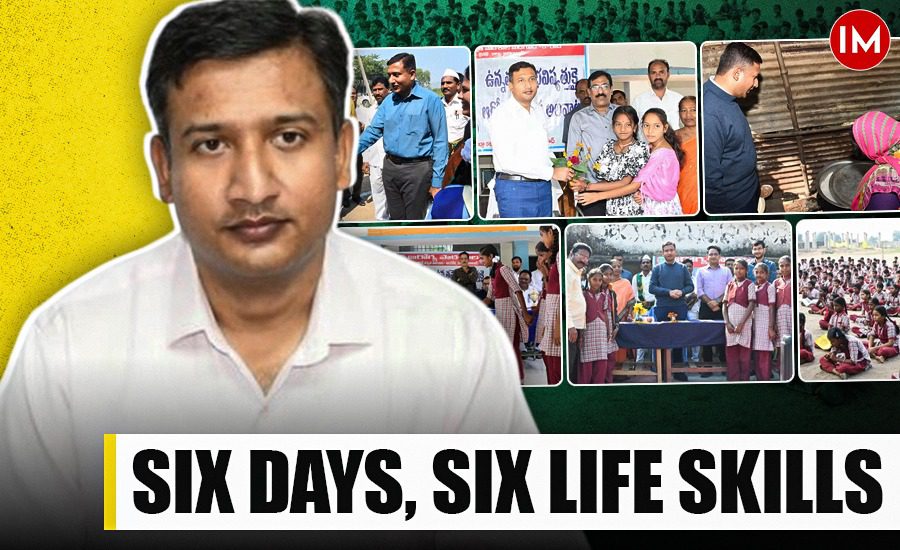
On a foggy Monday morning in Narnoor Block, before the school bell rings, a group of children gather near a hand pump. “Wash for 20 seconds!” one of them shouts, timing the others. A few years ago, this scene was unthinkable. Today, it is routine.
The change didn’t happen overnight. It began when Rajarshi Shah, IAS (2017 batch), Telangana cadre, took charge as Collector and District Magistrate and kept hearing the same worry from teachers and parents: children were falling ill often, struggling with Anemia, dealing with stress, or lacking basic hygiene and life skills.
“I realised we were teaching mathematics and science well, but not the science of living well,” Shah recalls during a conversation with Indian Masterminds. “If we don’t build healthy habits early, no other learning can stand strong.”
And that is how Aarogya Patashala was born.
A CLASSROOM FOR LIFE SKILLS
Aarogya Patashala is more than a school program. It is a weekly, structured wellness timetable woven into the school routine. The idea is simple: dedicate every day of the week to one vital life skill – health, hygiene, nutrition, stress management, drug awareness, seasonal disease prevention, and personal development.
“Children don’t just learn from lectures. They learn from practice, repetition, and stories. Aarogya Patashala brings all three together, every week, in a joyful way,” Mr. Shah says.
Each theme is assigned a day of the week, making wellness a continuous habit rather than a one-time campaign.
LEARNING LIFE SKILLS ONE DAY AT A TIME
Aarogya Patashala follows a unique weekly routine where each day is dedicated to one important aspect of a child’s well-being. The week begins with Health and Hygiene Monday, where students learn the basics of personal cleanliness, sanitation, and disease prevention. Teachers demonstrate proper handwashing, explain how germs spread, and show how a clean environment keeps illnesses away. For many children, this is their first exposure to real hygiene education, and schools report a visible drop in absenteeism.
On Nutrition Tuesday, the focus shifts to food and healthy eating. Children learn how anemia occurs, why iron-rich foods matter, and how a balanced diet keeps them strong. The impact is already evident. Naresh, a parent from Aada village, shares, “My daughter Nandini had anemia and ignored our advice. After the classes, she understood. Now she asks for sprouts herself.” Teachers say students who once paid little attention to meals now talk confidently about nutrients and food values.
Stress Management Wednesday brings calm into the classroom. Students practise simple breathing exercises, understand how to handle exam pressure, and learn to express their feelings. Many say they feel more relaxed and better prepared to face challenges.
On Anti-Drug Thursday, children learn the harsh truth about substance abuse through real-life stories and discussions. As Collector Rajarshi Shah says, “Preventive education is the strongest weapon. If a child knows how addiction destroys lives, they will think twice before saying yes.”
Seasonal Diseases Friday teaches students how to protect themselves from illnesses during different weather conditions, from mosquitoes in monsoon to flu in winter.
The week ends with Personality Development Saturday, a day for building confidence, communication skills, and leadership. As student Akshaya puts it, “Earlier I was shy. After speaking in the assembly, I slowly gained confidence.”
INNOVATION TANK
Perhaps the most exciting element is Innovation Tank, where students identify real problems in their villages and propose solutions across the six wellness themes. Selected ideas are mentored and supported by the district administration.
“When a child comes up with an idea to solve a community problem, it changes everything. They stop being just students – they become problem-solvers,” Shah says.
Some students have already proposed low-cost hygiene kits, anemia awareness posters, and nutrition gardens.
A MONTHLY FESTIVAL OF WELLNESS
Every third Saturday, government schools come alive with Aarogya Jathra, a colourful, bag-less celebration of health. The day is filled with skits, rallies, quizzes, games, and competitions around the six wellness themes.
Students lead awareness drives, demonstrate hygiene techniques, and perform small plays on nutrition and stress. The day ends with the announcement of Student Champions, who inspire others to follow healthy habits.
The Jathra has become a community event, with parents, local leaders, and teachers joining in.
HEALTH LESSONS THROUGH AIRWAVES
Narnoor has remote hamlets where access to expert sessions is difficult. To bridge this gap, the district launched Aarogya FM, a weekly radio program where doctors, teachers, mental health experts, and officials share health messages in simple language.
Schools tune in every week to listen. The sessions are also available as YouTube audio for wider reach.
“Even if a doctor cannot visit a school, their voice can. That is the power of Aarogya FM,” Shah explains.
CHANGING CHILDREN, CHANGING FAMILIES
The impact of Aarogya Patashala is visible not only in classrooms but in homes across the block. Parents say children remind them to wash hands, eat nutritious food, and keep surroundings clean.
One father shared, “Nandini changed, but she changed us too. Our home is cleaner. Our food is healthier. We feel more disciplined.”
Teachers say that the initiative has brought a cultural shift – students are more aware, more confident, and more responsible.
A MOVEMENT FOR A HEALTHIER FUTURE
Rajarshi Shah sees Aarogya Patashala not as a one-year project but as a long-term movement. “My dream is simple – to create a generation that grows up healthy, confident, and ready for life. Aarogya Patashala is our first step towards that future,” he says.
That future has already begun. Every week, every day, children learn lessons that will stay with them for life. And as they carry these habits home, the ripple effect continues – quietly, powerfully, and with hope.