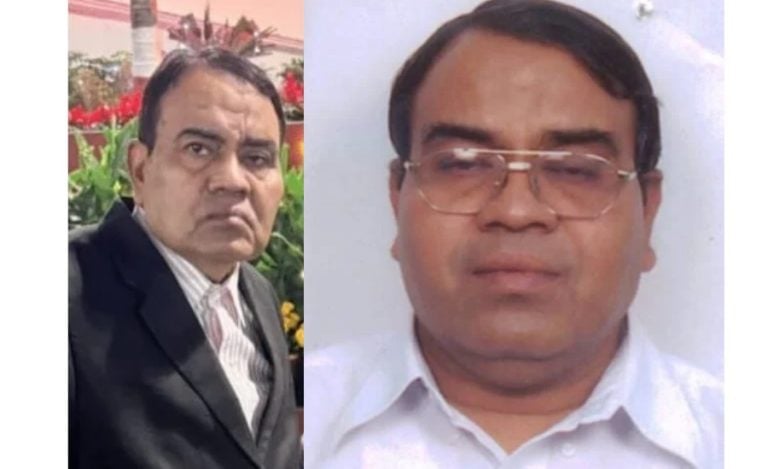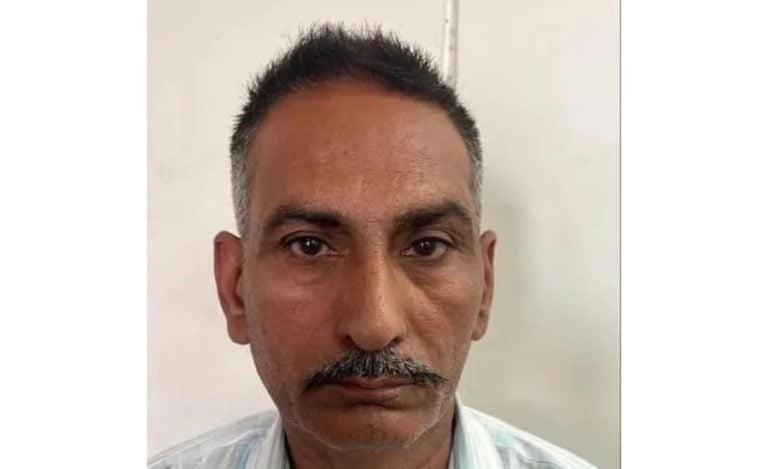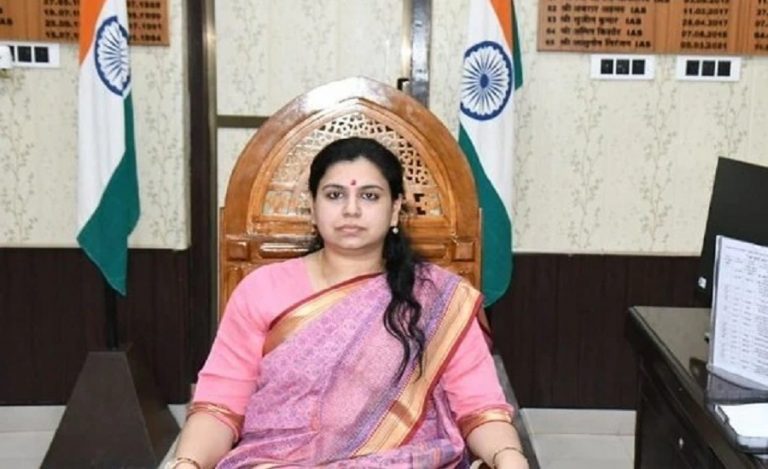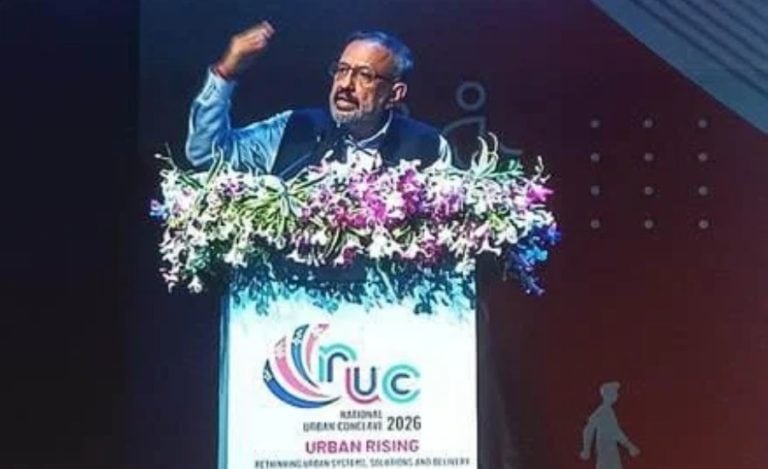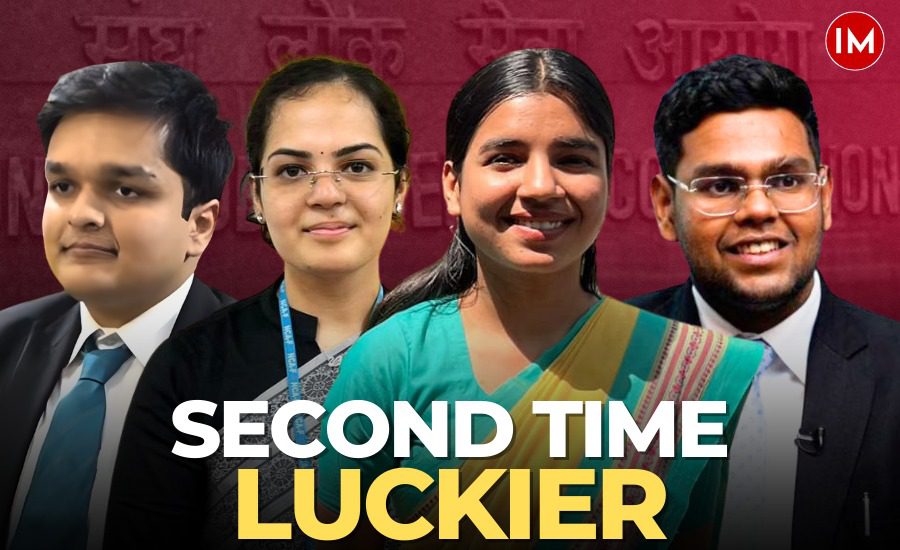
But beneath the excitement surrounding the new toppers, the results revealed a quieter but deeply revealing trend – 239 candidates selected in the 2025 list had already secured ranks in the 2023 or 2024 civil services examinations and had returned to improve their position.
That means nearly one out of every four candidates recommended by UPSC this year had already cracked the exam earlier. For lakhs of aspirants who prepare for years hoping to clear the exam once, this pattern raises an intriguing question:
Why do candidates who have already succeeded once often succeed again? The answer lies in the unique psychology and structure of the civil services examination.
The Story of Rank Improvement
For many aspirants, clearing UPSC even once feels like reaching the summit of a mountain. But for some, that summit becomes merely a base camp.
Take the example of Shambhavi Tiwari. In the UPSC Civil Services Examination 2024, she secured AIR 445, which placed her in the Indian Railway Traffic Service (IRTS). For most candidates, that would have been the end of a long journey. But Shambhavi chose to attempt the exam again. A year later, she returned stronger and secured AIR 46 in UPSC 2025, dramatically improving her position in the merit list.
Her story is not an exception. It reflects a broader culture within the UPSC ecosystem — the phenomenon of “rank improvement.”
In fact, six of the top 20 rankers had already been selected in previous attempts and were serving in different government services. This is the third time that AIR 3. Akash Dhull got selected in UPSC CSE. In 2023 he got 342nd rank, which he improved to 295 in 2024.
Similarly, AIR 5 Ishan Bhatnagar had secured 276 rank in 2023 but could not get in the next year. AIR 6, Zinnia Aurora, had secured 156th rank last year, while AIR 9, Astha Jain, like Akash Dhull, got selected for the third year in succession, scoring 131 and 186 in the previous two years. AIR 16 Monika Srivastava had clocked the 455th rank in 2023, while AIR 20 Ravi Raj had scored the 182nd rank last year.
Another example is Dev Dudeja from Uttar Pradesh, who cleared the exam again with a much better performance. In one attempt he secured AIR 327, which gave him entry into the Indian Revenue Service (IRS). But he continued preparing and in the next cycle improved his performance to AIR 152, moving significantly higher in the merit list.
Similarly, Ananya Rana offers another illustration of how repeated attempts can transform results. She had earlier secured AIR 280 in the 2023 examination but returned with stronger preparation and achieved AIR 60 in UPSC 2025, entering the top hundred.
Stories like these show that the civil services exam often rewards learning and iteration rather than one-time brilliance.
Cracking the UPSC Code Once
The three-tier Civil Services Examination is widely considered one of the toughest competitive exams in the world. Each year over 10 lakh aspirants apply, but fewer than 1,000 candidates finally make it to the merit list. Each stage demands different skills.
Prelims tests speed and conceptual clarity and is the toughest to clear. Out of 5.77 lakh students appearing for the prelims, around 14,161 candidates qualified for the Mains examination; that makes the success rate 2.45 per cent (only 1 in every 41 candidates could make it to the next round).
Mains tests analytical writing. Of these, 2,736 candidates passed the mains and reached the interview stage – a success rate of 19.3 per cent (one in every five was successful). The interview tests personality and administrative judgement. Finally, only 958 candidates were selected – meaning that more than one in every three candidates appearing for the interview made the cut.
For a first-time aspirant, navigating this system can feel like entering a maze. Repeat candidates, however, have already walked through that maze at least once and are familiar with the twists, turns and hurdles on the way.
They understand what UPSC examiners expect — how to structure answers, how to present balanced arguments, and how to manage time under pressure. In simple terms, they have already cracked the UPSC code.
The Marksheet Advantage
Another powerful advantage for repeat candidates is access to their detailed mark sheet. After the final results are declared, UPSC releases the marks obtained by candidates in each paper and in the interview.
This gives successful candidates a precise diagnosis of their strengths and weaknesses. For example: A candidate might realise that their essay score was only 110 marks, while toppers typically score 140 or more. Another candidate might find that their optional subject pulled down their overall score.
Armed with this knowledge, repeat candidates prepare with extraordinary precision. Instead of studying blindly, they focus on improving exactly those areas that cost them marks earlier. Preparation becomes surgical rather than general.
The Psychological Barrier Is Gone
Perhaps the biggest transformation happens inside the mind. For most aspirants, the first question during preparation is simple but daunting: “Can I clear UPSC at all?”
But once a candidate sees their name in the final merit list, that question disappears. Instead of chasing success, they start chasing rank improvement. This shift in mindset is powerful. Confidence replaces doubt. Strategy replaces experimentation. Calm preparation replaces anxiety. Many civil servants say that clearing UPSC once fundamentally changes how you approach the exam.
The Power of Institutional Networks
Repeat candidates also benefit from something that fresh aspirants often lack: institutional networks. Candidates who join services like the IRS, IRTS, IAAS or other Group-A services undergo training in government academies.
In these academies, they meet other officers who have already cracked the exam. Informal mentoring, discussion of answer-writing strategies, and sharing of notes become part of the ecosystem.
Preparation is no longer an isolated effort in a small room or coaching library. Instead, it becomes part of a community of people who understand the exam from the inside.
Financial Security Changes the Equation
UPSC preparation can be financially exhausting. Many aspirants spend years preparing without stable income, often relying on family support. This creates enormous psychological pressure.
Repeat candidates, however, usually already hold a government job.
They have a stable salary, institutional support and social security. Ironically, this financial stability often improves performance. When the fear of failure reduces, candidates write with greater clarity and confidence.
The Informal UPSC Ladder
Over the decades, an informal ladder has evolved in the civil services ecosystem. Many aspirants follow a pattern: The first selection is in a Central Service; the second attempt improves their rank to IRS or IPS, and they reach the IAS in their third or fourth attempt.
For some candidates, the first selection is not the destination but merely the beginning. This is why the UPSC merit list often features familiar names across multiple years.
The Deeper Lesson
At first glance, the dominance of repeat rankers may seem discouraging to fresh aspirants. But the deeper lesson of this trend is actually encouraging. The UPSC examination rarely rewards instant success. It rewards learning curves.
Candidates who improve their rank are often those who studied their previous mistakes carefully and returned with sharper preparation. In the end, the civil services examination is not just a test of knowledge. It is a test of resilience, self-analysis and persistence.
And that is why, year after year, the UPSC merit list tells a familiar story — of candidates who came back stronger the second time.
Ending This Era
Interestingly, the dominance of repeat rankers seen in the UPSC 2025 results may soon become a thing of the past. The Civil Services Examination 2026 notification has introduced a significant reform aimed at limiting repeated attempts by candidates who have already entered the civil services. Under the new rules, serving IAS and IFS officers are no longer allowed to appear in the civil services examination again unless they resign from service.
The restrictions extend in varying degrees to other services as well. For instance, IPS officers may appear again but cannot opt for IPS a second time, effectively preventing repeated attempts for the same service.
For candidates who join Group-A central services, the rules now allow only a single “rank-improvement attempt.” After that one attempt, they cannot appear in future civil services examinations unless they resign from the service they joined.
Candidates already allotted services through earlier examinations—such as CSE 2025 or before—have been given a one-time window to attempt the exam again in either CSE 2026 or CSE 2027 without resigning. However, once that opportunity is exhausted, further attempts will require resignation from the service.
Choose Carefully
The reform represents one of the most significant structural changes in the UPSC ecosystem in recent years.
The government believes this system created two major problems. First, it blocked opportunities for fresh aspirants, because candidates already in service continued to occupy seats in subsequent examinations. Second, it caused administrative complications, since officers undergoing training sometimes left midway after securing a higher rank in a later attempt. Now candidates will have to choose carefully.
Because under the new rules, rank improvement will no longer be an endless second chance—it will be a one-time gamble.