For centuries, human society has been organised around a simple idea: intelligence creates value. Those who were more intelligent—by birth, education, or effort—rose higher in society. Children were told to study hard. Students competed for ranks. Workers climbed career ladders. Nations invested in education believing that intelligence would translate into prosperity. This belief shaped aspiration. A young person could imagine a future better than the present because intelligence was respected, rewarded, and scarce.
This foundation is now breaking. The irresistible force and pace of Artificial Intelligence is disrupting this, along with many other accepted age-old paradigms and assumptions on which modern society, economy, work, governance and human aspirations have been built.
WHEN INTELLIGENCE STOPS BEING SPECIAL
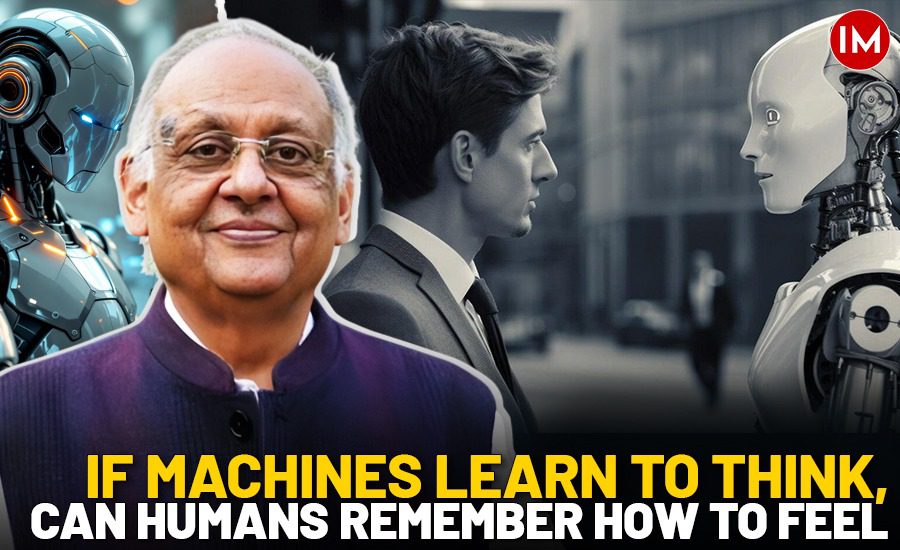
Artificial Intelligence changes something fundamental—not just jobs or productivity, but what it means to be human in society. For the first time in history, humans may no longer be the most intelligent entities on the planet. Even before Artificial General/ Super-Intelligence fully arrive, AI is outperforming humans in many cognitive tasks: analysis, pattern recognition, memory, speed, and increasingly, reasoning.
When this happens, the primary criterion on which society differentiated people collapses.
If intelligence no longer distinguishes humans from machines, and barely distinguishes humans from each other, then i) merit loses meaning, ii) hierarchies lose legitimacy, and iii) aspirations lose credibility. This is not a technical issue. It is a civilisational shift.
INTELLIGENCE, ASPIRATION, FUTURE
We began with a simple but powerful insight: aspiration is built on how society rewards intelligence, thereby creating an aspirational ladder—from manual work at the bottom to cognitive and white-collar work at the top—based on how intelligence is valued. A graduate hesitates to become a janitor not because the work is inferior, but because society has taught him that his intelligence should lead to something “better”. Over time, white-collar work became aspirational because it symbolised intellect being recognised and rewarded.
AI disrupts this relationship—quietly but decisively. As AI replaces large parts of routine and junior cognitive work—BPOs, clerical roles, accounting, research assistance, basic analysis—the middle of the ladder collapses, leading to aspirational unemployment. People are not merely jobless; they are future-less.
WHY THIS IS WORSE THAN PAST DISRUPTIONS
In earlier technological shifts, people moved from farms to factories, and from factories to offices. Each transition still rewarded effort and learning. This time, the transition is different.
AI removes the entry-level cognitive jobs, apprenticeship-style learning, and the slow process through which people develop judgment and understanding. When young people use AI to “get answers” without building mental models, even learning itself becomes shallow. Skill formation breaks down at the base. A society without learning pathways cannot regenerate itself.
THE ECONOMIC MODEL BREAKS NEXT
The modern economy works on a simple loop: you contribute skills → you earn → you consume → the economy sustains itself. AI breaks this loop. If large numbers of people cannot contribute economically—not because they are unwilling, but because machines outperform them—then:
i) They cannot earn
ii) Consumption falls
iii) Growth becomes fragile
iv) Handouts replace participation.
An economy of permanent handouts is not welfare. It is instability delayed.
THE PSYCHOLOGICAL FAULT LINE
Human beings can survive hardship—but only if they have hope. Religion, belief, and ideology have historically helped people endure uncertainty by promising meaning beyond logic. But what happens when a young person sees:
i) No job path
ii) No growth path
iii) No role in society
iv) No dignity attached to available work
Depression, anger, withdrawal and other mental health issues are inevitable. Increasing instances of extremism and violence are not random outcomes. They are symptoms of a system that has stopped making sense to its people. That is not an economic problem. That is an existential crisis.
THE ILLUSION OF CONTROL
There is another dangerous illusion. Humans may continue to believe they are in charge—politicians, bureaucrats, CEOs—but real decisions may increasingly be shaped by AI systems that:
i) Optimize outcomes
ii) Recommend actions
iii) Control information flows.
Formal authority may remain human, but we are fast moving towards a silent legitimacy crisis, because effective power may not be with humans.
WHY OLD IDEOLOGIES WILL NOT HELP
Capitalism, socialism, communism—these frameworks were built around human labour and scarcity. AI changes both: labour becomes less necessary, and unlimited intelligence brings abundance. Trying to fit AI into old ideological boxes will fail.
What matters now is not ideology, but fairness, dignity, and stability.
HUMAN VALUE BEYOND INTELLIGENCE
If intelligence no longer defines human worth, society must elevate what machines cannot replace easily: care, empathy, moral judgment, creativity, social bonding, meaning-making. This means redefining work, contribution and success.
Caregiving, teaching, mental health support, community leadership—these are not “soft sectors”. They are stability infrastructure for the AI age.
THE ROLE OF POLICY : THREE NON-NEGOTIABLES
First: Protect Social Stability
Acknowledge disruption honestly. Scale mental health support. Prepare communities for transition.
Second: Redefine Economic Participation
Recognise and support contributions beyond formal jobs. Preserve dignity even without traditional employment.
Third: Shape AI, Don’t Chase It
Promote human–AI collaboration. Prevent concentration of AI power. Keep humans meaningfully in the loop.
THE CHOICE BEFORE INDIA
AI will make nations richer. It will also make societies more fragile. India’s challenge is not whether it can adopt AI—it is already embracing it. The real question is: Can India redesign its social, economic, and psychological systems fast enough to keep its people whole?
If we succeed, India will offer the world a new development model for the AI age.
If we fail, we will face unrest not because people are poor—but because they feel irrelevant.
AI will not destroy our future; our failure to rethink success, work, and human value in the age of intelligent machines just might.