In the dense forests of Rourkela Forest Division, the rumble of trains once carried a grim reminder. The railway lines under South Eastern Railway cut across traditional elephant corridors, including the high-traffic Howrah–Mumbai Main Line and the Hatia–Bondamunda–Barsuan branch intersecting at Bondamunda.
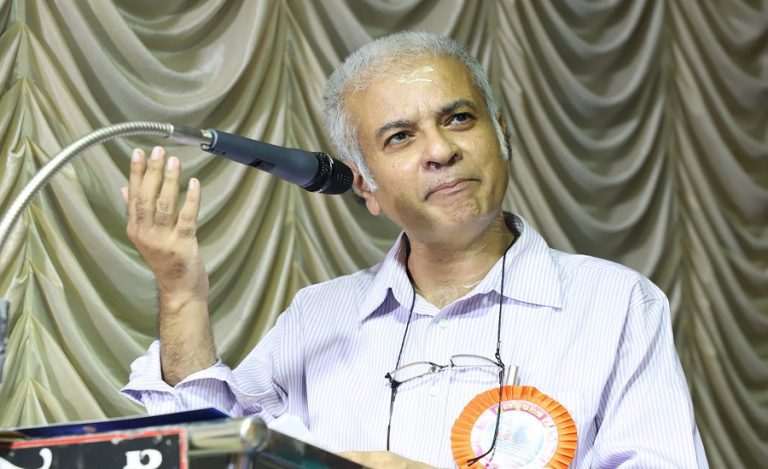
Until November 18, 2024, five elephants had died in train accidents in this division. For Divisional Forest Officer IFS Jasobanta Sethi, each incident was painful.
“It caused us deep distress. We knew elephants were moving at night, but we couldn’t detect them in time,” he shared exclusively with Indian Masterminds.
On average, 70 to 80 elephants move through these forest stretches. In darkness and dense foliage, manual surveillance was never enough.
Something had to change.
Read More : Meet Chandana Sinha: The RPF Inspector Behind 1,500 Child Rescues
NOVEMBER 19, 2024: WHEN AI ENTERED THE FOREST
On November 19, 2024, four AI-enabled Elephant Protection Towers became operational — the first deployment of such technology in Odisha.
They were strategically installed at:
- Mahipani and Sonakhan along the Howrah–Mumbai Main Line
- Dalakudar and Kucheita along the Bondamunda–Barsuan line
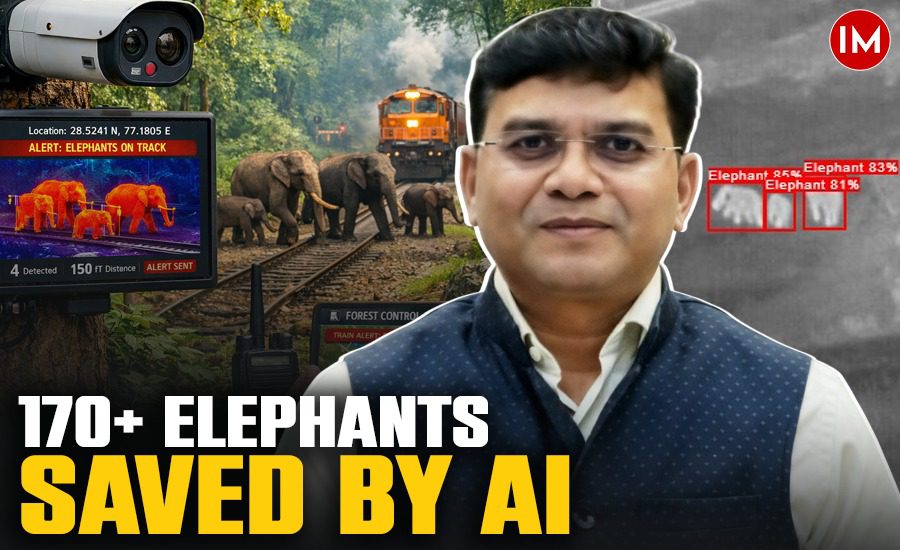
Each tower is equipped with advanced thermal imaging cameras, motion detection sensors, machine learning–based animal recognition systems, and real-time alert transmission to a centralized control room.
The AI camera coverage extends up to five kilometres. The moment an elephant enters the zone, an alert is instantly sent to the Forest Department control room at Bandamunda Railway ARM Office.
“The moment elephant movement is captured, we receive an immediate alert. We inform railway authorities, and trains are either slowed down or stopped right away,” Sethi explains.
880 ALERTS. HUNDREDS OF ELEPHANTS PROTECTED.
Between November 19, 2024 and December 31, 2025, the system generated nearly 880 alerts — each linked to elephant crossings ranging from single individuals to herds of up to 30.
A crucial incident occurred at Kucheita on November 26, 2025, when a single alert helped avert a potential collision involving nearly 30 elephants.
Impact by location:
- Kucheita: 34 incidents prevented, approximately 233 elephants protected
- Sonakhan: 6 incidents prevented, around 22 elephants safeguarded
- Mahipani: 4 incidents prevented, 6 elephants saved
- Dalakudar: 2 incidents prevented, 9 elephants protected
“During one year, around 850 alerts were received in our control room,” Sethi notes. “Our analysis shows that more than 170 elephants were directly saved from possible accidents.”
He recalls another tense moment:
“Just the previous night at 1:21 am, three elephants attempted to cross the tracks. The camera captured them instantly, and trains were stopped in time.”
TECHNOLOGY CREATING SAFER CORRIDORS
The initiative is being implemented in coordination with the Odisha Government’s Forest & Environment Department and Indian Railways. Upon receiving alerts, railway officials regulate speed or temporarily halt trains, preventing collisions while ensuring passenger safety.
Human-elephant conflict and train fatalities have long challenged forested railway corridors in Odisha. The Rourkela model now offers a practical solution — combining artificial intelligence with rapid inter-departmental coordination.
“This is about finding balance,” Sethi says. “By using Artificial Intelligence, we are saving elephant lives and ensuring safety for people as well.”
In forests once shadowed by risk, silent towers now scan the night — turning technology into protection, and alerts into life-saving action.
Read More: When Elephants Turn Killers: Inside Jharkhand’s Sudden Man–Animal Flashpoint