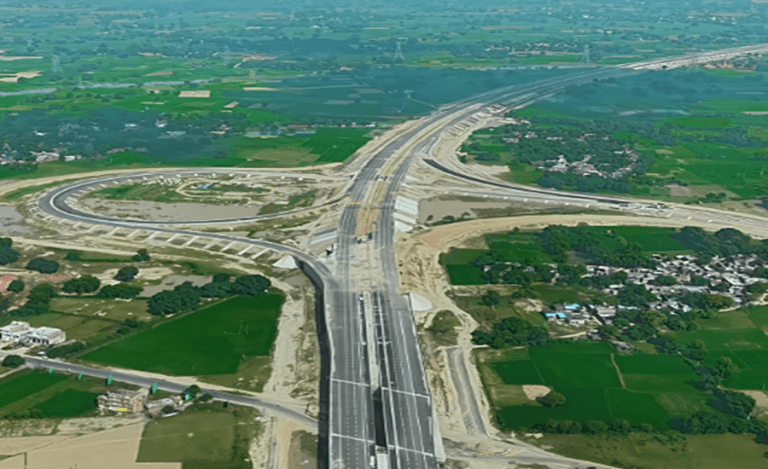
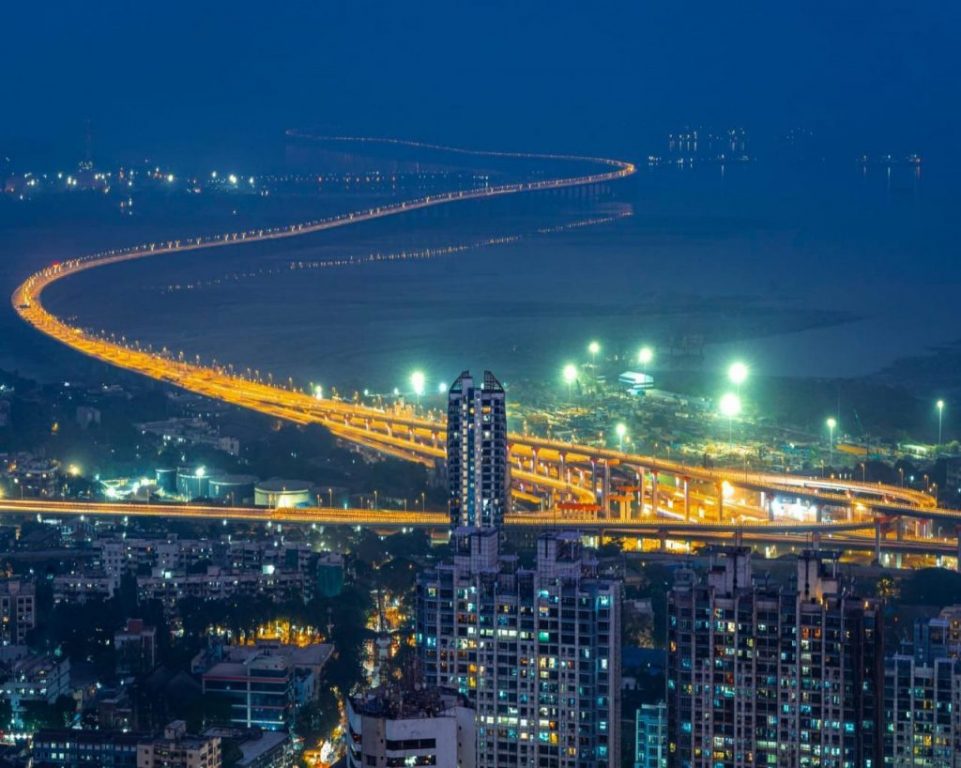
Recently, when Prime Minister Narendra Modi inaugurated the Atal Setu, the nation gazed in awe at the Mumbai Trans Harbour Link, the country’s longest sea bridge, which was completed nine months before schedule. Yet another such engineering marvel is getting readied to be unveiled – the Mumbai Coastal Road Project, that will have India’s first undersea tunnel, a 12.19-meter diameter tunnel situated under the Arabian Sea, 20 meters below its shore.
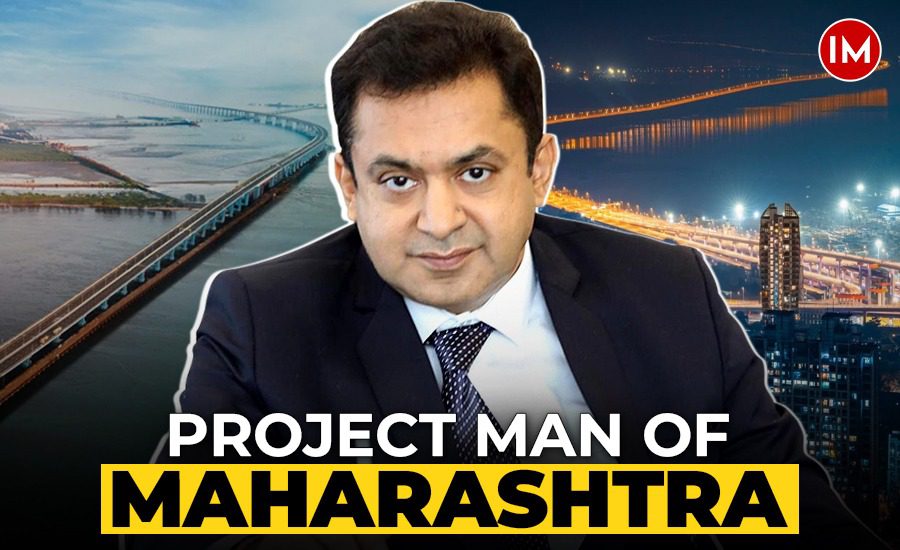
One of the guiding forces behind these projects is Dr. Sanjay Mukherjee, a 1996-batch IAS officer of Maharashtra cadre with a deep passion for nation building.
The youngest incumbent of each of the assignments he has held, Dr. Mukherjee’s signature is embedded in other major infrastructure projects too, from the Metro and the suburban railway projects to the Navi Mumbai International Airport.
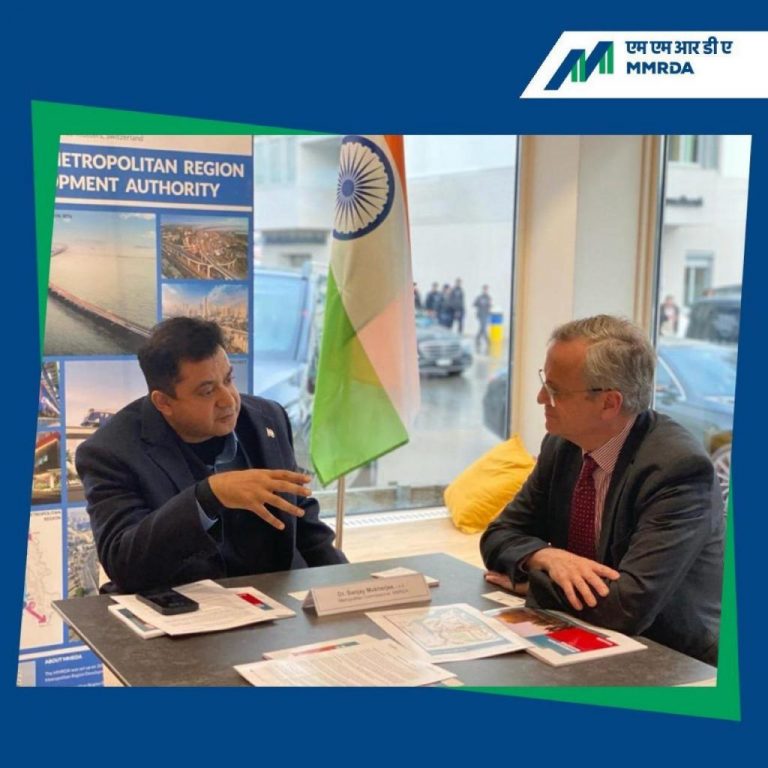
In an exclusive interview to Indian Masterminds, Dr. Sanjay Mukherjee, who is currently serving as the Commissioner of the Mumbai Metropolitan Region Development Authority (MMRDA), revealed his vision for taking the ‘region’ to a trillion dollar economy by transforming the Maximum City and its suburbs into thriving and sustainable metropolises through a plethora of innovative infrastructure projects.
Q. Ever since you joined as its Commissioner, the Mumbai Metropolitan Region Development Authority (MMRDA) has suddenly become more visible, with old projects getting completed and new ones being launched. Is this flurry of activities a result of your dynamism – your natural working style – or an urgent need to transform Mumbai within a speculated time; or both?
A. That’s for you to decide! However, ever since I took over the reigns at MMRDA, we are stringently working towards transforming the Mumbai Metropolitan Region into a convenient, resourceful, thriving, and sustainable metropolis through a plethora of innovative infrastructure projects. At the helm of MMRDA, my goal is to bring a perfect balance between efficiency and effectiveness, as Mumbai needs both quick and long-lasting solutions with respect to infrastructure development.
Also, the MMR is a versatile region whose true potential for embracing sustainable growth is yet to be fully realised. Thus, at MMRDA, we are constantly reinventing ourselves and working dynamically to reshape the MMR into a symbol of sustainable development in the global arena. We feel fortunate to see our tireless efforts and futuristic directions recognized and I am confident that our pace will keep going up, duly contributing to the timely and successful completion of magnificent infrastructure projects from time to time.
Q. Sustainable urban development is your mantra. Please elaborate how MMRDA has been decongesting traffic and enhancing citizens’ lives under your leadership.
A. Though the MMR has the privilege of being one of the busiest regions in our nation, this brings with it its own set of disadvantages like traffic-related troubles, pollution, etc. Thus, in order to have a meaningful impact on the lives and livelihoods of the MMR’s residents, we have chosen to embrace a progressive vision of sustainable development. Numerous projects were set in motion over the years with the sole purpose of elevating the proficiency of the MMR’s transportation infrastructure.
For instance, the proposed 337 km long Metro network will rise up to become a prominent mode of transportation between the districts of the MMR and continue its noble duty of decongesting traffic in the roadways on a grander scale. This humongous network of the Maha Mumbai Metro is a huge leap towards sustainability, taking us a few steps closer to achieving our futuristic dream of affordable yet comfortable public transportation for all. Furthermore, several infrastructure projects are in the pipeline, dedicated to regions in and around the MMR, each progressing at a swift pace to serve the citizens of the MMR at the earliest possibility. From Atal Setu to the Maha Mumbai Metro, from the Orange Gate Tunnel to the Thane Borivali Twin Tunnels, to small measures to decongest BKC, MMRDA’s expansive vision for the MMR is already making waves in transforming the lives of Mumbaikars. Therefore, I believe it is safe to say that the future is bright, and the future is the MMR.
Q. After Atal Setu, India’s longest sea bridge, now the Coastal Road, that has an undersea tunnel, is going to be inaugurated. Can you take us on a whirlwind tour through it so that we know what makes it so unique and how it will benefit Mumbaikars.
A. The Mumbai Coastal Road Project is a visionary project and I had the privilege of leading it during my stint at the BMC from the project development, designing and tendering stage, till the commencement of work. This game-changing project connects South Mumbai to North Mumbai, via reclamation, sea bridges and sea links. The Southern Part, from Princess Street Flyover to Worli, is mainly on reclamation, with India’s first undersea tunnel and interchanges at Priyadarshini Park, Haji Ali and Worli, and connects to the Bandra Worli Sea Link. The Northern Part, implemented by MSRDC, shall connect the BWSL to Versova, and thereby make North South Connectivity seamless. The Coastal Road shall be connected later to the Atal Setu by the Orange Gate Tunnel at the Marine Drive end, and the Service Worli Elevated Corridor at the Worli end. Both of these works are in progress.
One of the noteworthy attributes of the MCRP is the 12.19-meter diameter tunnel that will be situated under the Arabian Sea, 20 meters below its shore. Phase I of the Mumbai Coastal Road (South) will link Shamaldas Gandhi Marg in the South and the Bandra-Worli Sea Link at the Worli end. Built with an objective to provide an effective alternate route for the traffic between North and South Mumbai, the Mumbai Coastal Road will offer substantial support to the immediate necessity for traffic decongestion in and around the MMR. Also, it will grant people the opportunity to travel from South Mumbai to Worli and vice versa in just 10 minutes, which is a major feat in relation to the elevation of connectivity. Furthermore, a consistent reduction in the consumption of fuel will be gifted day by day once the Mumbai Coastal Road is inaugurated, taking the MMR ahead in its journey towards a sustainable future.
Q. One noticeable thing in the last few weeks has been the department’s addressing of environmental concerns. The Thane-Borivali twin tunnel, for instance, will not only lessen travel distance for daily commuters, but also act as a wildlife corridor. How did you convince National Board of Wildlife to give permission, since this tunnel will cut through a Protected Area where wildlife thrives.
A. Every project that is being conceived within the scope of infrastructure development will have an impact on the environment, in one way or another. However, MMRDA clearly understands the imminent need for the preservation of the environment, and the effect of this pristine realization can be witnessed in every one of our modern-day projects. Our measures to protect the environmental welfare across the MMR go further beyond addressing the compliance requirements of the regulatory bodies.
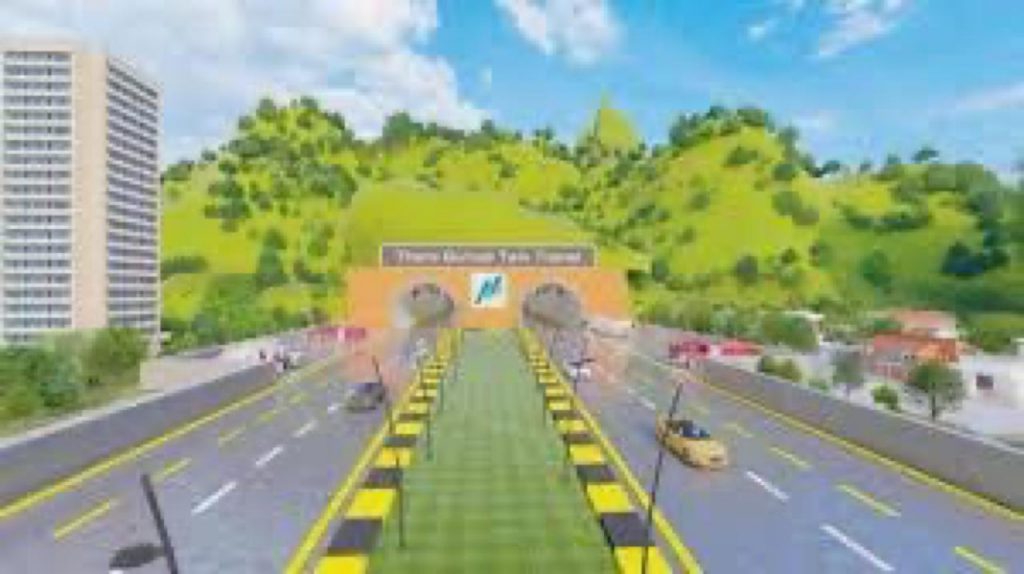
In particular, the tunnelling responsibilities of the project will not affect the ground conditions at the Sanjay Gandhi National Park. Also, the entry and exit points of the tunnel are designed to exist outside the boundaries of SGNP. The Tunnel Boring Machines employed in the tunnelling activities will not disturb the flora and fauna of the region, and the movement of wildlife will not be disrupted in any way as the tunnel will be situated underground. Furthermore, the possibility of wild animals falling or getting trapped inside the tunnel is completely avoided by the planned absence of any vertical ventilation shaft. These are some of the many brilliant measures we integrated into the plan at different levels to uphold our commitment to protecting the environment. We shall not be entering the SGNP for tunnel construction, and our mitigation plan is extremely robust. Hence, we were able to achieve the necessary clearance from the National Board of Wildlife.
Q. You are a fine example of a bureaucrat maintaining a healthy work-life balance, which you advocate strongly. You love to sing. Is singing a passion that helps you to unwind? Are you a trained singer?
A. I personally feel that a healthy work-life balance can be easily achieved if our work perfectly aligns with our moral values and personal aspirations. I’m pretty much married to my work too and it provides me with a strong sense of satisfaction, so I generally do not experience the need to unwind and take a break. Singing is an activity that I learnt at the so-called “Kishore Kumar Academy”, that is I have received no training of any sort and sing intuitively as I love music. I like to sing impromptu and without any preparation, and that’s when I suppose I give my best performance. I do have a YouTube Channel with around a lakh subscribers, and I do post some of the songs that I sing there occasionally.