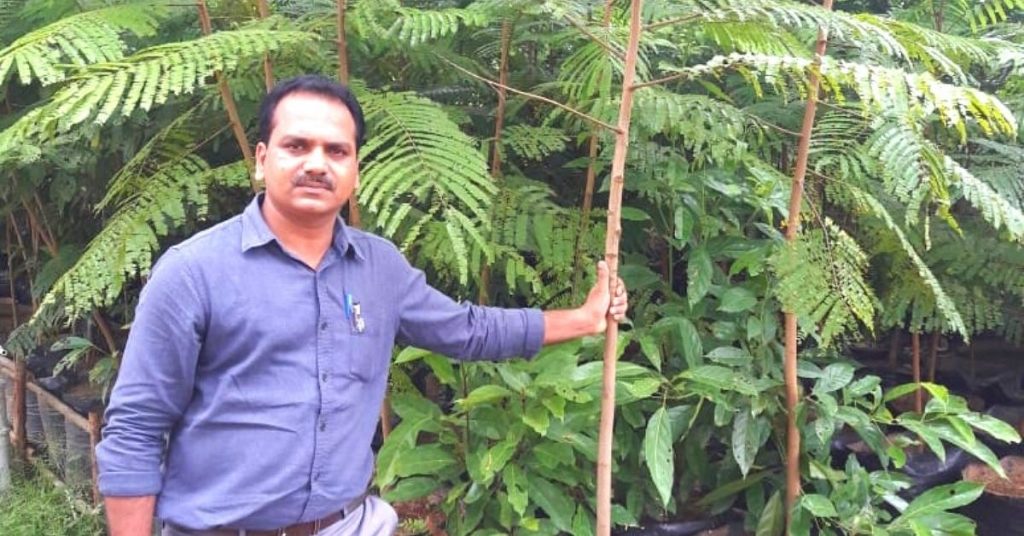
For mitigating the adverse impact of climate change and global warming, regular and quick afforestation at minimum expenditure has become a necessity. To meet this demand, an innovative technique of raising ‘Trees Banks’ has been developed by IFS officer Prasada Rao, Managing Director of Tripura Rehabilitation Plantation Corporation. By this method, green belts are created virtually overnight.
In an exclusive conversation with Indian Masterminds, Mr. Rao explained how these ‘tree banks’ would benefit the environment.

TREE BANKS
The present concept of “Tree Banks – An Innovative Technique Developed for Environmental Conservation by Quick Generation of Green Belts at Effective Cost” is aimed at delivering quick and effective services of afforestation at minimum cost. As a direct offshoot, it would help in increasing greenery on Mother Earth.
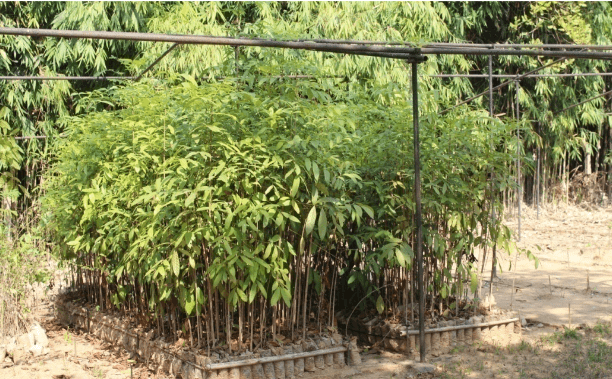
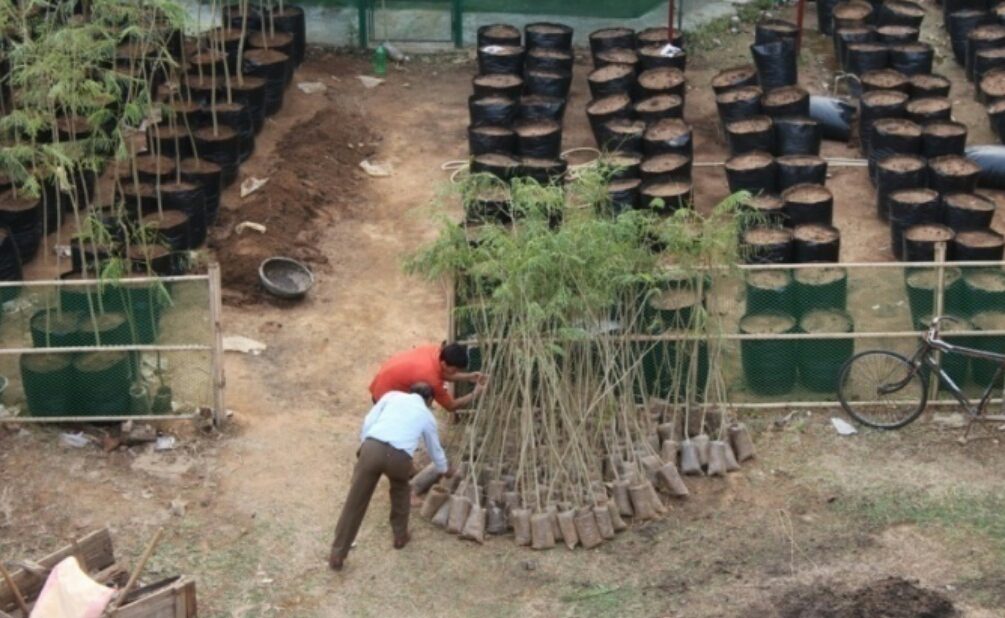
“It is a place, where trees of minimum collor girth of 20 CM and minimum heights of 12 feet are readily available to supply and transport for taking up of plantation to create greenery overnight,” said Mr. Rao.
HOW THEY WORK
This concept was conceived by Mr. Rao through the root spread analysis of a well-established naturally grown Mahogany tree of 15 feet height and 22 cm collor girth, which can withstand strong wind pressure.
Interestingly, it was found that its taproot is grown to a depth of 45 cm from the surface of the soil and its majority of fibrous roots are spread within the radius of 25 cm horizontally, occupying about 4 ft. soil.

“After taking these measurements, the size of the polybag with a sufficient thickness to last for four years, in which trees of this stature can be developed to raise tree banks, is determined. The size of the poly bag is standardized as 70cm x 77.5 cm with a 500-micron gauge,” Mr. Rao told Indian Masterminds.
Ultimately, after transplanting one-year-old seedlings in the standardized bag in a standardized potting mixer, a pole size tree of 20 cm color girth and 12 feet height are generated successfully within a maximum of two years.

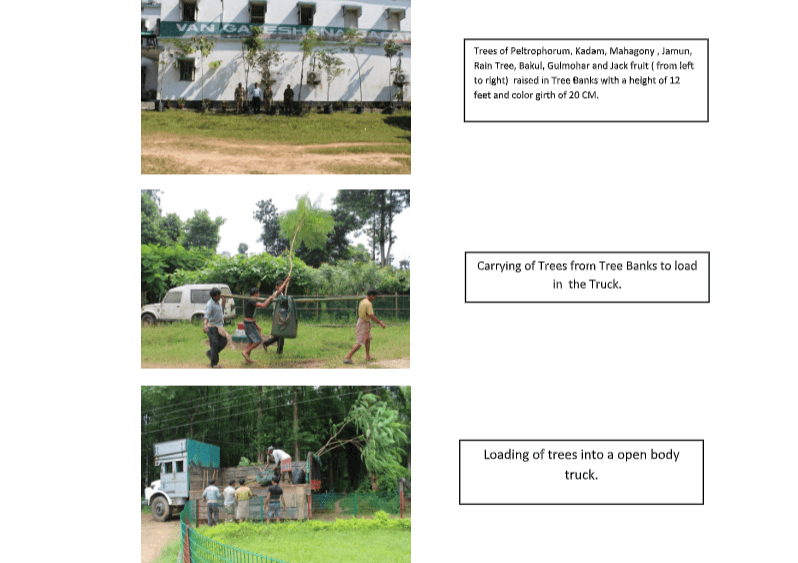
The trees are planted in the polybag for easy and quick transportation, whenever required. They are carried and loaded in open body trucks and delivered to the plantation site where the positioning of barren land is done, a day prior.
Furthermore, the tree is taken out of the poly-bag and planted into the soil, giving way to the formation of a green belt.
OBJECTIVE OF TREE BANKS
Establishing tree banks serve various objectives, which are:
- Raising trees (min 20cm collor girth and 4 mt. height) in a short period of two years, whose plantation requires no plant guard and foliage is above the browsing height.
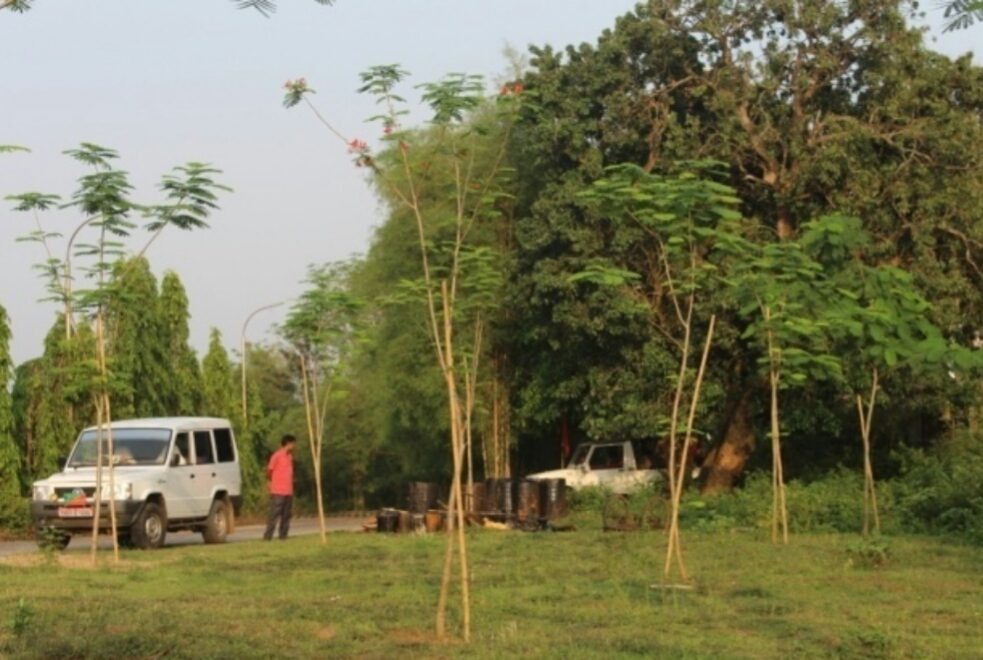
- Creation of greenbelts overnight with a 100% establishment rate.
- Effective and quick generation of green belts at very low cost along roadsides and avenue lands.
- Effective establishment of forests on the degraded lands and mining rehabilitation areas including on rocky soils.
- Creation of uniform plantations with well-maintained shape and size, especially for plantations of urban beautification.
- Reduction of cost of plantation to many folds lower by avoiding the cost of plant guard and fencing.
ADOPTED IN SEVERAL REGIONS
Says Mr. Rao, “With this concept, we are able to successfully generate trees with an average height of 12 feet and girth of 18-20 cm within the large size poly bags at a very economical cost within 2 years. By planting these readily usable trees, we can create green belts overnight, even on degraded lands.”
His brilliant ‘Tree Bank’ idea is also being adopted in several other regions across the country as well. It was first adopted in the field by the social forestry wing of the Tripura forest department, to raise roadside plantations on the way to ILS hospital in Agartala.
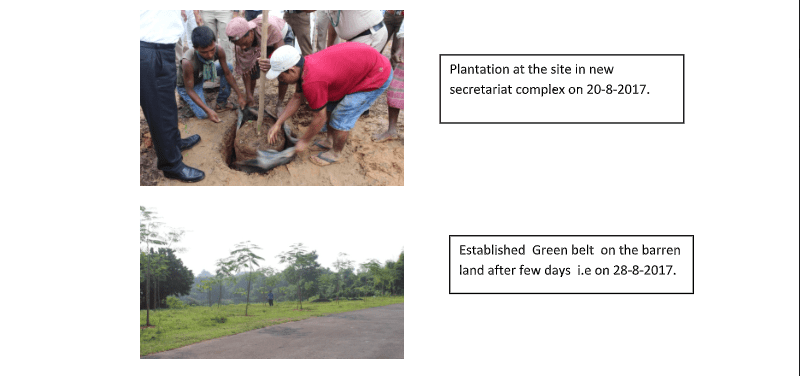
With the same technique, a stretch of about 30 km successful roadside plantation along the National Highway in Sephaijala district was developed in a short span of time by the forest administration.
Several schools, public places, and secretariat complexes have turned to ‘Tree Banks’ to get a supply of the trees and make their centers greener.
COST EFFECTIVE
The treebank method is more affordable and cost-effective than the traditional method using a fabricated iron plant guard. Where the traditional method costs Rs. 1400/plant, the treebank method costs only Rs. 350/plant.
No doubt IFS officer Mr. Prasada Rao’s initiative is successfully helping in giving a healing touch to our environment.