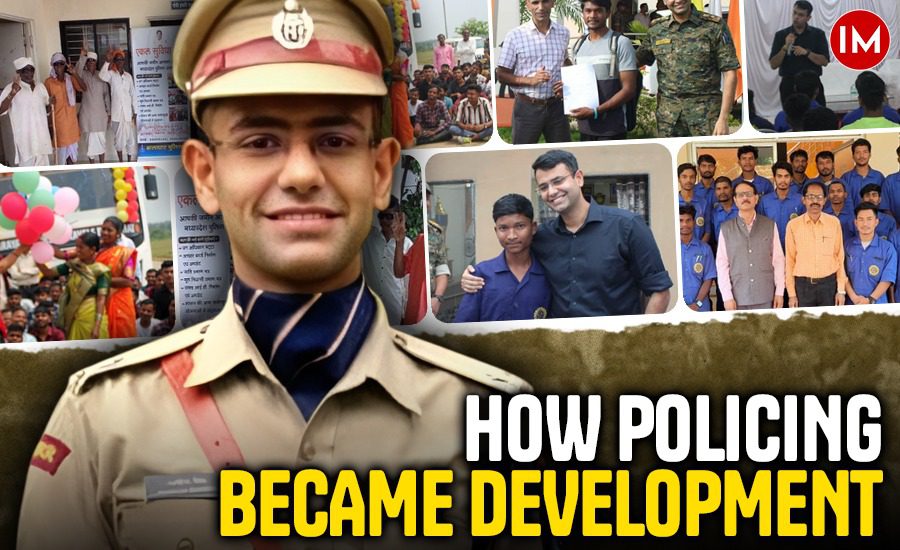
Balaghat, a district in Madhya Pradesh, is known not just for its lush forests but also as one of India’s most Naxal-affected regions. Amidst the challenges posed by extremist ideologies, one officer is redefining policing by turning fear into empowerment and ensuring that government services reach the most marginalized communities. IPS Aaditya Mishra, a 2018-batch officer of the Madhya Pradesh cadre and currently Superintendent of Police in Balaghat, has emerged as a beacon of this transformative approach.
Indian Masterminds recently interviewed Mr Mishra to understand how he took up the initiative, implemented it, and what its impact has been.
A Mission to Serve the Marginalized
For IPS Aaditya Mishra, policing is not just about law and order – it is about inclusion, dignity, and development. His mission is clear: “If people cannot reach the administration, the administration will reach them.” With this philosophy, he has focused on empowering tribal and marginalized communities by making welfare rights and essential services accessible at their doorstep.
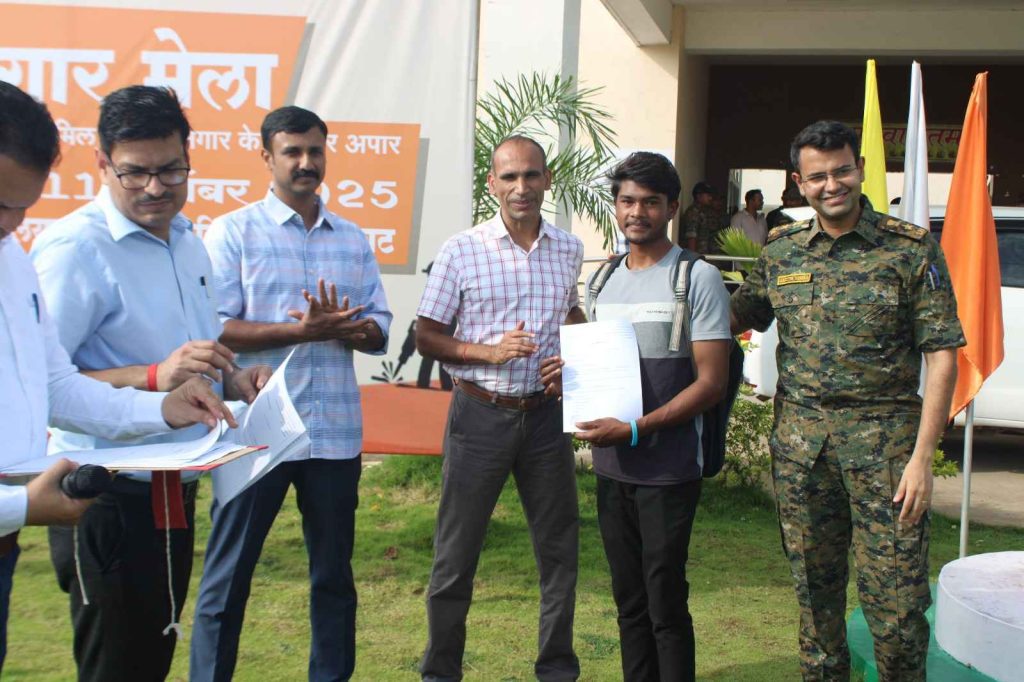
In Balaghat, where access to government services is hindered by distance, bureaucracy, and complex legal procedures, Mr Mishra recognized that development needed a new approach – one that went beyond enforcement to community engagement.
Ekal Suvidha Kendra: A Single Window Solution
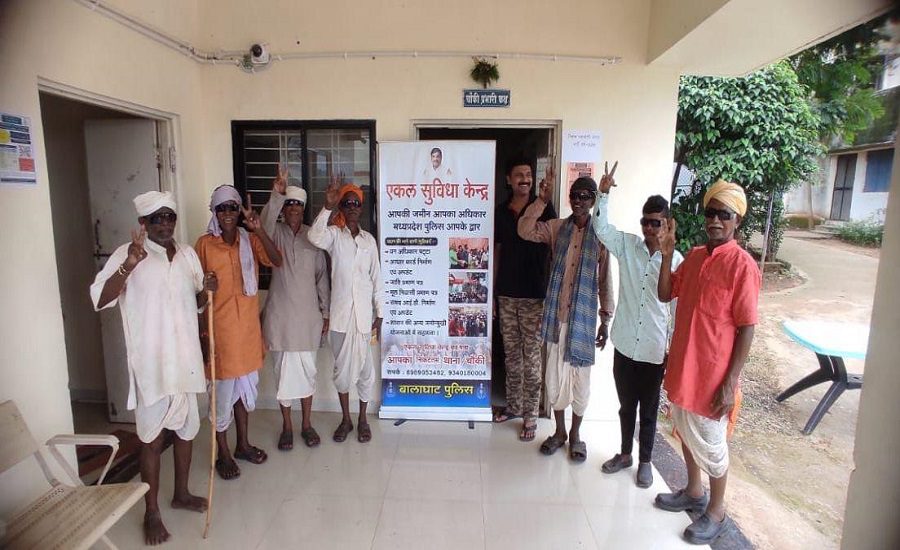
At the heart of Mishra’s initiative is the Ekal Suvidha Kendra (Single Facility Centre) – a one-stop solution for all basic government services. Whether villagers need caste certificates, residence certificates, or assistance with welfare schemes, these centers provide comprehensive support.
Currently, 46 police stations, outposts, and security camps in Naxal-affected areas such as Baihar, Lanji, and Paraswada have been converted into community service centers. These centers are strategically located closer to the villages, often deep in the forest, ensuring that even remote communities can access government services without fear or difficulty.
IPS Mishra explains, “One of the biggest issues here is that tribal populations live far away, and their forest rights leases or property rights often remain unsettled. Traveling hundreds of kilometers to file claims is nearly impossible, and even when applications are submitted, errors in forms or online procedures lead to IPSrejection. Our solution was simple: bring the administration to the people.”
Tackling Land and Forest Rights Challenges
A key focus of the Ekal Suvidha Kendra initiative is addressing the long-standing issue of property and forest rights under the Forest Rights Act. Tribal residents often face difficulties in getting recognition for their land, a problem that has been exploited by Naxal ideologies.
The centers employ Ekal Suvidha Mitras, whose primary responsibility is to fill online applications accurately, follow up with village forest committees, and liaise with sub-divisional level offices. This systematic support has increased the acceptance of property rights applications from 10% to approximately 45%, with over 4,152 applications filed to date.
Mishra emphasizes, “This strikes at the very root of the narrative propagated by Naxalites, who claim that the government wants to evict tribal populations. By ensuring rights are granted effectively, we give people a counter-narrative – truth backed by action.”
Beyond Paperwork: Health and Employment
The Ekal Suvidha Kendras extend their support beyond documentation. Recognizing that healthcare is another major gap in remote areas, Balaghat Police organizes medical camps providing free check-ups, medicines, and transportation for further treatment. In these camps, more than 600 malaria tests, 125 eye examinations (leading to 43 cataract surgeries), and 1,500 general health check-ups have been conducted.
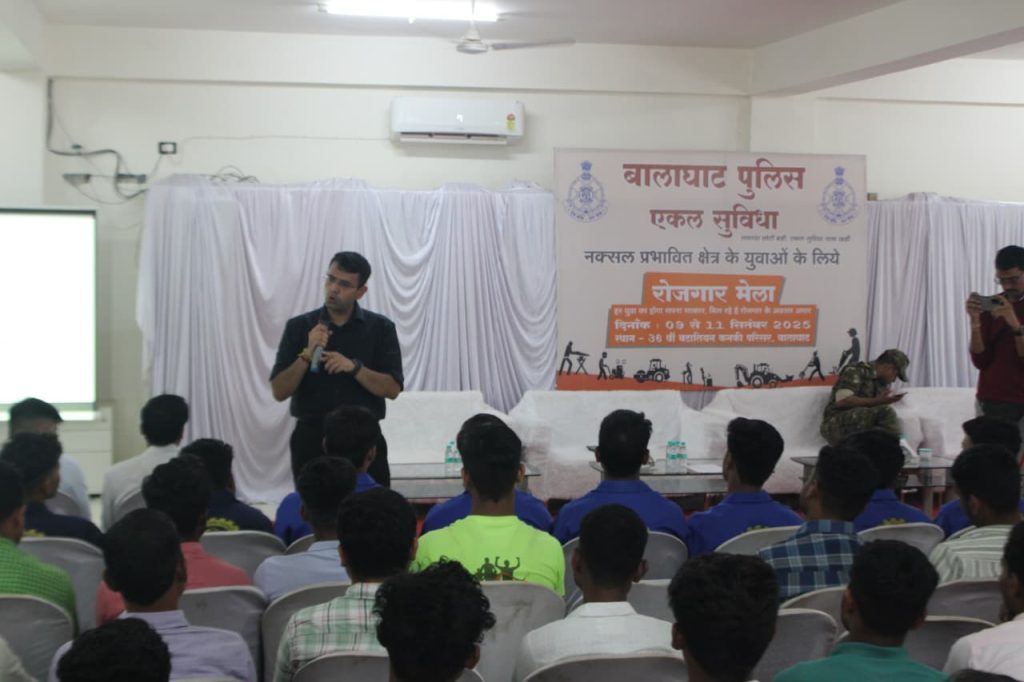
Employment opportunities for youth are another focus. The Ekal Suvidha Rozgaar Melas, the first-of-its-kind employment fairs in Naxal-affected villages, have linked over 300 young people, including women, to private sector jobs. Partnering with companies such as Larsen & Toubro, Reliance, Adani Foundation, Voltas, CII, and FIMI, Mishra has enabled tribal youth, many of whom are school dropouts, to access skill training and employment.
“With special skill programs, we’ve been able to link these youth to private sector employment opportunities. The biggest satisfaction is that female candidates are also part of these Rozgar Melas and have successfully been linked to jobs,” he shared.
A Ground-Level Explanation by IPS Aaditya Mishra
Speaking in detail about the initiative, Mishra described the philosophy and practical implementation –
“If we talk about Naxalism, we often fight at a security level. But the governance battle that promotes Naxalite ideology, we don’t fight as effectively. They claim the government wants to evict tribal populations from their land, which is not true, but the narrative spreads. Our job is to counter that through action.”
He elaborated on how police camps, strategically located closer to villages, were converted into single-window facilitation centers. Officers received training to fill forms accurately, submit them online, and follow up with relevant authorities at every administrative level.
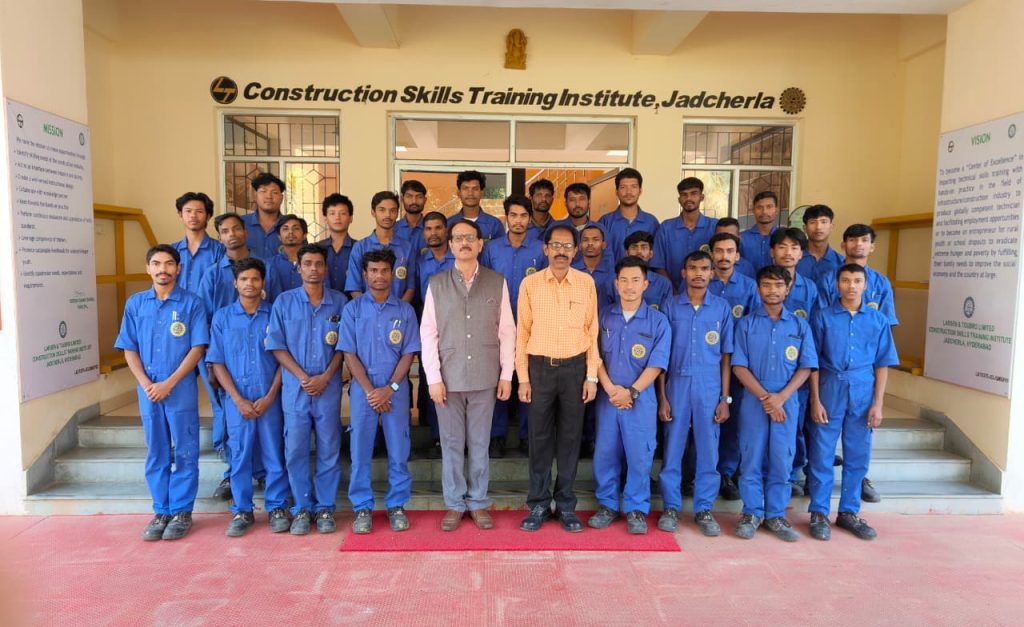
“The Single Facility Center focuses primarily on three services: land and property rights, health through Ayushman cards, and employment opportunities for youth,” Mr Mishra explained. “We created a database of 10,000 children from Naxal-affected villages and linked them to skill programs conducted by private companies. After training, they get guaranteed employment, from L&T worksites to Tata Hospitality Services.”
The initiative also ensures continuous monitoring from the Superintendent of Police’s office. Daily progress reports from each center help track applications, follow-ups, and resolutions. Approved applications, such as property leases, are delivered directly to villagers’ homes.
“The applicant doesn’t have to leave their village. From form submission to final approval, everything is handled, bringing governance to their doorstep,” Mr Mishra said.
Public Engagement and Trust Building
Mishra also emphasized the importance of community trust. Monthly public hearings bring district officials to villages to address local issues – roads, electricity, schools, and other small but vital concerns.
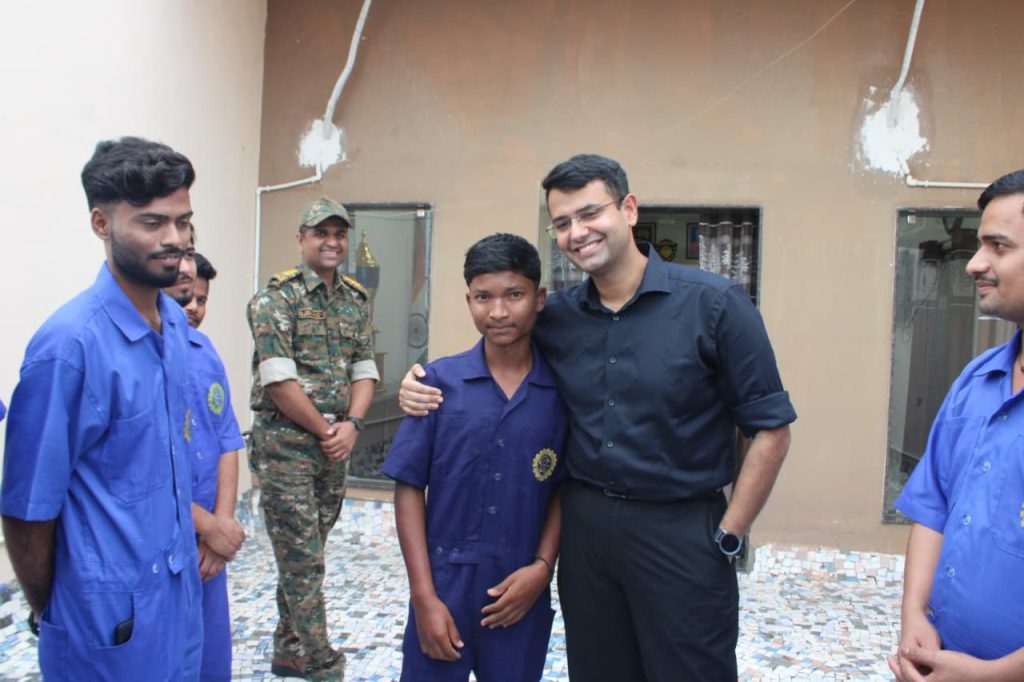
“Reassuring people that we want to work for them has a huge impact. Today, villagers line up at our office from morning onwards, asking for help with everything – from forms to gas connections. The Ekal Samuday Saarthi has become a recognized and trusted service for the community,” he shared.
Measurable Impact
The results of this initiative are tangible –
- More Than 4000 Forest Rights claims filed
- Almost 2000 caste certificates and 600 residence certificates issued
- Over 1000 Aadhaar updates and 80 Samagra ID updates completed
- Over 500 youth employed in private sector jobs
- Hundreds of villagers received healthcare services
Through these interventions, the Balaghat Police under Mishra has demonstrated that effective policing is not just about enforcement but about empowerment, inclusion, and sustainable development.
“Unless you create an ideologically counter narrative, you can fight Naxalites, but the most important way to prevent the creation of new ones is to ensure the right thing reaches the right person,” Mr Mishra said.
A New Era of Community Policing
IPS Mishra’s Ekal Suvidha Kendra model is setting a new benchmark for community policing in India. By addressing the root causes of discontent – land rights, health, and employment – his initiative has shown that policing can be a tool for peace, development, and lasting positive change.
“Policing is no longer just about fear and enforcement. It’s about dignity, development, and delivering justice to every villager,” Mr Mishra concluded.
This story not only highlights the initiatives and measurable results but also places IPS Mishra’s vision and voice at the center, emphasizing the human and strategic side of policing in Naxal-affected regions.