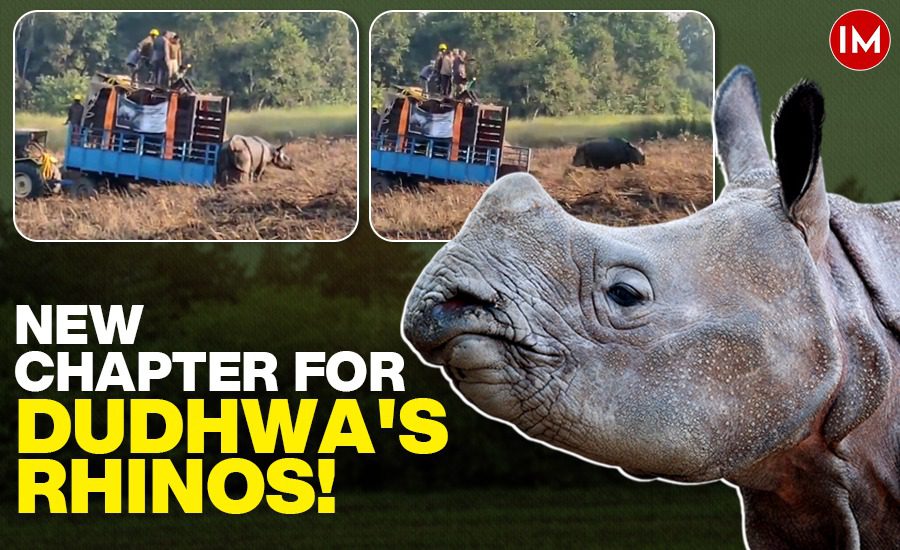
The reintroduction of the one-horned rhinoceros into Dudhwa Tiger Reserve has reached an important milestone in conservation efforts. While the species once thrived in the Terai region of Uttar Pradesh, it became locally extinct due to habitat loss and poaching long before independence. In 1984, a successful reintroduction effort brought rhinos from Assam to Dudhwa, and since then, their population has steadily grown. Today, over 50 rhinos inhabit two protected areas within the reserve. However, the latest move to “free-range” these rhinos—releasing them from fenced enclosures into the open areas of the park—marks a significant new chapter in the region’s conservation strategy.
THE ORIGINAL REINTRODUCTION EFFORT
Field Director of Dudhwa Tiger Reserve, IFS officer Lalit Kumar Verma, explained the broader vision behind this initiative. “The original reintroduction of the rhinos was done in 1984, when the natural population was wiped out from this area. The region has characteristics similar to those of Assam and Nepal, making it an ideal habitat for rhinos. Since then, the population has grown, but they have been confined to fenced enclosures,” Mr. Verma shared with Indian Masterminds.
Congratulations @UpforestUp & @WWFINDIA for reintroduction of the free ranging one-horned rhinoceros in the Dudhwa Tiger Reserve, after 80 years marking a significant conservation milestone. Historically, the one-horned rhinoceros thrived in the Terai region of Uttar Pradesh.… pic.twitter.com/hWL8YD9ySJ
— Supriya Sahu IAS (@supriyasahuias) November 29, 2024
The fenced enclosures, fitted with sonar fencing for added security, provided a safe and controlled environment for the rhinos to flourish. However, the long-term goal has always been to allow the rhinos to roam freely in the open, where they can interact with the rhino population from neighbouring Nepal. Mr. Verma noted that the plan to make the rhinos free-ranging serves a dual purpose: “We are releasing the rhinos to strengthen the gene pool and allow them to interact with rhinos from Nepal. This interaction is crucial for preventing genetic weakening, which was happening due to the limited gene diversity in the captive-bred population.”
THE FREE-RANGING INITIATIVE
In this process, four rhinos—one male and three females—were fitted with radio collars and released into the open park area. This new approach to rhino conservation is being carefully monitored through a combination of GPS tracking and manual patrolling. “Half a dozen teams have been formed to monitor the rhinos. They will track the animals through GPS and also conduct manual patrolling. This exercise will last for two months, but it may be extended for up to a year until the rhinos adapt fully to their new surroundings.”
One of the key advantages of this new initiative is its potential to ease the growing population pressure within the existing 27-square-kilometre fenced area, which has been the rhinos’ home since their reintroduction. By allowing the rhinos to roam freely across the larger park, the risk of overcrowding is minimised, and the ecosystem remains balanced.
STRENGTHENING THE GENE POOL
The presence of rhinos from neighbouring Nepal further adds to the importance of the free-ranging process. “Rhinos from Nepal frequently visit Dudhwa’s forests. These rhinos not only share the same habitat but also mate with the rhinos here, helping to introduce fresh genetic material. This interaction between the Dudhwa and Nepal populations is essential for ensuring that the gene pool remains diverse and robust for future generations,” the official said.
MONITORING AND COMMUNITY SUPPORT
While the free-ranging experiment is a major step forward, it comes with its own set of challenges. One of the most pressing is ensuring the successful coexistence of humans and wildlife. The reserve is surrounded by villages and communities that have lived alongside elephants, tigers, and other wildlife for years. As rhinos are released into open areas, it is vital to educate these communities on the importance of peaceful coexistence.
Mr. Verma emphasised the need for community involvement in the project’s success. “The communities living on the fringes of the reserve must be educated to coexist with the rhinos, just as they have lived alongside elephants and tigers for decades. We need their support in ensuring that the rhinos do not face any harm or disturbance as they adapt to their new environment.”
LONG-TERM CONSERVATION GOALS
The success of the free-ranging initiative will depend on effective monitoring, community education, and continued collaboration with conservationists and local authorities. By allowing these rhinos to roam freely, the Dudhwa Tiger Reserve is taking an important step not just for the rhinos but for the broader ecological health of the region. As Mr. Verma aptly put it, “It is crucial that these rhinos have the freedom to interact with their counterparts in Nepal. This interaction will help strengthen the gene pool, ensuring that Dudhwa’s rhino population remains genetically healthy for years to come.”