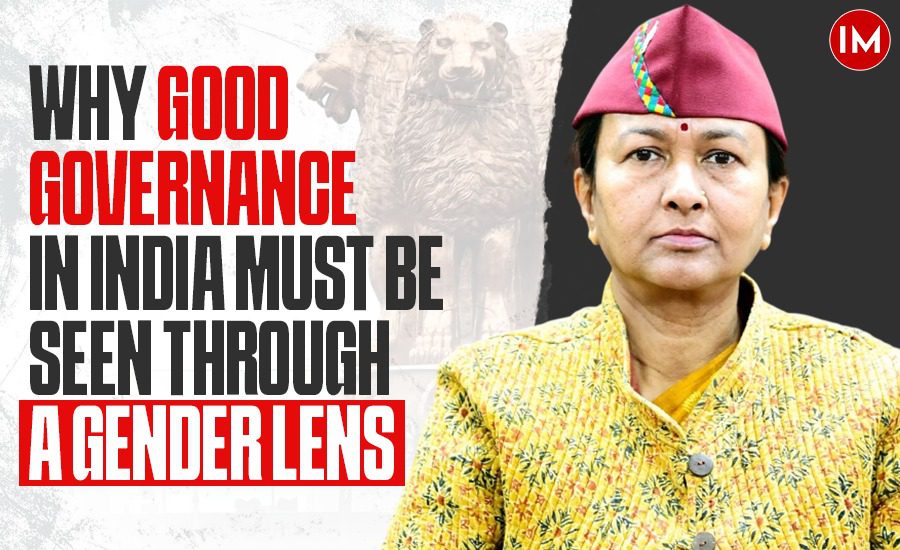
I joined the IAS in 1988 and since then I have had the experience of working in four states – Madhya Pradesh, Uttar Pradesh, Andhra Pradesh (United) and Uttarakhand. I started my service life as SDM (Sub Divisional Magistrate) and finally reached the apex level, retiring as the first woman Chief Secretary of Uttarakhand, on 31st March 2025.
It has been a great journey for me since I worked at various levels of the state government, from the district to the state secretariat. In that sense, I have observed “governance” very closely and I strongly believe that for any society or nation to progress, “good governance” has to be seen through the lens of “gender”.
The democratic governance requires equal participation of all citizens. Our Constitution makes the “Right to Equality”, a fundamental right, making no distinction between “men” and “women”. “People’s Representation Act” also gives women the right to vote, equally with male voters.
Going forward, all laws in India give women equal rights and often they are extra sensitive to the needs of female citizens.
For democratically elected governments, espousing the principles of a “welfare state”, “good governance” is the way forward. But why has gender equality not been a fundamental concern of good governance?
Probably, the answer to this fundamental question is that our society is still deeply entrenched in “patriarchy” and “feudalism”. Why is the birth of a daughter not celebrated with the same joy that is apparent when a son is born? Why does India need the PC&PNDT Act, to stop parents and doctors from murdering the unborn girls? So, despite being legally equal our daughters still have to fight a lot of social bias to break the glass ceiling.
Some of the key areas where we need urgent intervention include:
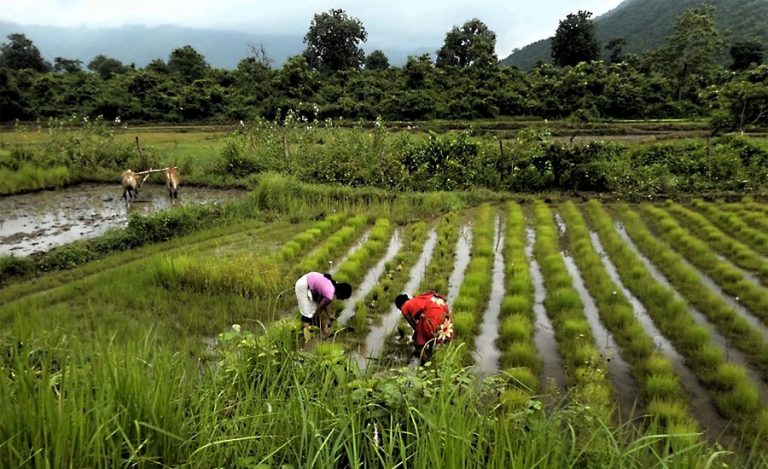
- Agricultural land in U.P. & Uttarakhand is hardly in the name of women – so women in the hill villages of Uttarakhand are not designated as “Kisan” (farmer) even though they do all the agricultural work. Because they do not own land, (it’s in the name of their husbands, sons or other male members) the banks do not give loans to women (no collateral security) thus its difficult for them to start any economic activity.
- Women spend most of their time in household chores, care works (care for the young and elderly in the family) or agricultural labour in family-owned farms – all this work remains unaccounted, unacknowledged and unpaid.
- Lower workforce participation of women, resulting from the previous point. However, workforce participation is on the rise in India and in Uttarakhand. Recent policy changes, including new labour codes in India aim to ensure greater safety, and better maternity benefits for women.
- Domestic violence is widely prevalent among all classes of society. Similarly, “dowry deaths” are still very common, despite very progressive legal provisions.
- Child marriage of underage girls, high MMR & IMR are issues where departments like WCD, Health and Education have to work together for better governance.
- Inadequate representation of women in higher judiciary – judges have the ability to further gender inclusive governance by adopting a gender sensitive interpretation of laws.
Gender inclusive policies and services are more effective since they address the needs of the total population, resulting in better developmental outcomes.
If we see good governance through a “gender lens”, our policies, institutions and services need to be responsive to the requirements of both women & men.
Some of the key aspects for gender responsive governance include:
- Gender Budgeting.
- Gender sensitization of policy makers.
- Better participation and representation of women in elected bodies such as panchayats and urban local bodies.
- Better access of public services to women.
In Uttarakhand, women have always been at the forefront of all activities, whether economic or social, including the statehood agitation. Uttarakhand government has also focused on “gender sensitive governance”, leading to better opportunities for our girls in education, employment and wholistic development.
UNDP and Niti Ayog have judged Uttarakhand to be the Number 1 state in India (during the year 2024), while reviewing the Sustainable Development Goals. This achievement is a direct response to gender inclusive good governance initiatives.
(The author is 1988-batch IAS Officer Ms. Radha Raturi of Uttarakhand Cadre. She retired as the first woman Chief Secretary of the state in March 2025)