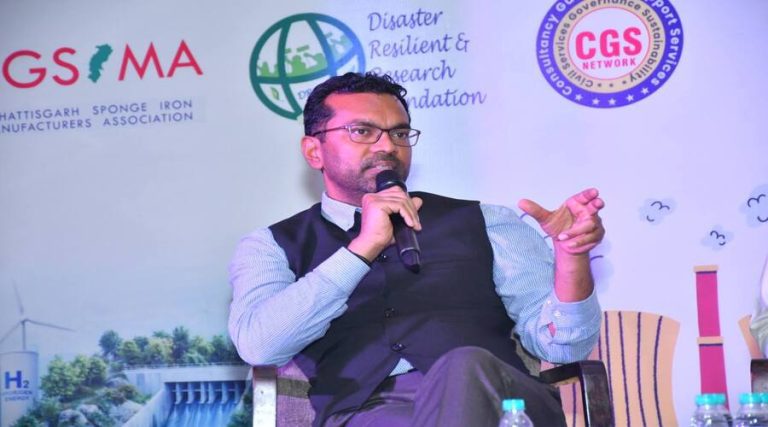
Some houses are built with bricks. Others are built with memories. In a quiet corner of Delhi’s Old Seemapuri, one such house has witnessed a young man’s struggle, a father’s sacrifice, and, now, the dreams of dozens of children. In choosing to give it away, IAS officer Rajesh Singh Rana has donated his ‘ lucky house’ to an NGO that ,turned a deeply personal space into a shared promise, where his past quietly fuels someone else’s future.
In a city where property is often the ultimate marker of security, a quiet residential house in Delhi’s Old Seemapuri has taken on a different meaning. It is no longer just a home. It is a working space of aspiration- where schoolchildren gather after class, where young girls practise self-defence, and where skills are slowly being shaped into livelihoods.
At the centre of this transformation is Rajesh Singh Rana, a 2008-batch IAS officer of the Chhattisgarh cadre, who chose to donate the very house where he once prepared for the Civil Services Examination. Today, the property functions as the Ajit Singh Rana Skill Centre- an initiative that provides free coaching and skill development for underprivileged students.
A Personal Loss, A Public Decision
“He always believed that students here should not face the hardships we faced.”
Rajesh’ decision followed the passing of his father, Ajit Singh Rana, on 25 January 2026. A retired personnel from the Border Security Force, he had bought the house after moving to Delhi post-retirement, an investment rooted in his son’s future.
Read Also: From Forests to Water Banks: How Surat is Rewriting India’s Water Conservation Story
It was here that Rajesh studied, graduated from the University of Delhi, and prepared for the UPSC examination. The house, in many ways, carried the memory of that journey-of uncertainty, discipline, and eventual success.
Speaking to Indian Mastermind, Rajesh describes the decision as “emotional, and evolving”, a step shaped by both memory and purpose.
From Residence to Institution
“This initiative is about helping young people realise their potential and build better careers.”
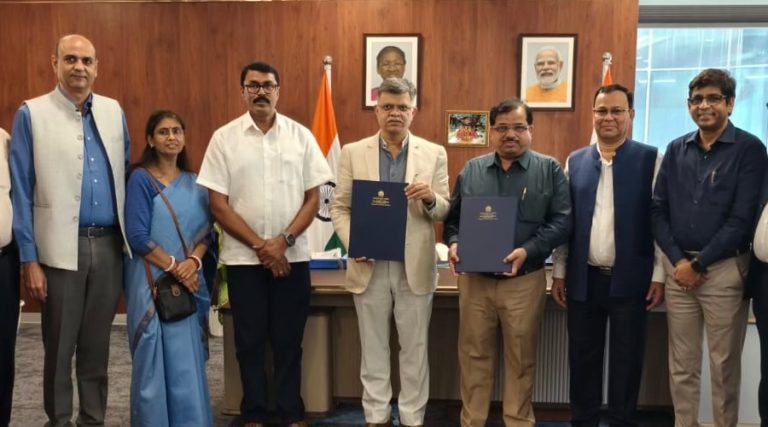
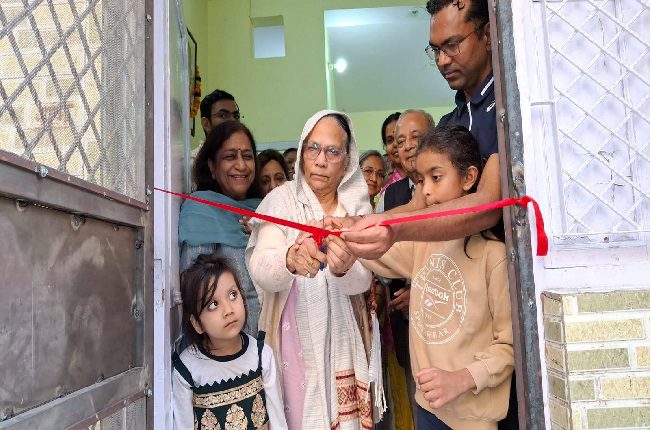
In March 2026, the house formally transitioned into a public space. The PHD Family Welfare Foundation (PHDFWF), in partnership with the Jaquar Foundation, inaugurated the Ajit Singh Rana Memorial Skill Centre at Old Seemapuri.
The choice of location is significant. Seemapuri, like many urban clusters on the margins, reflects both the possibilities and the constraints of rapid urbanisation. Infrastructure may be improving, but access to quality education and skills often remains uneven.
At the inauguration, Rana emphasised the importance of giving back to society, congratulating the beneficiaries and expressing confidence in their future journeys.
A Hybrid Model of Learning
“The centre is accessible to everyone; poverty was a major reason behind starting this.”
The centre currently caters to around 70 students, but its significance lies in its design.
It does not treat education and employability as separate tracks. Instead, it brings them together.
Students from Classes 6 to 12 receive free academic coaching, while parallel programmes focus on practical skills-ranging from vocational training to self-employment readiness. For girls, the inclusion of martial arts such as judo and karate adds another layer: confidence and personal security.
Alongside this, activities like knitting, embroidery, and beautician training introduce pathways that are often more immediately accessible in local economies.
Beyond One Initiative
“There is an inner push to give an assisting nudge to the underprivileged.”
What emerges on closer examination is that this is not a one-off gesture.
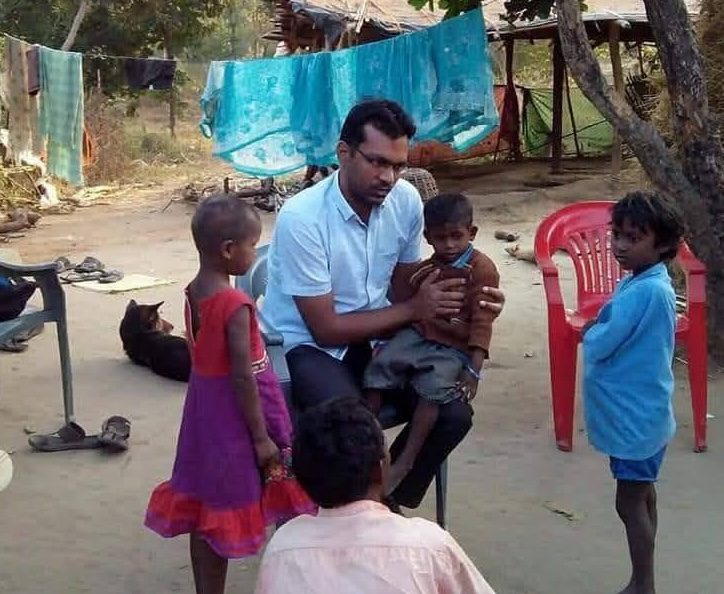
Rajesh has previously converted his ancestral home in Bulandsheher into a public library, aimed at encouraging reading and learning within his village. Across his postings in Chhattisgarh, he has also initiated free coaching efforts, particularly targeting tribal communities.
Over the past few years, several beneficiaries have cleared SSC and other government examinations, highlighting how sustained, localised interventions can create tangible outcomes.
A Development Perspective
“Capacity building must go hand in hand with visible development.”
Rajesh Rana’s observations also reflect a broader understanding of development.
Referring to areas like Seemapuri, he points out that while visible transformations in slum clusters- roads, housing, sanitation are important, they are only one part of the story. The more challenging aspect is equipping individuals with skills and education.
He also acknowledges the wider ecosystem of governance, noting that many officers are contributing meaningfully to social change.
The Ajit Singh Rana Skill Centre is not framed as a completed act. Rana has indicated that he will continue to support the initiative, including stepping in with resources if required.
This shifts the effort from a one-time donation to a longer-term commitment to institution-building.
Redefining Public Service
“Giving back to society is essential, it completes the journey.”
At one level, this is a story about a house.
At another, it is about how we define value.
In cities like Delhi, property is often seen as a symbol of arrival. It secures the future, anchors identity, and accumulates worth over time. Rajesh Rana’s decision challenges that framework-not by rejecting it, but by reinterpreting it.
He has taken something deeply personal and made it useful to others.
The house in Old Seemapuri no longer belongs to a single family’s story. It now supports many- linking memory with mobility, and personal history with collective futures.
Read Also: A Life Lost, A System Exposed: Sand Mafia’s Deadly Reach in Morena