At a time of rising global temperatures and increasing water stress, conserving natural resources has become more critical than ever. This responsibility largely rests with forest departments, especially during the scorching summer months when water scarcity intensifies. Encouragingly, some forest divisions are stepping up with remarkable initiatives that are making a real difference on the ground.
In Gujarat, the Surat Forest Division has set a remarkable example. Over the last five years, it has conserved nearly 580 crore litres of water – enough to sustain around 40,000 villages for a year – effectively turning forests into natural water banks.
Through Soil and Moisture Conservation (SMC) works, the division has created a water storage capacity of about 5.83 million cubic meters, with the potential to recharge nearly 233 crore litres of groundwater annually.
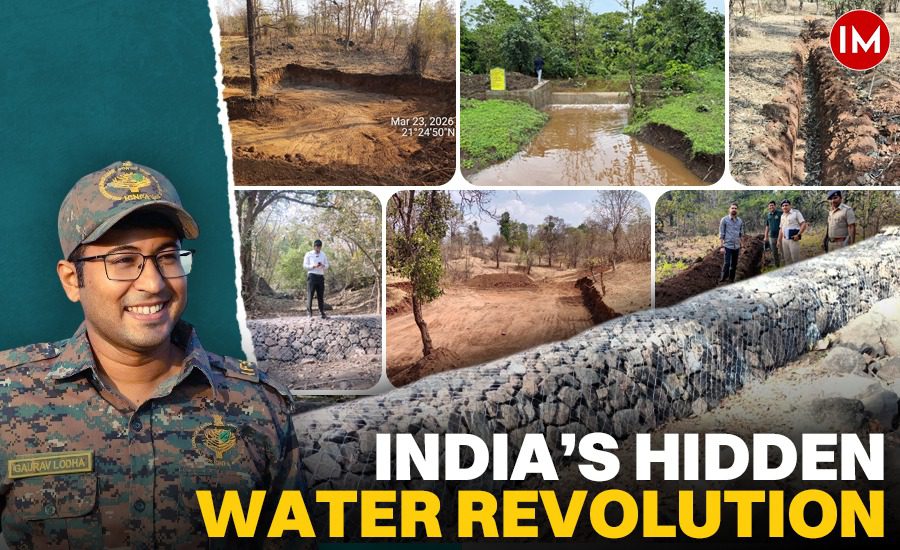
To understand the scale and impact of these efforts, Indian Masterminds interacted with Indian Forest Service (IFS) officer of the 2023 batch, Mr. Gaurav Lodha, Assistant Conservator of Forests (ACF), Surat.

Understanding the Problem: When Rain Becomes Runoff
“When it rains in the jungle, a large amount of water erodes the soil. And in open patches, where water accumulates more, soil erosion increases significantly,” explains Mr. Lodha.
Forests, often perceived as self-sustaining ecosystems, are not immune to degradation. Without intervention, rainwater quickly runs off the surface, carrying fertile soil with it and leaving behind dry, unproductive land. This not only reduces groundwater recharge but also impacts biodiversity and nearby communities dependent on forest resources.
Read Also: A Life Lost, A System Exposed: Sand Mafia’s Deadly Reach in Morena
To counter this, the Surat Forest Division adopted a scientific and time-tested strategy – the Ridge to Valley approach.
The Science Behind the Success: Ridge to Valley Approach
The Ridge to Valley strategy ensures that water is conserved at every stage of its natural flow – from hilltops to plains – through a series of carefully designed interventions.
1. Area Treatment: Protecting the Upper Slopes
At higher elevations, the focus is on slowing down water and allowing it to seep into the soil.
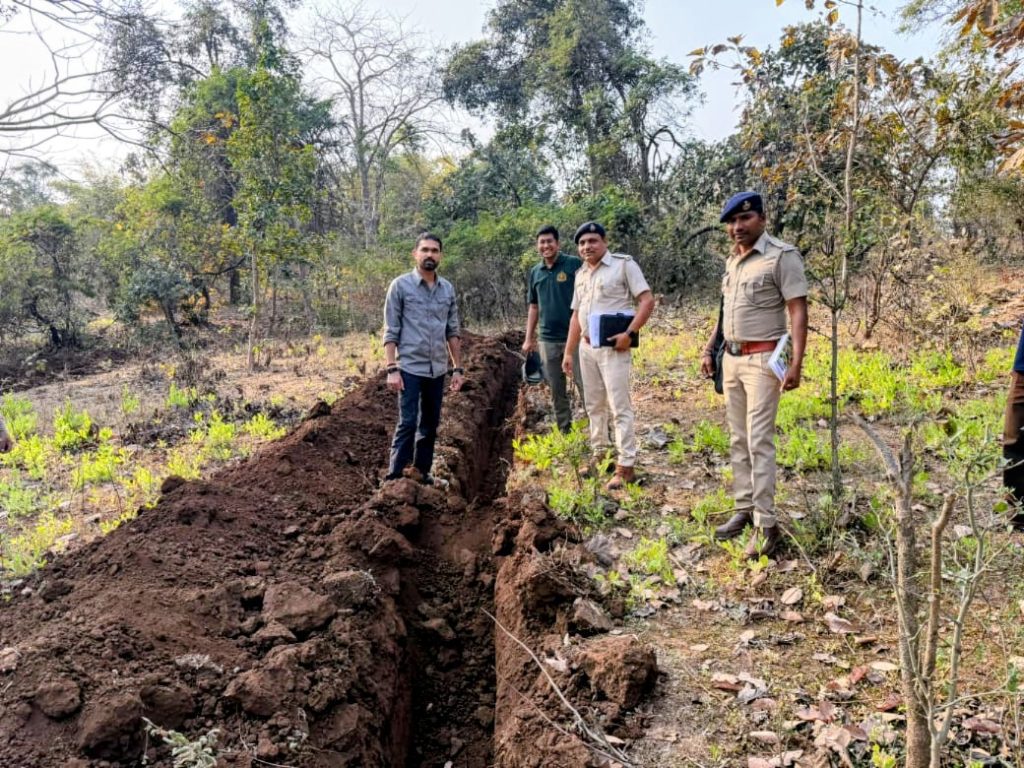
- Continuous Trenches
- Staggered Contour Trenches
“These trenches allow rainwater to percolate into the soil, increasing moisture levels and improving biodiversity,” says Mr. Lodha.
This reduces sheet erosion and prepares the land for vegetation growth.
2. Line Treatment: Strengthening Natural Drainage
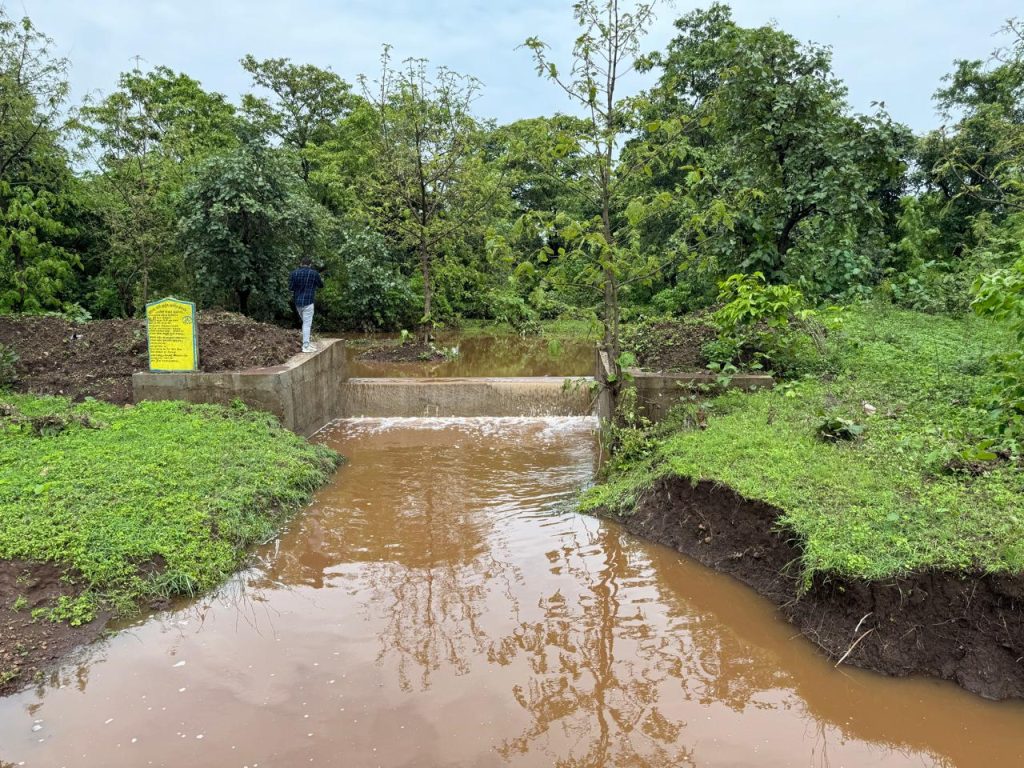
As water flows downward into natural drainage lines, different structures are built based on the intensity of flow:
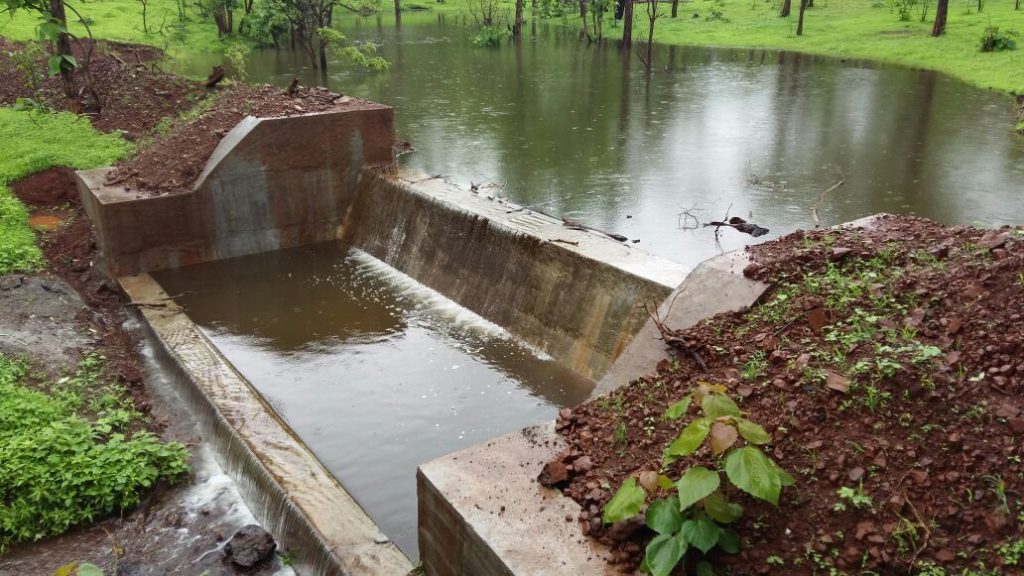
- First Order Streams: Brushwood structures and loose boulder dams
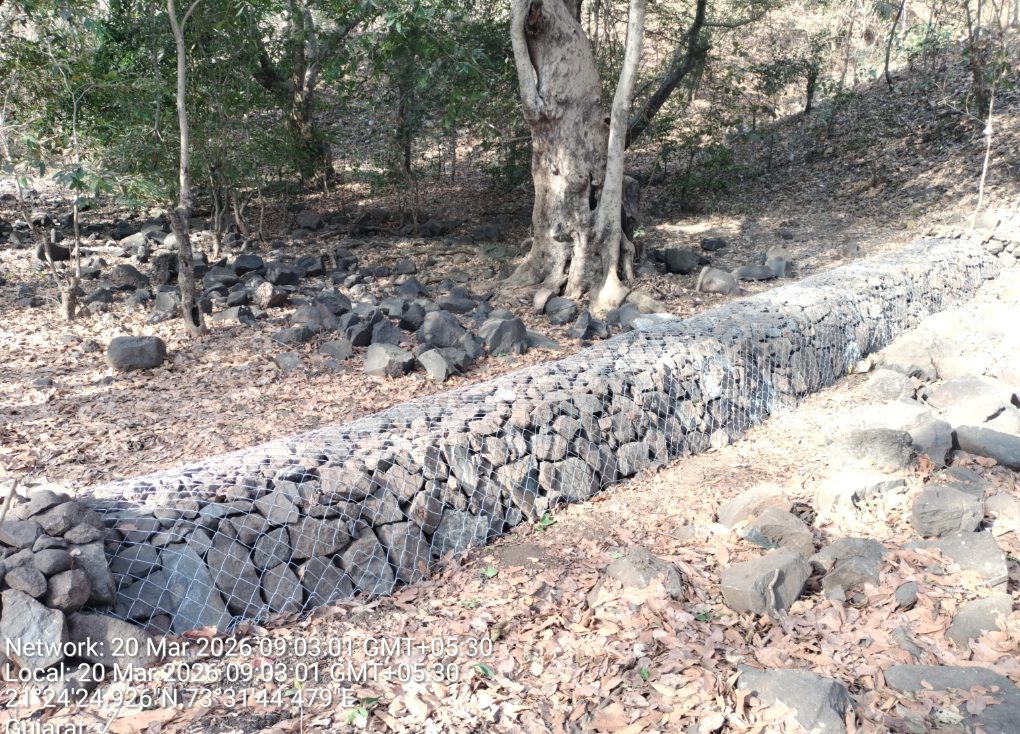
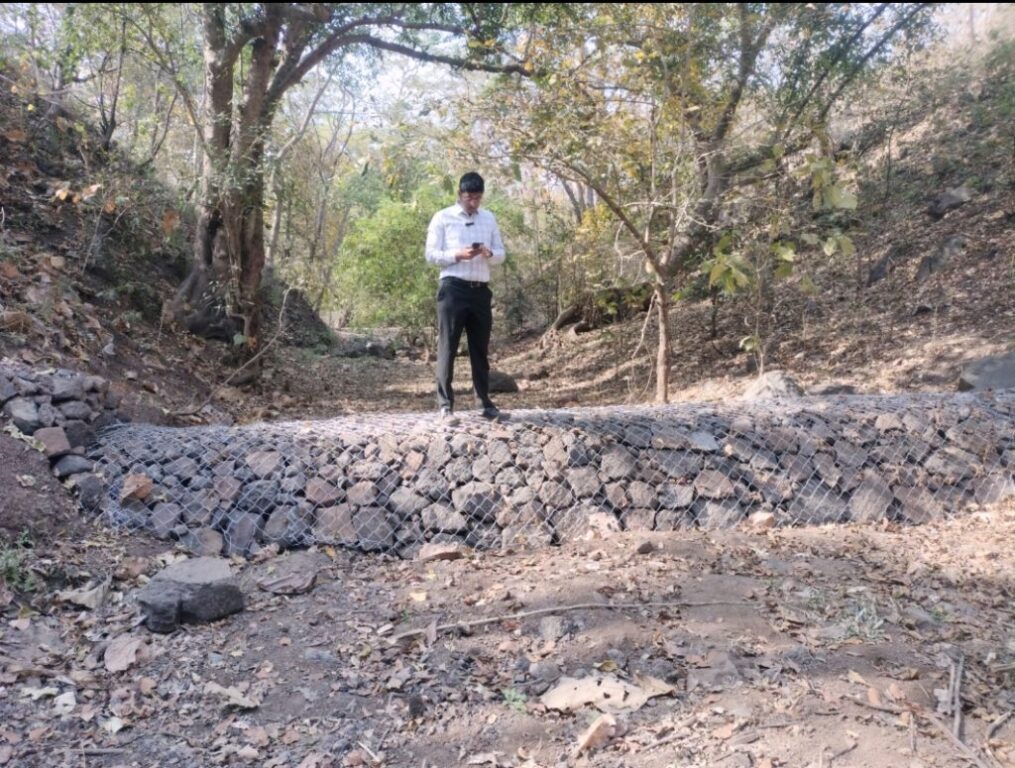
- Second Order Streams: Gabion structures and earthen check dams
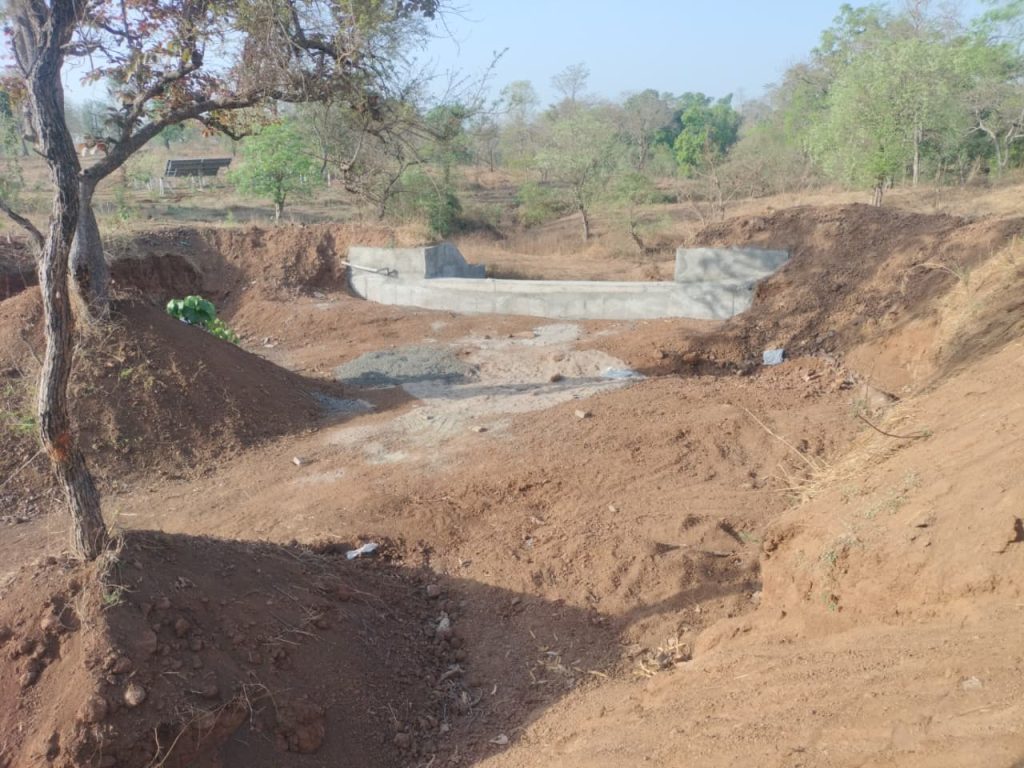
- Third Order Streams: Permanent check dams and stone masonry dams
Explaining their function, Mr. Lodha said, “Structures like gabion and brushwood help stop water, recharge groundwater, and maintain moisture in the surrounding area.”
Gabion structures, made of stones reinforced with mesh, stabilize water flow, while check dams temporarily store water, allowing excess to flow safely downstream.
3. Lower Reaches: Storing Water for the Long Term
In areas where water naturally accumulates or cannot seep easily into the ground, larger storage structures are built:
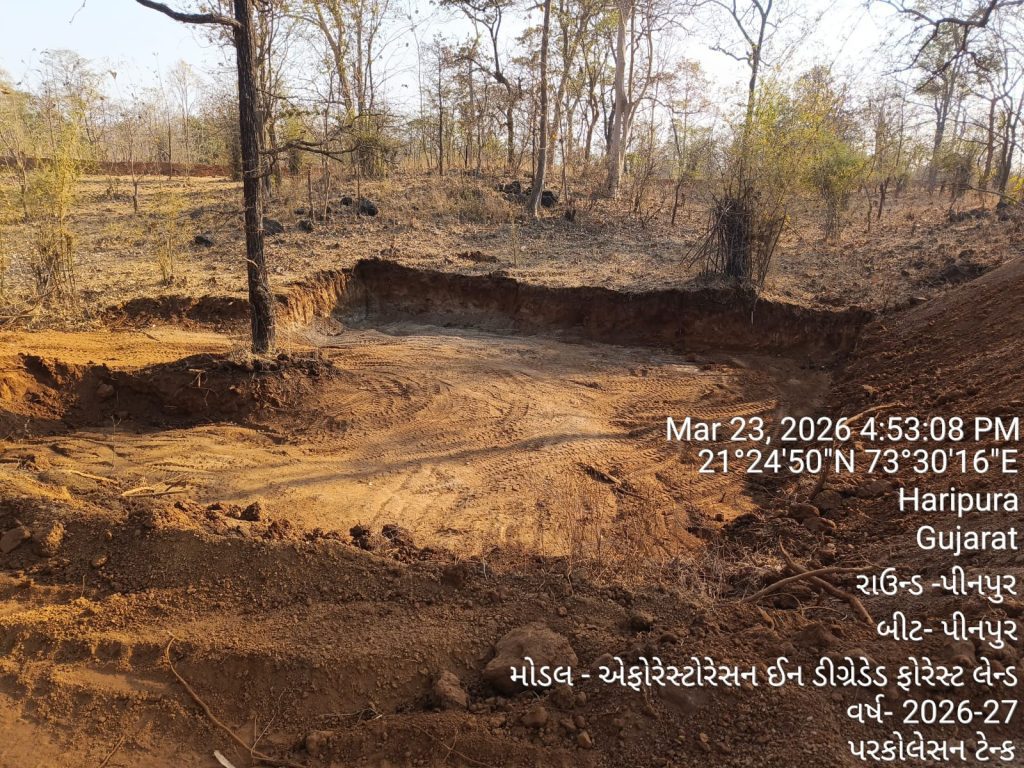
- Percolation ponds
- Forest ponds (Vantalaavdi)
- Tanks and reservoirs
“These structures store large quantities of water for long durations and ensure groundwater recharge, supporting biodiversity throughout the year,” he explains.
4. Plantation: Securing the Future
The final stage involves plantation and ecological restoration.
With improved soil moisture, newly planted trees have higher survival rates. Over time, this leads to stronger forests, better grass growth, and enhanced natural regeneration.
Forests That Behave Like Sponges
One of the most remarkable outcomes of these interventions is how forests begin to function.
“With SMC intervention, our forest acts like a sponge. It absorbs rainwater and releases it gradually.”
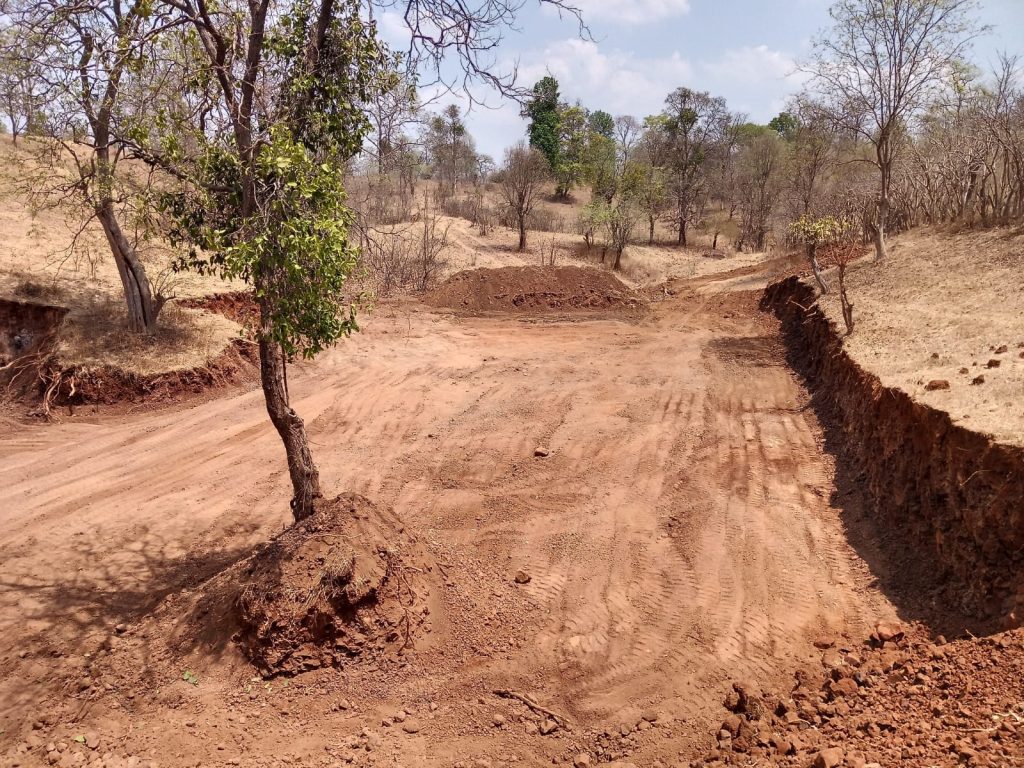
What was once degraded land is now thriving. Mr. Lodha points to a site transformed in just two years:
“This was degraded land two years ago. After SMC work, we now see strong natural regeneration and healthy tree growth.”
Impact in Numbers: A Transformation Backed by Data
The scale of work done by the Surat Forest Division is both impressive and measurable:
Water Conservation Achievements (Last 5 Years)
- Total Water Storage Capacity:
5,833,864.51 cubic meters
(≈ 5.83 million cubic meters / ≈ 583 crore litres) - Groundwater Recharge Potential:
≈ 233 crore litres annually - Equivalent Impact:
Water sufficient for ~40,000 villages
Structure-wise Contribution
- Check Dams → 2,858,615.95 m³
- Forest Ponds → 2,178,402 m³
- Hilltop Tanks → 391,951 m³
- Check Walls → 91,083.56 m³
- Desilting & Repairs → Significant additional capacity restored
- Earthen & Masonry Bunds → Strengthening local retention
More Than Forest Work: Direct Benefits to People
These efforts extend far beyond ecological restoration.
“Ridge to Valley SMC works are not just forest activities – they directly benefit people,” says Mr. Lodha.
Key Outcomes
- Water Security: Wells and borewells recharge
- Agricultural Boost: Soil retains moisture longer
- Summer Relief: Remote villages get water even in dry months
- Employment Generation: Local communities are actively involved
- Ecosystem Revival: Biodiversity thrives year-round
Result: More water, more livelihood, and more resilient villages.
Reaching the People: The Need for Awareness
Despite years of work, one major gap remained – visibility.
“This has been going on in the forest department for many years. The issue was that it was not reaching the public that we are doing so much work.”
To bridge this gap, the team took a new step—communicating their work through simple, informative videos and outreach efforts.
“We wanted people to understand how scientifically we assess areas and conserve water in different ways.”
Scientific Planning and Monitoring
What sets this initiative apart is its strong technical backbone.
- Geotagging of Structures
- KML Mapping for Boundary Demarcation
- Water Storage Calculations per Structure
- Long-Term Impact Assessment (5–25 years)
“We calculate how much water each structure can store and then estimate its impact over years. This gives us a clear picture of conservation at the division level.”
Empowering Tribal Communities
The initiative has had a profound socio-economic impact, especially in remote areas.
Surat’s forest regions – like Umarpada, Varpada, and Vankal – are largely tribal, with 80–90% of the population dependent on forests.
“By doing this work, we provide employment, conserve water, and support biodiversity. This helps in empowering local communities economically and financially.”
In regions where industrial or urban employment is scarce, such initiatives become lifelines.
Timing is Everything: Preparing for the Monsoon
The success of SMC works also depends heavily on timing.
“We complete all work before the monsoon so that as soon as rain starts, water is conserved effectively.”
This ensures maximum efficiency and also supports plantation efforts.
“When soil moisture is already good, the survival rate of plants improves significantly.”
A Long-Term Vision: Building Forests That Last
Forest development is a long journey – often taking 10 to 20 years.
But as Mr. Lodha emphasizes: “If the foundation is strong, the forest will develop well and sustain itself.”
By combining water conservation with plantation and community participation, the Surat Forest Division is not just solving today’s problems – it is securing the future.
A Model for a Water-Secure India
The story of Surat Forest Division is not just about conserving water – it is about rethinking how natural systems can be restored and optimized.
It is about turning forests into water banks, landscapes into livelihoods, and challenges into opportunities.
In an era of climate uncertainty, such models offer a clear path forward – one where science, governance, and community come together to build resilience from the ground up.
And perhaps, as this initiative shows, the answer to water scarcity does not always lie in building something new – but in restoring what nature already knows how to do best.
Read Also: Meet Jagdish Prasad Ahirwar: The Forest Guard Who Catalogued 130 Medicinal Plants