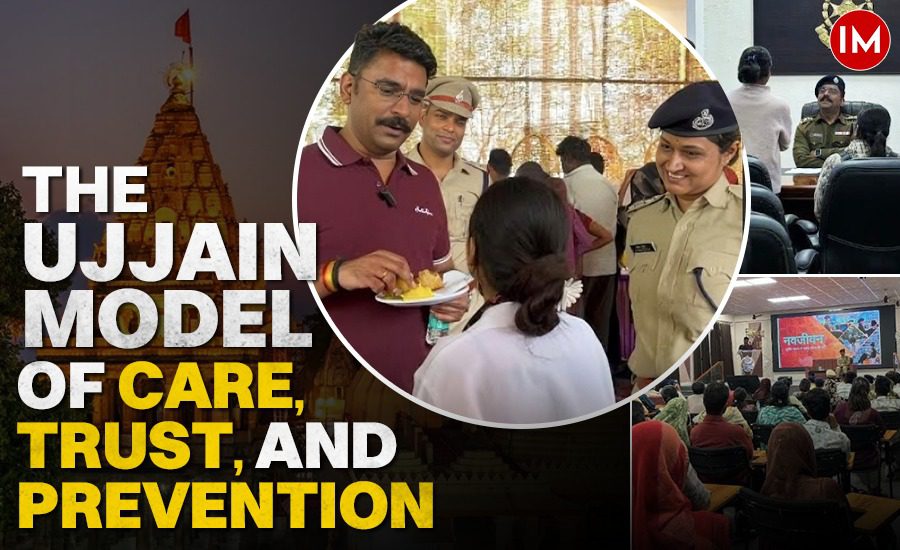
In Ujjain, where faith and history shape everyday life, a quieter transformation is going on within the police system. Under the leadership of IPS officer Pradeep Sharma, Superintendent of Police (SP), the district police reoriented its approach towards a more humane, responsive framework through two key interventions: ‘Navjeevan Mission’ and the ‘Senior Citizen Cell’. Supported on the ground by CSP and nodal officer of Navjeevan Mission, Shweta Gupta, these initiatives signal a decisive shift from reactive enforcement to preventive, people-centric policing.
In an exclusive interaction with Indian Masterminds, both officers outline how empathy, institutional convergence, and sustained engagement are reshaping outcomes for two vulnerable groups: children in distress and elderly citizens navigating social change.
Navjeevan Mission: Looking Beyond Missing Complaints
“Our aim is not just to bring children back home, but to ensure they truly feel at home. Unless we address the root cause, the problem will resurface”, says IPS officer Pradeep Sharma
Navjeevan Mission represents a fundamental departure from conventional policing approaches of missing children. Instead of treating such cases as isolated incidents, the initiative interprets them as manifestations of deeper psychological and social distress. The emphasis, therefore, is not merely on recovery but on meaningful rehabilitation.
Once traced, children are not immediately reintegrated into their families. They undergo structured counselling sessions alongside their parents, designed to unpack emotional triggers and situational pressures. This process transforms the police station into a space of dialogue, where listening becomes as important as action, and understanding takes precedence over procedure.
Also Read – How Ajay Gupta Cleared Both UPSC Civil Services and Indian Forest Service Exams in 2025
Decoding the Causes: What Drives Children Away
“When we started listening closely, we realised these were not isolated cases, they highlight wider social pressures affecting young minds.” – IPS officer Pradeep Sharma
The diagnostic insights emerging from the initiative reveal a complex interplay of pressures shaping young lives. Academic stress, exam anxiety, and strained family dynamics are among the most common triggers. Many children also report a lack of alignment with formal education, coupled with declining self-confidence.
More subtle influences, such as social media dependency and dowry-related tensions within households, have also surfaced as contributing factors. These findings situate individual cases within a broader socio-cultural conditioning, showing how systemic pressures often manifest as personal crises for children.
A Convergent Model: Administration as a Collective Support System
“If the issue is education, we involve the education department; if it’s family conflict, we bring in counselling. It has to be a collective response.” – IPS officer Pradeep Sharma
At its core, Navjeevan Mission is built on institutional convergence. The police work in close coordination with education departments, counselling professionals, and social welfare agencies to tailor interventions based on each case. This integrated model ensures that responses are not generic but calibrated to the child’s specific circumstances.
Educational reintegration, psychological counselling, and family mediation are deployed in tandem, creating a support system that extends beyond policing. The approach exhibits an understanding that sustainable rehabilitation demands collaborative governance rather than isolated administrative action.
Rehabilitation as a Continuous Process
“Rescue is only the first step. Real success lies in ensuring the child remains stable, confident, and supported over time.” – IPS officer Pradeep Sharma
What distinguishes the initiative is its long-term orientation. Each rehabilitated child is placed under a structured review mechanism, weekly in sensitive cases and mandatorily every three months otherwise. This ensures that progress is monitored and setbacks are addressed in real time.
Beyond formal reviews, the police maintain informal engagement through periodic interactions, including shared meals with families. These efforts build trust and create a non-intimidating environment for continued communication. Counselling remains an ongoing process, extending to parents and other stakeholders to stabilise the child’s ecosystem.
Data-Backed Impact: Insights from the Field
“Our effort is to ensure that every child not only returns but also rebuilds a stable and dignified future.” – CSP & Nodal Officer, Navjeevan Mission Shweta Gupta
Operational data from 2025 illustrates the scale and depth of the initiative. According to CSP and nodal officer Shweta Gupta, 293 children were rehabilitated, of whom 264 were girls, highlighting a significant gender dimension in runaway cases. Each child received targeted support aimed at addressing the root cause of leaving home.
More than 160 children were reintegrated into formal education through coordination with departments and training institutes, while 57 were provided vocational training to build sustainable livelihoods. In 34 cases involving adult girls who left home due to marriage-related conflicts, counselling and family dialogue led to resolution. These women are now reported to be settled and leading stable lives.
Impact on Ground: Rebuilding Lives, Restoring Continuity
“Seeing children return to school and regain confidence is the most meaningful outcome of this initiative.”– IPS officer Pradeep Sharma
With over 80% positive outcomes, Navjeevan Mission has demonstrated measurable success in reintegrating children into stable family and educational environments. Many who had discontinued schooling have resumed their education, while others have found alternative pathways through skill development.
The broader impact lies in restoring emotional equilibrium. Children who once experienced alienation now find themselves supported within more responsive family structures. The initiative highlights how timely, empathetic intervention can fundamentally alter life trajectories.
Senior Citizen Cell: Addressing Silent Vulnerabilities
“Senior citizens often hesitate to approach the police. We want to assure them that their concerns are valid and will be addressed with dignity.” – IPS officer Pradeep Sharma
Complementing its work with children, Ujjain Police has also institutionalised support for elderly citizens through a dedicated Senior Citizen Cell. The initiative provides a structured platform for addressing grievances that often remain unreported due to hesitation or social stigma.
Every Wednesday is reserved exclusively for senior citizens, ensuring predictable access to the system. This dedicated window has helped build trust and encourages the elderly to come forward with concerns they might otherwise suppress.
Changing Social Structures, Emerging Challenges
“With nuclear families and urban lifestyles, many old age people face isolation and insecurity. Policing must respond to these realities.” – IPS officer Pradeep Sharma
The grievances brought to the cell reflect shifting social patterns. Cases range from domestic neglect and interpersonal conflicts to property disputes and pension-related complications. Increasingly, financial fraud, particularly cybercrime has emerged as a significant concern.
These issues underscore the vulnerabilities created by gradual erosion of traditional support systems. The initiative recognises that law enforcement must adapt to these evolving dynamics, offering both resolution and reassurance.
A Single-Window, Humane Response
“It’s not just about solving complaints; it’s about ensuring seniors feel heard, safe, and respected.” – IPS officer Pradeep Sharma
The Senior Citizen Cell operates as a single-window mechanism, simplifying procedures and ensuring timely intervention. Cases are handled with patience and sensitivity, reducing the intimidation often associated with formal complaint processes.
By prioritising dignity and accessibility, the police are reshaping public perception-positioning themselves not merely as enforcers of law but as facilitators of social well-being. The initiative reinforces the idea that responsiveness and empathy are integral to effective policing.
A Replicable Template for Modern Policing
“If we can prevent distress from turning into crisis, we have already succeeded as a system.” – IPS officer Pradeep Sharma
Together, these initiatives offer a motivating template for modern policing in India. They demonstrate how institutions can transition from reactive frameworks to proactive, community-oriented models of governance.
For children, the system prevents temporary distress from escalating into long-term disruption. For senior citizens, it ensures that vulnerability does not translate into neglect or invisibility. In doing so, Ujjain Police is redefining its role, not just as a force of authority, but as a stabilising presence rooted in care and continuity.