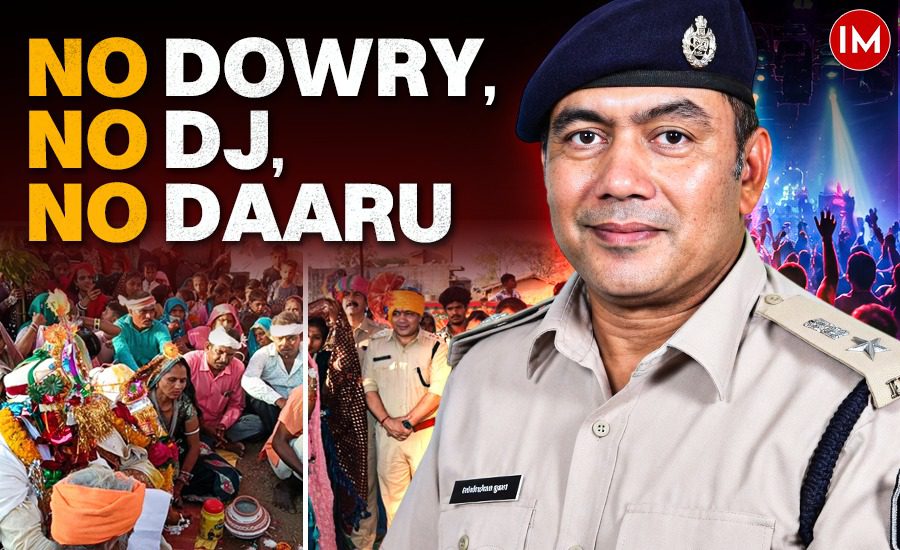
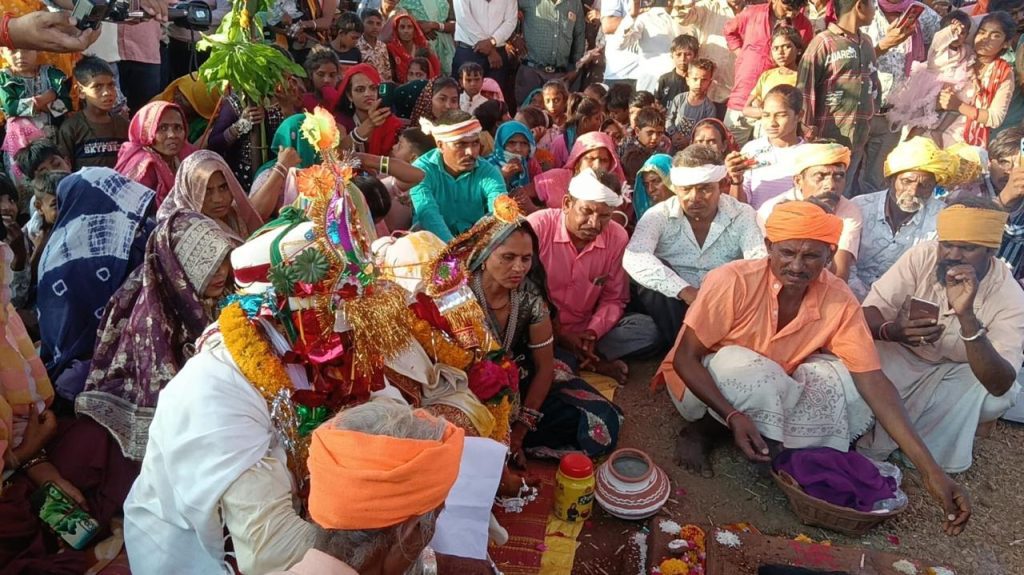
In the tribal village of Junapani in Madhya Pradesh’s Barwani district, a wedding recently unfolded in a way that would have been unthinkable just a few years ago.
There was no blaring DJ.
No alcohol-fuelled chaos.
No dowry negotiations.
No financial pressure on the bride’s family.
Instead, there was simplicity, dignity and applause.
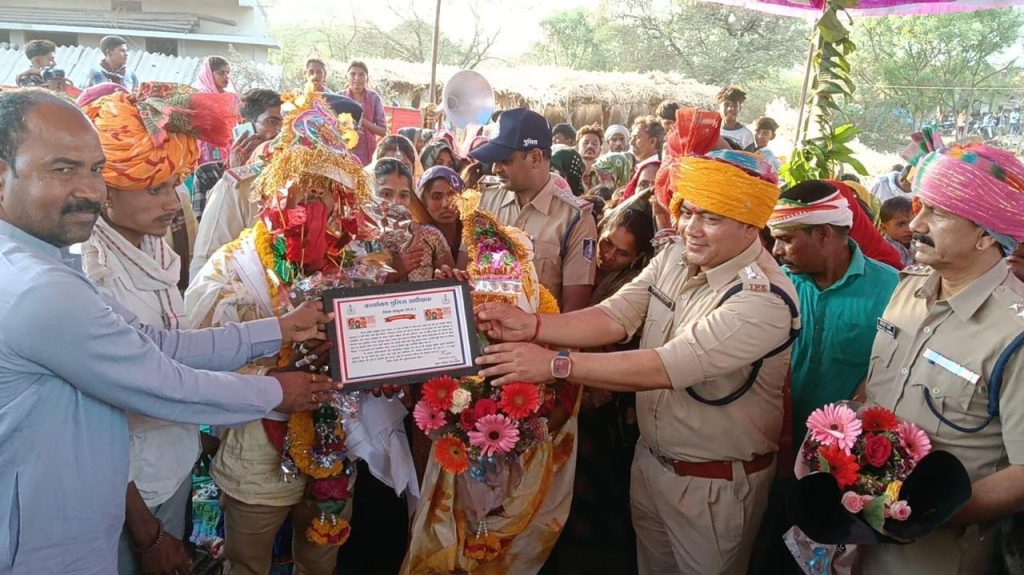
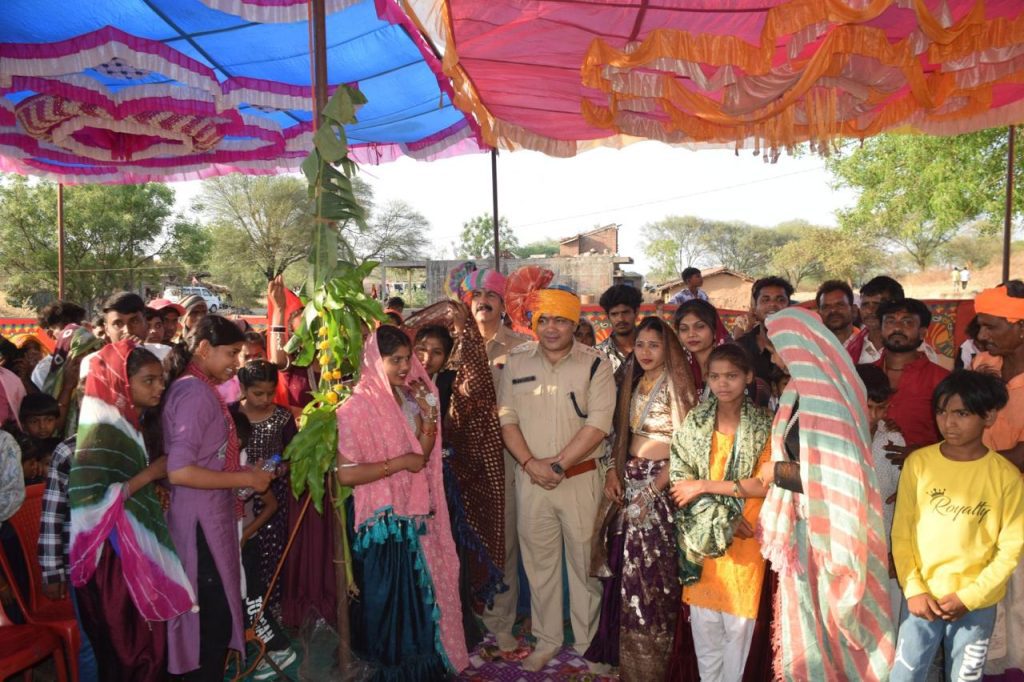
Social worker Rama Nargave solemnised the marriages of his son, Krishna Nargave, and his daughters, Ranjita and Dina, in strict alignment with Mission 3D, Barwani Police’s campaign against Dahej (dowry), Daru (alcohol) and DJ culture.
When Barwani Superintendent of Police Padmavilochan Shukla, a 2016-batch IPS officer, arrived at the village with his team to personally honour the family with shawls, certificates and public recognition, the message was unmistakable: social reform is no longer confined to speeches. It is entering people’s homes.
Indian Masterminds exclusively spoke with SP Padmavilochan Shukla, and 2010 batch, MP cadre IPS officer, Mr. Vineet Kapoor, currently posted as Deputy Inspector General of Police for Community Policing, to learn more about the project.
THE OFFICER WHO ASKED ONE SIMPLE QUESTION
For Padmavilochan Shukla, Mission 3D began not in Barwani but earlier during his posting in Jhabua.
There, while examining the district’s education patterns, he noticed an alarming trend: girls were dropping out of school at a young age, many leaving home for Gujarat as migrant labourers, often becoming vulnerable to exploitation, early relationships and teen pregnancies.
“I kept asking myself — what is causing such large-scale dropout among girls?” Mr. Shukla recalls.
Detailed surveys revealed a chain of interconnected social practices. Lavish wedding expenses, reverse dowry demands, alcoholism and all-night DJ events were creating economic stress and social disorder, often pushing families into situations that disrupted girls’ education and safety.
That insight led to a larger intervention.
“We decided to start slowly, by talking, counselling and building awareness. Even if immediate results didn’t come, the effort had to begin,” Mr. Shukla told Indian Masterminds.
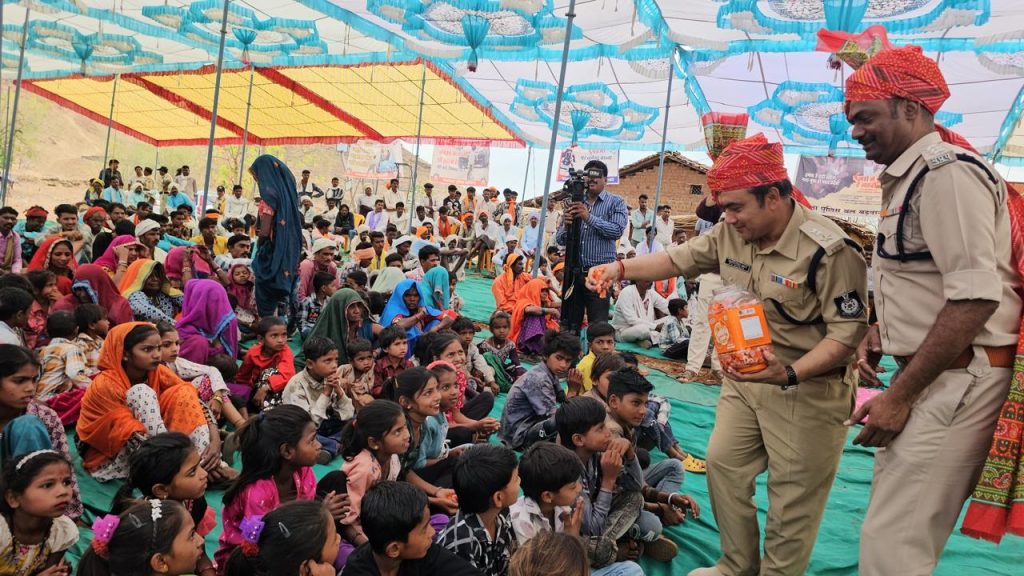
MISSION 3D: TACKLING SOCIALLY ACCEPTED VIOLATIONS
The philosophy behind Mission 3D was shaped through community policing, supported by senior IPS officer Vineet Kapoor, 2010-batch MP cadre, currently DIG for Community Policing.
As Mr. Kapoor explains:
“Many harmful social practices are already prohibited under law, but enforcement becomes difficult because society does not always see them as wrongdoing. Police action alone cannot change this. In a democracy, we have to take the community along.”
He adds:
“Mission 3D is a participatory model where village leaders and communities accept behavioural change together. When people themselves reject dowry, alcohol and disruptive DJ culture, law enforcement becomes social reform.”
The campaign recognised that many offences emerging during weddings, such as fights, disputes, noise violations, drunken brawls and dowry conflicts, were not isolated incidents. They were symptoms of a larger pattern.
WINNING OVER RESISTANCE IN TRIBAL MADHYA PRADESH
Changing tradition was never going to be easy.
When the campaign first gained momentum in Jhabua, resistance came swiftly.
DJ operators protested.
Highways were blocked.
Police teams sent for dialogue faced stone pelting.
Mr. Shukla remembers the tense period clearly.
“The Indore-Baroda highway was jammed. Our police teams were attacked. It could have escalated badly. But through coordination with local administration and political leadership, we stayed firm.”
Several cases were registered.
The message was clear: reform would not be abandoned under pressure.
Slowly, the resistance faded. Then came acceptance. And then came participation.
HOW COMMUNITY PRIDE BECAME THE CAMPAIGN’S BIGGEST WEAPON
Mission 3D’s real breakthrough came when police shifted from enforcement to recognition.
Whenever a family conducted a wedding without a dowry, alcohol or DJs, Mr. Shukla or his representatives attended personally, presenting certificates and gifts.
The social effect was immediate.
“Where even local leaders often don’t visit, the SP arriving at a family’s wedding becomes a matter of honour,” Mr. Shukla told Indian Masterminds.
The certificate often finds pride of place inside homes. That public recognition turned compliance into aspiration. Families began seeing 3D weddings not as a sacrifice, but as prestige.
THE NUMBERS TELL THEIR OWN STORY
In Jhabua, Mr. Shukla personally attended nearly 47 Mission 3D weddings.
After his transfer to Barwani, where he has spent just a few months, five such weddings have already taken place, with Junapani’s triple wedding becoming one of the strongest public endorsements yet.
What changed on the ground?
DJ-heavy late-night functions gave way to traditional daytime mandal ceremonies.
Alcohol consumption dropped sharply.
Excessive silver exchanges, often reaching three kilograms, were significantly reduced.
Dowry-related disputes began falling.
And perhaps most importantly, the social environment around weddings became calmer.
WHY MISSION 3D IS ABOUT MORE THAN WEDDINGS
For Mr. Shukla, Mission 3D was only the beginning.
In Barwani, he has now expanded the idea into S3: Shiksha, Swasthya, Swavalamban: Education, Health and Self-Reliance.
His goal is straightforward:
Keep children in school till at least Class 12.
Encourage healthier lifestyles.
Push families toward stable livelihoods and entrepreneurship.
“Even a small shop is better if it gives dignity and independence,” he says.
The campaign now connects social reform directly with economic and educational progress.
THE COMMUNITY-LED MODEL THAT IS SPREADING ACROSS DISTRICTS
DIG Vineet Kapoor notes that the campaign’s strength lies in its local ownership.
“When village heads, cultural leaders and community elders publicly take vows, behavioural change becomes sustainable,” he told Indian Masterminds.
The movement that began in Jhabua has now spread through Alirajpur, Barwani and other tribal belts of western Madhya Pradesh, turning into a larger reform model.
As Mr. Shukla puts it:
“This is not just about stopping DJs or dowry. It is about changing the entire social atmosphere that creates disorder and financial stress.”
A QUIET REVOLUTION IN JUNAPANI
When Rama Nargave chose to marry all three of his children under Mission 3D principles, he was not merely organising a wedding.
He was making a public statement.
And as SP Padmavilochan Shukla stood among villagers to honour the family, the symbolism was powerful: policing had moved beyond crime control into changing social behaviour from within.
In a region where weddings once often triggered disputes, debt and disorder, Mission 3D is proving that reform sometimes begins with something as simple as saying no.
No dowry.
No alcohol.
No DJ.
And yes, to dignity.