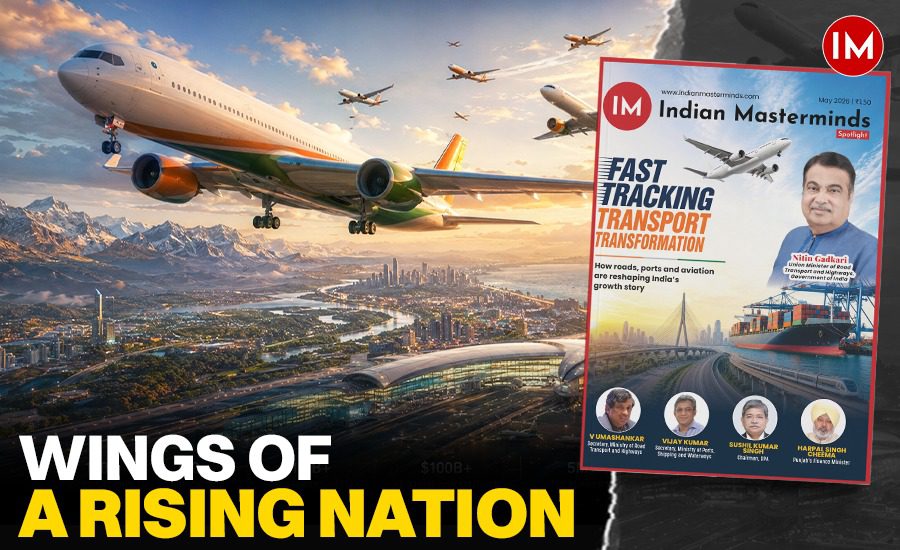
India’s aviation sector stands at a decisive inflection point, evolving from one of the world’s fastest-growing air travel markets into an emerging global aviation hub. This transition is being driven by large-scale infrastructure investments, policy reforms, and a clear strategic push to build a complete aviation ecosystem. While recent data indicates a moderation in short-term growth, the long-term trajectory remains strong, with India targeting nearly 500 million passengers annually by 2030.
400 Airports Planned by 2047
At the core of this transformation is scale. India today operates over 160 airports, a sharp rise from just 74 in 2014. The expansion is far from over. The government plans to increase this number to around 210 airports by 2029 and eventually 350–400 airports by 2047. This aggressive infrastructure build-out reflects the country’s intent to match aviation capacity with rising demand and future economic aspirations.
Infrastructure development remains the backbone of this sectoral shift. Several major greenfield airports are in advanced stages of development. The Noida International Airport (Jewar) and Navi Mumbai International Airport are nearing operationalisation, with construction in advanced stages and commercial operations expected to begin soon. These projects are critical to decongesting major metro hubs such as Delhi and Mumbai and supporting future growth. Meanwhile, Bhogapuram International Airport in Andhra Pradesh remains under active development, representing the next phase of expansion in emerging regional corridors.
Regional connectivity continues to reshape India’s aviation geography. The UDAN (Ude Desh ka Aam Nagrik) scheme has already connected over 90 underserved airports and operationalised hundreds of routes, bringing millions of first-time flyers into the aviation ecosystem. This has significantly expanded access to air travel beyond metropolitan centres, making aviation growth more inclusive and geographically balanced.
2200 More Planes Needed By 2042
Passenger traffic trends reinforce this growth story, even as they signal near-term challenges. Domestic traffic reached approximately 1,677 lakh passengers in FY26, registering a modest 1.4% year-on-year increase. The slowdown is attributed to elevated aviation turbine fuel (ATF) prices and currency pressures. However, the broader picture remains robust.
India continues to be the world’s third-largest domestic aviation market, and total passenger traffic—domestic and international combined—is expected to approach 500 million annually by the end of the decade. International traffic saw a slight dip in early 2026, but load factors remain strong at around 89.5%, indicating sustained demand resilience.
Fleet expansion further underscores long-term confidence. Indian airlines have collectively placed orders for over 1,000 aircraft in recent years—one of the largest expansion cycles globally. This includes both narrow-body and wide-body aircraft to strengthen domestic and international connectivity. Projections suggest India could require over 2,200 aircraft by 2042 to meet rising demand, particularly as air travel penetration deepens across Tier-2 and Tier-3 cities.
Building a Full Aviation Ecosystem
A major structural shift is underway in India’s aviation ambitions. The focus is no longer limited to transporting passengers but extends to building a comprehensive aviation value chain within the country.
The government is actively promoting domestic manufacturing of aircraft components while encouraging global original equipment manufacturers (OEMs) to establish a presence in India. At the same time, significant efforts are being made to develop a robust Maintenance, Repair and Overhaul (MRO) ecosystem. Policy measures, including tax rationalisation and infrastructure incentives, are aimed at reducing dependence on foreign hubs such as Dubai and Singapore.
This push is strategically important. A substantial portion of India’s aviation-related expenditure—particularly in maintenance, repair, and leasing—currently flows overseas. By building domestic capabilities, India aims to retain this value within the country while also attracting global aviation business.
The development of aircraft leasing and financing ecosystems in GIFT City further strengthens this ambition. Combined with continued private sector participation and PPP-led airport modernisation, India is steadily positioning itself as a competitive global aviation services hub.
Preparing for the Future
Preparedness for the future is emerging as a defining theme. Sustainability is gaining prominence, with increasing focus on sustainable aviation fuels (SAF), green airport infrastructure, and energy-efficient operations.
At the same time, India is exploring emerging technologies such as drones, advanced air mobility, and electric vertical take-off and landing (eVTOL) systems, which could redefine urban mobility and logistics. The integration of digital and AI-driven systems is also being prioritised to enhance operational efficiency and airspace management.
Human Capital Abound
Human capital remains a critical enabler. With rapid expansion ahead, the sector will require thousands of additional pilots, engineers, and aviation professionals. Bridging this skill gap through improved training infrastructure and regulatory oversight will be essential to sustaining growth.
Despite strong fundamentals, challenges persist. Airline profitability remains sensitive to fuel costs and global economic conditions, while the financial viability of regional routes requires continued policy support. Infrastructure expansion must also keep pace with demand to avoid capacity bottlenecks.
India’s long-term aviation vision is both ambitious and strategic. By 2047, the country aims to build a fully integrated aviation ecosystem spanning manufacturing, services, and global transit hubs. The shift underway is clear—from being a high-growth aviation market to becoming a global aviation powerhouse, aligned with the broader vision of a “Viksit Bharat.”
In essence, India’s aviation story is no longer just about carrying more passengers—it is about building the infrastructure, capability, and competitiveness to shape the future of global aviation.
Quotes of Union Minister of Civil Aviation K Ram Mohan Naidu
“India is no longer just a market for aviation; we are building capabilities to design, manufacture, and lead globally.”
“Our vision is to create a complete aviation ecosystem—from manufacturing and MRO to leasing and financing—within India.”
“India represents the wings of 1.5 billion aspirations, and aviation will be a key driver of inclusive national growth.”
“We are committed to transforming India into a global aviation hub, integrating infrastructure, innovation, sustainability, and skilled manpower.”
“Regional connectivity is not just about airports; it is about unlocking economic potential and connecting aspirations across every corner of India.”