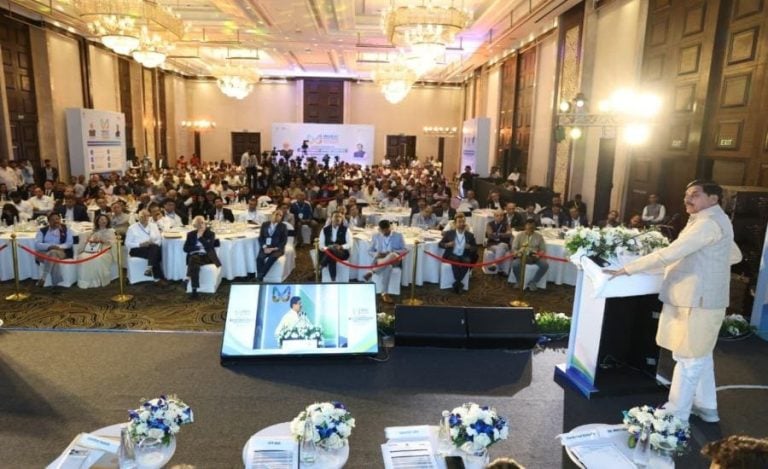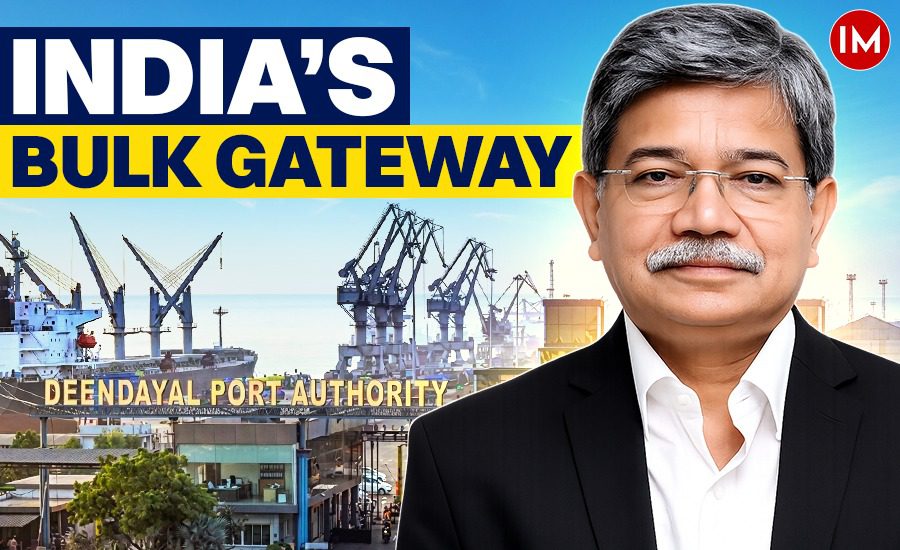
From being India’s bulk cargo backbone to emerging as a green energy and transshipment hub, Deendayal Port Authority (DPA) is driven by scale, specialization, and sustainability. Strategically located on India’s western coastline, Deendayal Port at Kandla in Gujarat has long served as a vital trade gateway for the nation’s industrial heartland. Today, as global supply chains shift and India sharpens its trade ambitions, the port is evolving into a future-ready maritime hub—expanding capacity, deepening specialization, and embracing green energy. In an interview with Indian Masterminds Spotlight, Chairman DPA, Mr. Sushil Kumar Singh, outlines how the port is leveraging its strengths while preparing for the next phase of growth…
1. Deendayal Port has long been a critical gateway for India’s western coast. How do you see its strategic importance evolving in the context of India’s growing global trade ambitions and supply chain realignments?
Ans: The geographical location of Deendayal Port, Kandla on the western coastline of the country, gives it a strategic advantage positioning it as a natural preferred port of call for the cargo flow on the international trade lane between India-Europe-Middle East-Africa. With the strong hinterland connectivity with the central, north-western and western parts of the country, it acts as a Gateway Port supporting the industrial and trade activities.
The Port is fast developing into a key transhipment hub for Middle-East bound cargo offering marine services, storage facilities at competitive rates and services like ship-to-ship transhipment at outer anchorages to optimise capacity utilisation.
Also Read – Feeling Freedom by Losing It: Telangana is Rethinking Justice
2. What are the core strengths and cargo specialisations of the port today? How has Deendayal Port differentiated itself from other major ports in handling specific commodities or logistics segments?
Ans. Its core strengths lie in three areas. First, POL and liquid cargo, where Kandla functions as a major energy gateway with extensive tank farms and strong hinterland connectivity. Second, it is a leading hub for edible oil imports, supported by nearby processing industries, making it an integrated value-chain port rather than just a transit point. Third, it has deep specialization in dry bulk like fertilizers, food grains, and salt, with established mechanized handling and strong demand from North and Northwest India.
What differentiates Kandla from ports is its hinterland-driven model and cost-efficient bulk handling. Instead of diversifying into all cargo types, it has built depth in essential commodities, creating stable, sticky cargo flows. Its cluster-based development especially in liquid cargo and edible oils further strengthens this position.
Going forward, Kandla can leverage these strengths to emerge as a green fuel and specialty liquid cargo hub, aligning with initiatives from other stakeholder departments and ministries.
In essence, Kandla’s edge is its role as a reliable, cost-efficient bulk cargo lifeline for India’s hinterland, with strong potential to evolve into a future-ready energy port.
3. Connectivity is key to port-led development. Could you elaborate on how Deendayal Port is integrated with inland transport networks—rail, road, and multimodal logistics—and what further enhancements are planned?
Ans. Connectivity is central to port-led development, and Deendayal Port Authority demonstrates strong integration with inland transport networks.
On the rail side, the port has well-developed internal rail infrastructure with multiple sidings to handle bulk cargo efficiently. It is well connected to northern and western hinterland states, and linkage with the Dedicated Freight Corridor has significantly improved evacuation speed, reliability, and capacity for long-distance cargo movement.
In terms of road connectivity, the port is linked to national highway networks connecting Gujarat, Rajasthan, and North India. However, last-mile congestion has been a challenge. To address this, projects like construction of Road Over Bridges have been taken up to eliminate bottlenecks, reduce delays, and ensure smoother cargo flow.
From a multimodal perspective, the port is integrated through rail, road, and pipeline systems, especially for liquid cargo like POL. This enables efficient movement from the port to inland consumption centers and industrial clusters, strengthening its role as a logistics hub rather than just a cargo handling point.
Looking ahead, further enhancements focus on improving last-mile connectivity, expanding rail capacity, and aligning with national initiatives to build seamless multimodal corridors. There is also emphasis on modernizing cargo handling and improving logistics efficiency to support growing volumes.
In essence, Deendayal Port’s strong hinterland connectivity, combined with ongoing infrastructure upgrades, positions it as a key driver of port-led industrial and logistics development.
4. What is your strategic roadmap for the next five years? Could you highlight key expansion projects, capacity augmentation plans, and technology adoption initiatives that will shape the port’s future?
Ans. The strategic roadmap for Deendayal Port Authority over the next five years focuses on capacity expansion, diversification, and transition into a future-ready mega port.
A major priority is capacity augmentation, with the port targeting an increase from the current 265 MMTPA to about 490 MMTPA by 2035. This will be supported by projects like new 135 MMTPA capacity smart port development ouside Kandla creek, which will enhance berthing capacity and improve operational efficiency.
On the cargo side, the port is strengthening its core strengths while diversifying. The development of new oil jetties at Old Kandla will reinforce its leadership in liquid cargo, while the Tuna Tekra container terminal and multi-cargo berth will expand capabilities in container and clean cargo segments.
At the same time, the focus is on building a broader maritime ecosystem. The proposed floating dry dock ship repair facility at Vadinar and the mega shipbuilding yard at Veera will enable the port to expand into ship repair and shipbuilding, creating additional revenue streams and strategic capability.
Technology and modernization form another key pillar, with emphasis on smart port initiatives, including digitalization, improved cargo visibility, and faster turnaround times.
In essence, the roadmap aims to transform the port into a high-capacity, diversified, and efficient mega port with strong maritime and industrial linkages.
5. Ports today are expected to balance growth with sustainability. What initiatives has Deendayal Port undertaken in green energy, digitalisation, and environmental management?
Ans. At Deendayal Port Authority, sustainability is being integrated with growth through a combination of green energy transition, digitalisation, and environmental management initiatives.
On the green energy front, the port is positioning itself as a future fuels hub. It is developing into a Green Hydrogen Hub under the National Green Hydrogen Mission of Govt. Of India. Major industry partners like L&T, Reliance, Welspun, and AM Green are developing green hydrogen and green ammonia production, storage, handling and transportation ecosystem at Kandla. Kandla Port itself has adopted a pilot project-based approach to de-risk adoption and create confidence amongst the stakeholders. The port is also working towards establishing a green methanol bunkering ecosystem, along with facilities for e-methanol production, handling, storage, and bunkering. In addition, an MoU with the Port of Rotterdam supports knowledge exchange and alignment with global best practices in green fuels.
In terms of clean operations, initiatives such as deployment of a green tug and introduction of hydrogen fuel cell buses in partnership with NTPC are promoting green mobility within the port ecosystem.
On the renewable energy side, the port is expanding its renewable energy capacity to reduce dependence on conventional sources and lower its carbon footprint.
From an environmental management perspective, the focus is on cleaner fuels, safer handling systems, and gradual transition to low-emission operations, while ensuring compliance with evolving global standards.
Overall, the approach is to combine industrial-scale green fuel development with cleaner port operations, positioning Deendayal Port as a key node in India’s maritime energy transition.
6. Drawing from your experience, what leadership approach are you applying to drive efficiency, competitiveness, and transformation at the port?
Ans. At Deendayal Port Authority, the approach of our team is focused on driving efficiency, competitiveness, and long-term transformation through a balanced mix of modernization, sustainability, and stakeholder-centric reforms.
A key priority is decarbonization, where the focus is on transitioning towards cleaner fuels, green energy adoption, and promoting low-emission operations across port activities. This is not treated as a compliance requirement, but as a strategic shift for future readiness.
At the operational level, emphasis is placed on port automation and digitalisation to improve transparency, reduce turnaround time, and enable data-driven decision-making. Alongside this, we are working on enhancing productivity through induction of modern equipment, benchmarking performance against global best practices to ensure competitiveness with leading international ports.
Another important pillar is reducing the cost of doing business. This involves rationalizing processes, minimizing delays, and improving operational efficiency so that port users benefit from faster and more predictable services. In parallel, efforts are directed towards enhancing ease of doing business by simplifying procedures, reducing documentation, and creating a more user-friendly interface for stakeholders.
Finally, there is a strong focus on reducing the overall cost of logistics by improving multimodal connectivity, streamlining cargo movement, and strengthening integration with hinterland networks.
In essence, the approach is to combine sustainability, technology, and efficiency-driven reforms to make the port more competitive, user-friendly, and future-ready.
(Sushil Kumar Singh is a senior maritime administrator leading Deendayal Port Authority. He is driving capacity expansion, green energy initiatives, and digital transformation to position the port as a future-ready global logistics hub.)
Also Read – The Engineer Who Left High-Frequency Trading to Crack UPSC in One Shot