The first few years of a child’s life can shape how they learn, communicate and adapt when they enter school. Yet, for years, early childhood education in many rural areas received far less attention than nutrition.
In Saharanpur, Uttar Pradesh, this gap became the starting point for Mission Sunehra Kal – “Poshan Bhi Padhai Bhi”.
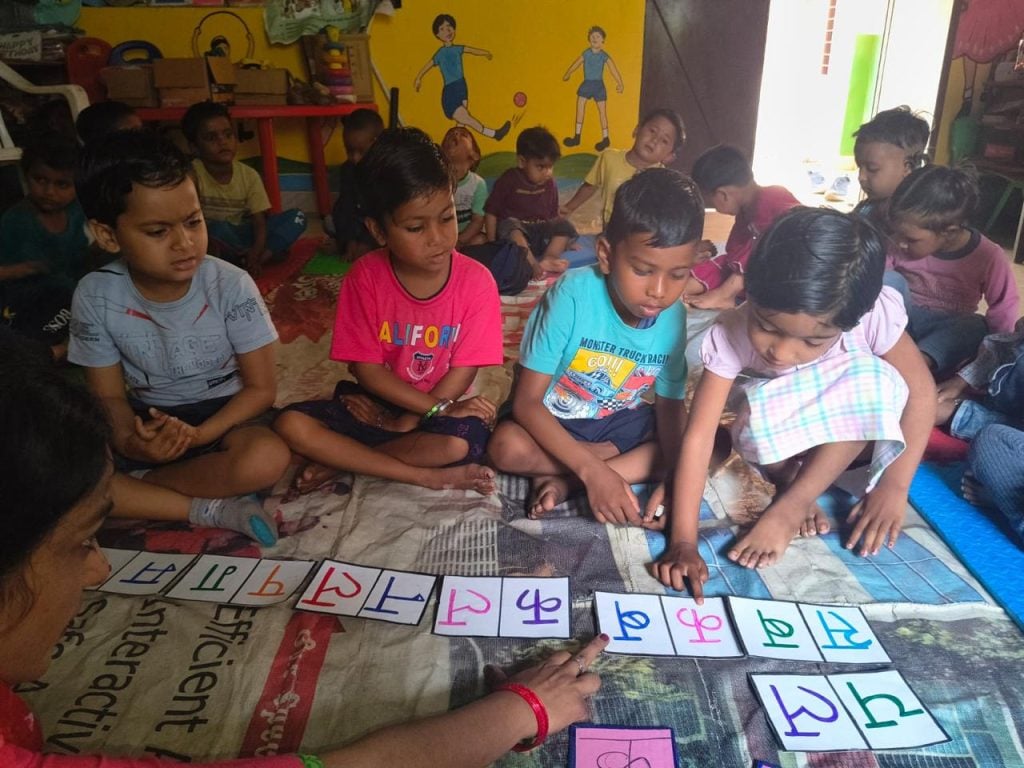
The initiative, led by IAS Sumit Rajesh Mahajan, a 2020-batch Uttar Pradesh cadre officer and Chief Development Officer (CDO), Saharanpur, seeks to transform Anganwadi centres from places primarily associated with nutrition services into spaces where young children can learn through structured play and age-appropriate activities.
The model has now expanded across all 3,410 Anganwadi centres in the district and has been recognised by NITI Aayog as a national best practice in Early Childhood Care and Education (ECCE).
Why Mission Sunehra Kal Was Needed
The idea emerged from a simple observation.
Anganwadi centres were largely functioning as nutrition centres, with their role often associated with distributing rations and providing nutritional support. Speaking with Indian Masterminds, IAS officer Sumit Mahajan shared that he felt that their potential could go much further.
“Anganwadis should not remain just nutrition centres; they should also become play groups or play schools, similar to how early childhood education is emphasised in the New Education Policy.”
The National Education Policy (NEP) 2020 places considerable emphasis on Early Childhood Care and Education, particularly for children in the 3–6 age group. For Saharanpur, strengthening Anganwadis became a practical starting point for implementing this vision at the grassroots level.
But transforming the centres required more than introducing a new curriculum. The people working with children every day needed to be equipped with the right skills.
That made capacity building of Anganwadi workers and supervisors the first major focus of Mission Sunehra Kal.
Creating a Cadre of Master Trainers
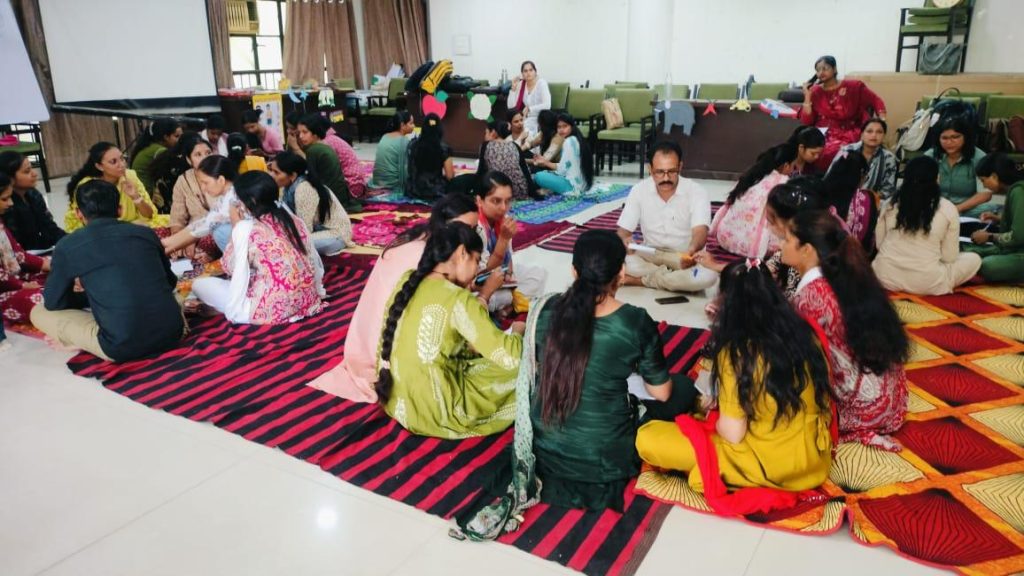
During the first two years, Saharanpur identified 137 Anganwadi workers and supervisors to become master trainers.
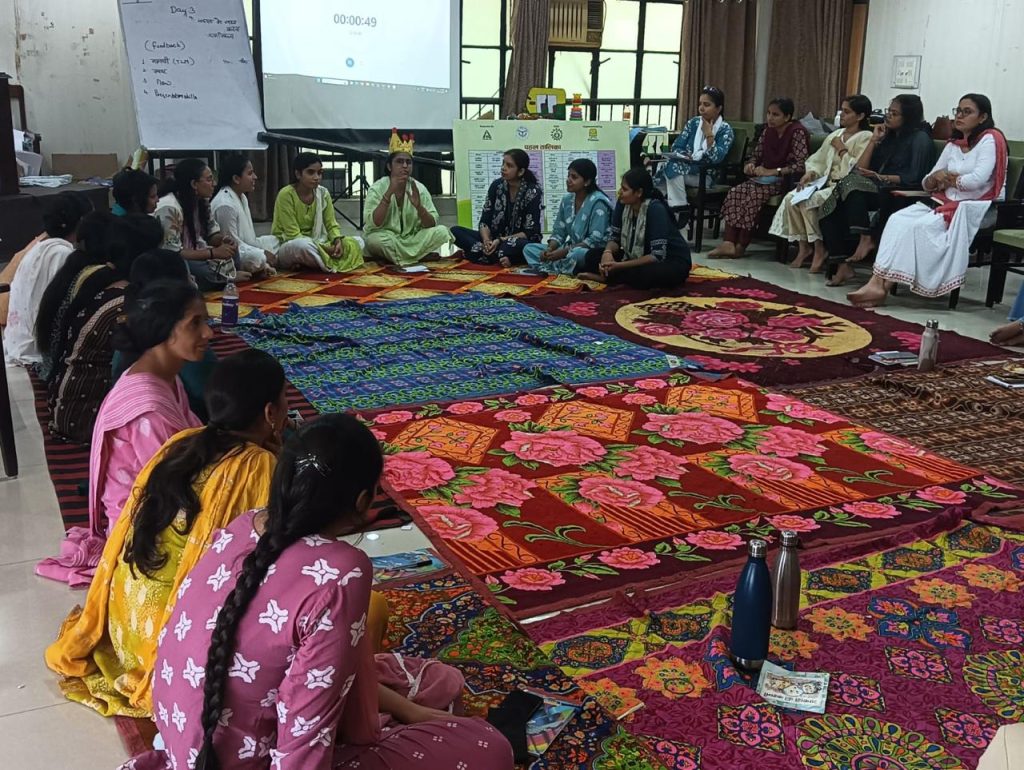
With support from Pratham Foundation, Delhi, these selected workers underwent a five-day training programme conducted by master trainers from the organisation.
The objective was to create a district-level group capable of taking the programme forward and training other Anganwadi workers.
The initial training was followed by a more intensive 20-day training programme, where the master trainers were taught how to deliver a simple, structured three-month syllabus designed for children between three and six years of age.
The programme was not limited to classroom-style training.
After the five-day training, a practical examination was conducted after 20 days to assess how effectively the participants could translate what they had learned into actual teaching practices.
This approach created a system in which training, assessment and implementation were connected.
From 780 Centres to All 3,410 Anganwadis
Rather than attempting to introduce the programme across the entire district at once, Saharanpur adopted a phased approach.
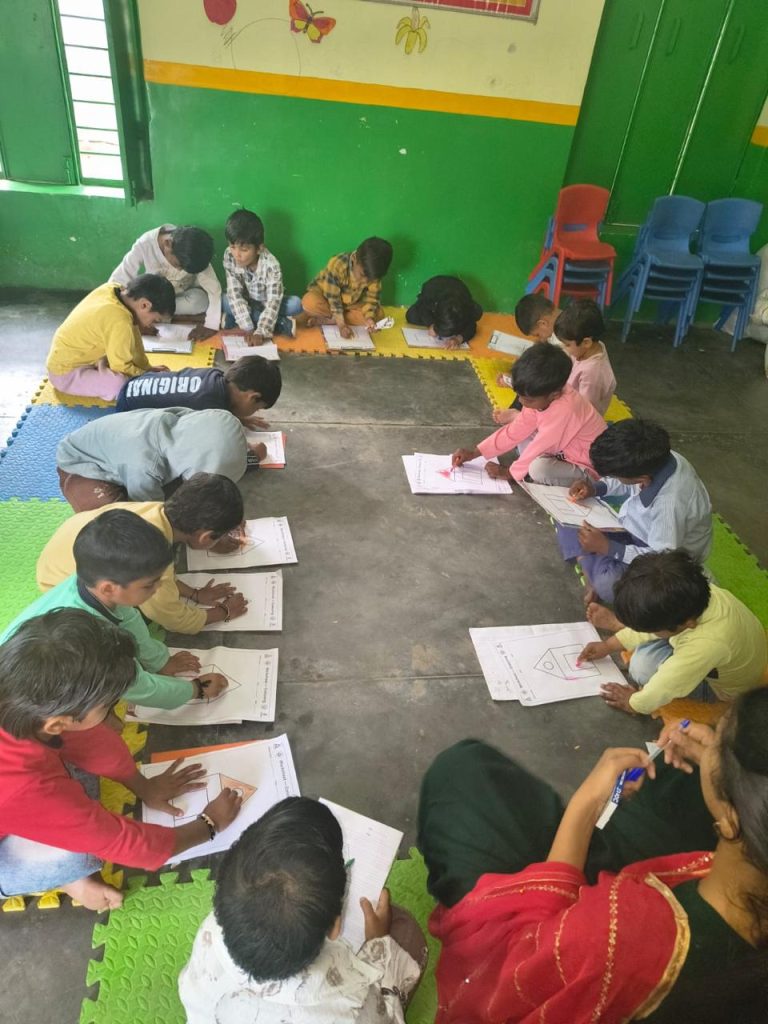
In the first year, around 780 Anganwadi centres implemented the three-month early childhood education syllabus.
The experience and results from these centres helped build confidence in the programme. In the second year, the model was expanded to all 3,410 Anganwadi centres across Saharanpur.
Mr Mahajan explains why the administration chose a gradual expansion.
“The biggest challenge was capacity building on a large scale. That is why we did it phase-wise. Instead of introducing it across the whole district at once, we first worked with 137 master trainers and 780 Anganwadis.”
The strategy allowed the administration to identify challenges early, refine the process and create a trained pool of people who could support the expansion.
Measuring More Than Just Attendance
Mission Sunehra Kal was designed around the idea that early childhood education should produce measurable changes in a child’s development.
To track this, the district administration developed assessment forms based on five key indicators:
- Physical development
- Cognitive development
- Social development
- Arithmetic skills
- Language skills
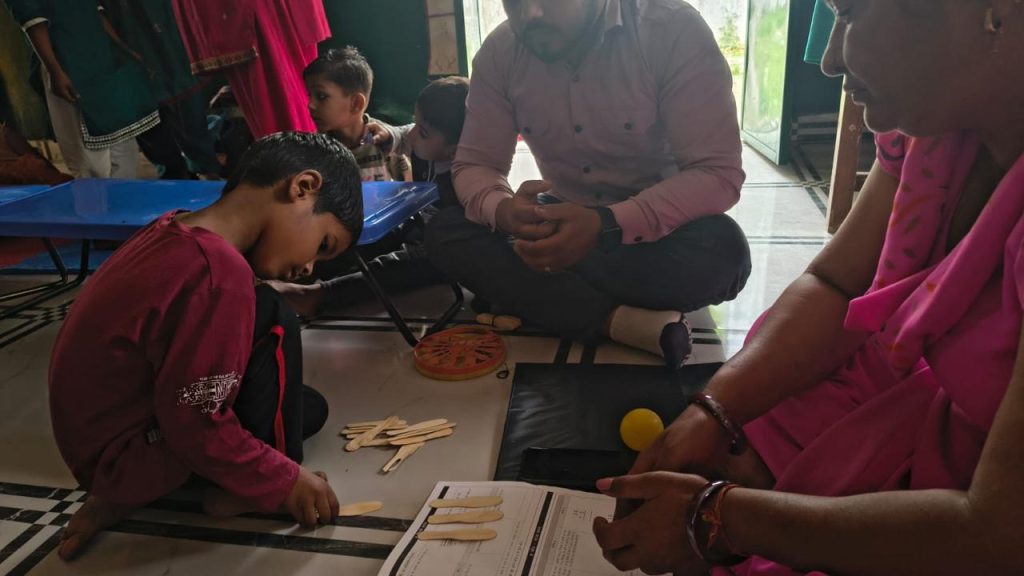
For each indicator, five activities were selected, creating a set of 25 activities through which children’s development could be assessed.
A baseline assessment was conducted before the three-month programme began. The children were assessed again after completing the course.
In the first year alone, around 20,000 children were covered. During the second year, the programme reached more than 50,000 children across the district.
The assessments showed noticeable improvement in children’s learning and development.
The administration also focused on what happened after children completed the programme.
Many of the children completing the three-month course turned six and became eligible to enter formal schooling. Officials observed that these children were more confident and better prepared for school compared to children who had not gone through the programme.
School Readiness Melas Bring Parents Into the Process
The next step was to ensure that the transition from Anganwadi to school was smooth.
Saharanpur organised School Readiness Melas across the district, bringing together children, parents, teachers, Anganwadi workers and members of the local community.
The events were used to showcase children’s learning, involve parents and encourage school admissions.
This also helped change the perception of Anganwadi centres among families.
“Parents were quite encouraged because Anganwadis had earlier been seen only as nutrition centres.”
The shift was therefore not only about what happened inside an Anganwadi centre. It was also about changing how families and communities viewed early childhood education.
Why the Model Can Work Beyond Saharanpur
One of the distinctive aspects of Mission Sunehra Kal is its attempt to give equal importance to education and nutrition during the early years.
While play groups and structured early learning are relatively common in urban settings and private schools, such opportunities are often less accessible to children in rural areas.
Mr Mahajan believes this is where the model has wider relevance.
“The strong focus on early childhood education — especially in rural Anganwadis — is the most replicable part. In urban areas and private schools, play groups already exist, but in rural areas this concept was missing.”
The programme was also aligned with existing state-level initiatives instead of functioning as an isolated intervention. This helped connect the district-level model with the broader objectives of early childhood education under the New Education Policy.
Another important factor was monitoring.
Pratham Foundation supported the district in developing feedback mechanisms, conducting assessments and monitoring the three-month programme. This helped the administration track implementation rather than relying only on training numbers.
From Saharanpur to a Wider Model
The initiative’s recognition by NITI Aayog as one of the country’s best practices in Early Childhood Care and Education has added another dimension to the Saharanpur experiment.
According to Mr Mahajan, only two initiatives received this particular recognition, with Saharanpur’s early childhood education model being one of them.
The model has also begun attracting interest beyond Uttar Pradesh.
Pratham Foundation and ITC, which partnered with Saharanpur for the programme, have since signed an MoU with the Uttarakhand government after showcasing the Saharanpur model. The agreement, signed in the presence of the Uttarakhand Chief Minister, aims at state-level implementation based on the approach developed in Saharanpur.
For IAS Sumit Mahajan and the district administration, the larger lesson is straightforward: strengthening early childhood education does not always require creating an entirely new system.
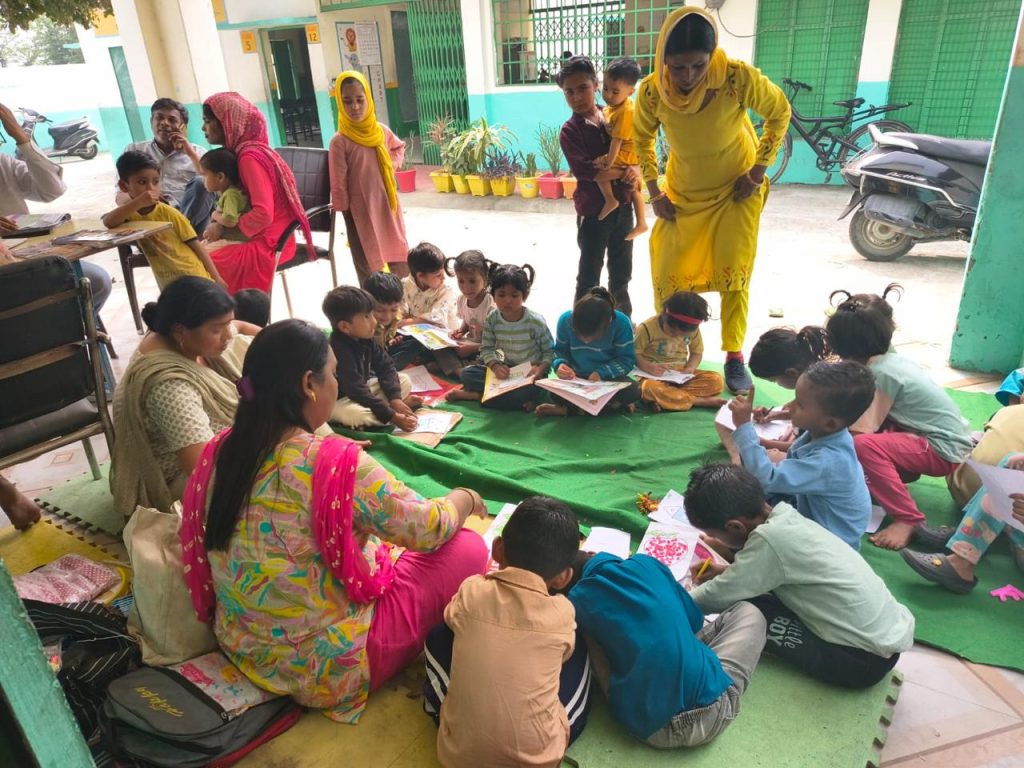
Existing institutions such as Anganwadi centres can become stronger learning spaces when their workers receive the right training, children are given structured activities and progress is regularly assessed.
Mission Sunehra Kal has attempted to make that shift across Saharanpur — moving Anganwadis beyond their traditional role as nutrition centres and giving “Poshan Bhi Padhai Bhi” a practical meaning.
“When we invest in young children today, we build a stronger society for tomorrow.”
With 137 master trainers, 3,410 strengthened Anganwadi centres, 137 model centres, more than 50,000 children reached, and recognition from NITI Aayog, Saharanpur’s experience offers a model for bringing early learning closer to children who may otherwise have limited access to it.