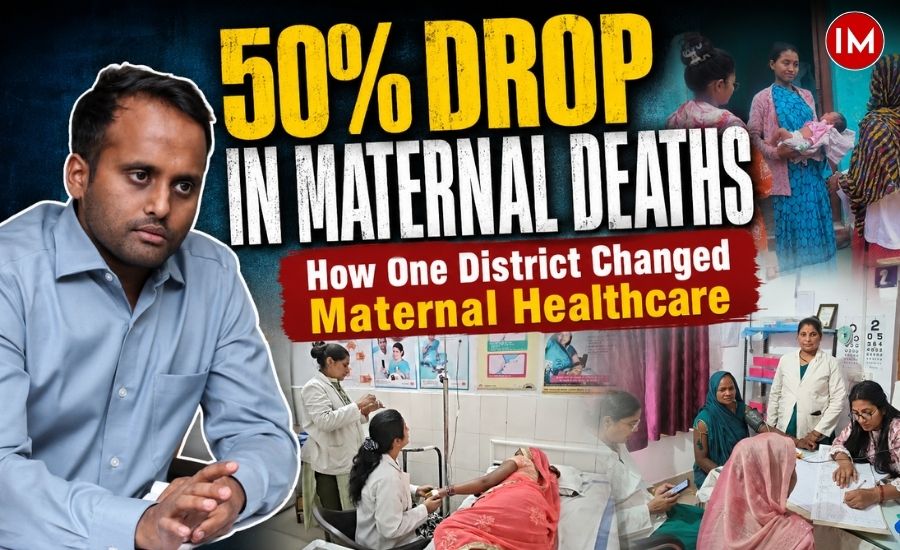
Despite free medicines, nutritional support and multiple maternal health schemes, maternal deaths remained a concern in several parts of Madhya Pradesh’s Shahdol district. The problem was not the absence of government programmes—it was the gap between healthcare services and the women who needed them most.
Many pregnant women, particularly in remote tribal villages, were not taking iron and calcium tablets regularly, missing nutritional supplements and delaying visits to health facilities until complications became severe. Frontline workers were expected to monitor them, but regular follow-up was inconsistent, and awareness about pregnancy care remained low.
Instead of launching a new scheme, IAS Shivam Prajapati, a 2021-batch Madhya Pradesh cadre officer and CEO of Zila Panchayat, Shahdol, decided to strengthen the implementation of the existing system.
The result was ‘Maa Ka Haal – Swasthya Ka Khayal,’ a district-wide campaign built around one simple idea—identify every high-risk pregnancy early, stay in regular contact with the mother, and intervene before complications become life-threatening.
Within six months, the initiative contributed to a 50% decline in maternal deaths and a 34.7% reduction in infant deaths compared to the same period last year.
Looking Beyond the Schemes
Before designing the intervention, the district administration spent nearly two months conducting a village-level assessment to understand why government schemes were not producing the expected outcomes.
The findings challenged a common assumption. The issue was not that medicines or healthcare services were unavailable. The real problem was that beneficiaries were not being reached consistently.
“The government is running a lot of schemes, but we wanted to understand why they were not reaching people. After speaking to villagers for almost two months, we realised that our own people were not reaching them on time,” IAS officer Shivam Prajapati shared in a conversation with Indian Masterminds.
The survey also revealed that many pregnant women did not understand the importance of taking prescribed medicines regularly or maintaining a nutritious diet. For families dependent on daily wage labour, travelling to health centres for routine counselling or follow-up was often difficult. As a result, complications such as anaemia and pregnancy-induced hypertension frequently went unnoticed until they became serious.
The administration decided that instead of expecting women to come to the health system, the health system needed to go to them.
Building a Doorstep Monitoring System
The campaign began in January 2026 with a comprehensive survey across every village in Shahdol to identify High-Risk Pregnant Women (HRPW).
Every fifteen days, updated lists of high-risk pregnancies were shared with ANMs, Community Health Officers and Medical Officers. Each identified woman received at least one home visit and two phone calls every month. Healthcare workers monitored whether medicines were being taken on time, checked nutritional intake, enquired about warning signs and arranged referrals whenever necessary.
Women continued to remain under observation until 42 days after delivery, ensuring that postnatal complications were also monitored.
Pregnant women whose haemoglobin levels ranged between 7 and 8.5 g/dL underwent CBC investigations for better diagnosis and treatment planning.
“We reached them instead of waiting for them to come to the hospital. We first identify them and then reach them before complications become serious,” Shivam explains.
The campaign was intentionally designed to be simple and practical.
“We have not used AI because we wanted to keep the system simple. Our lowest-level staff should be able to understand and implement it easily. If the process becomes complicated, the initiative will not succeed.“
From Awareness to Acceptance
One of the biggest lessons from the campaign was that poor compliance did not necessarily mean unwillingness.
When health workers started speaking regularly with pregnant women, they realised most beneficiaries had never been properly counselled about the importance of medicines or nutrition.
“When we asked them, they said, ‘Sir, we have no idea. If we know, we will take the medicines.’ The problem was not refusal; it was lack of awareness,” says the officer.
Regular conversations gradually changed health-seeking behaviour. Women became more conscious about taking prescribed medicines, consuming protein-rich food and reporting symptoms early. Since health workers visited their homes instead of asking them to travel repeatedly to hospitals, families found it easier to follow medical advice without losing daily wages.
Another interesting behavioural shift emerged over time. Since women knew health workers would be calling or visiting regularly, many began planning their schedules accordingly.
“Acceptance has increased, and people have become more aware about their own health,” he says.
Changing the Working Culture of Frontline Staff
The campaign transformed not only beneficiary behaviour but also the functioning of frontline health workers.
Initially, some ANMs and ASHA workers viewed the additional follow-up as an extra burden. The administration addressed this by introducing regular monitoring and district-level verification calls.
Random beneficiaries were contacted directly to confirm whether home visits and phone calls had actually taken place.
The system gradually improved accountability.
“Initially, our staff could reach only about 80% of beneficiaries through phone calls. Gradually, that figure increased to almost 99%. Once they saw that better monitoring was producing better results, they themselves became more motivated to visit the field,” Shivam says.
Planning Deliveries Before Emergencies
Providing maternal healthcare in Shahdol comes with unique logistical challenges. Many villages are located in forested and difficult-to-reach areas where heavy rainfall often cuts off road connectivity.
Rather than responding only after labour pains began, the district administration started preparing in advance.
Lists of women expected to deliver within the following week were shared with local administration, ANMs, ASHA workers and sub-divisional magistrates. Ambulances and transport arrangements were organised beforehand, especially for remote villages where reaching a hospital at night or during the monsoon could become difficult.
The proactive planning also reduced the chances of home deliveries and emergencies occurring while patients were being transported.
Measurable Improvements in Six Months
Between January and June 2026, the campaign identified 5,380 High-Risk Pregnant Women, achieving 100% phone monitoring.
Among them, 4,646 women were diagnosed with moderate anaemia, 174 with severe anaemia and 560 with Pregnancy-Induced Hypertension (PIH).
Timely intervention helped successfully manage 3,084 moderate anaemia cases, 151 severe anaemia cases and 461 PIH cases, resulting in successful treatment for 3,696 high-risk pregnancies.
The improvements extended to maternal and child health outcomes.
Maternal deaths in Shahdol declined from 14 between January and June 2025 to 7 during the same period in 2026, representing a 50% reduction.
Infant deaths also reduced from 323 to 211, a 34.7% decline, indicating that better maternal monitoring was also improving newborn survival.
The district’s six Nutrition Rehabilitation Centres (NRCs) also reported encouraging progress. Admissions increased from 686 children in the first half of 2025 to 1,027 during the same period in 2026, while successful discharge rates improved from 87% to 90%, reflecting stronger identification and referral systems for malnourished children.
The Road Ahead
The Shahdol administration now plans to extend the same intensive monitoring approach to further reduce infant mortality.
For IAS officer Shivam Prajapati, the campaign has reinforced an important lesson: strengthening implementation can often deliver better outcomes than creating new schemes.
“If the mother remains healthy, the child also remains healthy. Our focus now is to ensure that this close monitoring continues throughout the year so that maternal and infant deaths remain as low as possible.“
The experience from Shahdol shows that improving maternal healthcare does not always require sophisticated technology or expensive infrastructure. Sometimes, consistent follow-up, timely counselling, accountable frontline workers and reaching beneficiaries before they seek help can produce measurable improvements in public health.