For thousands of children in Ratlam’s government schools, learning once began with a simple challenge: finding a comfortable place to sit.
Many primary school students attended classes seated on the floor. In secondary schools, smart boards had arrived, but quality digital content had not. Across rural Ratlam, students preparing for competitive examinations often had nowhere quiet to study after school.
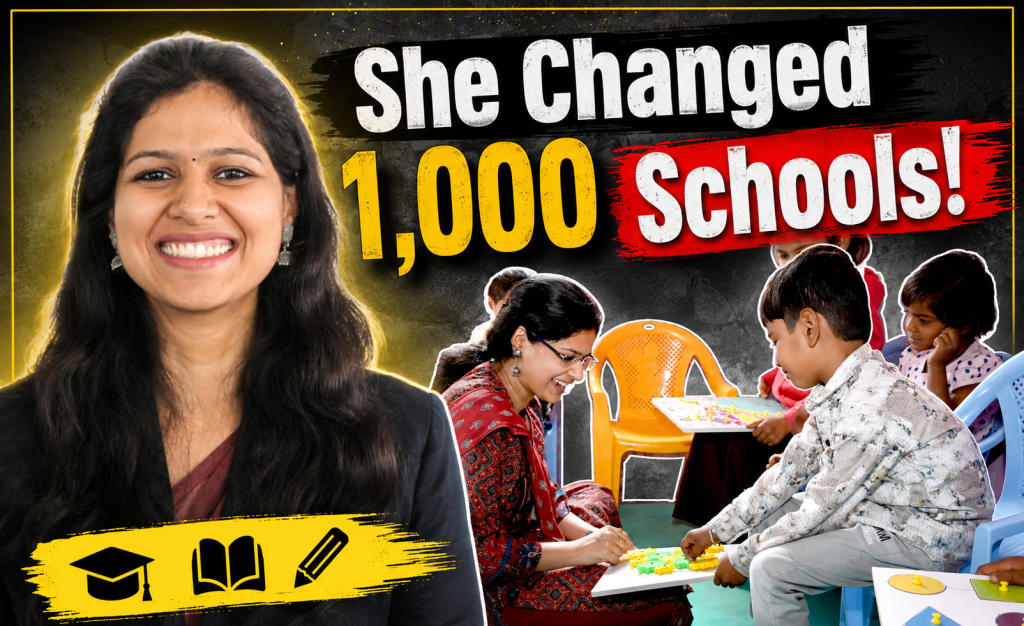
IAS Vaishali Jain looked at these problems not as separate issues but as different parts of the same puzzle.
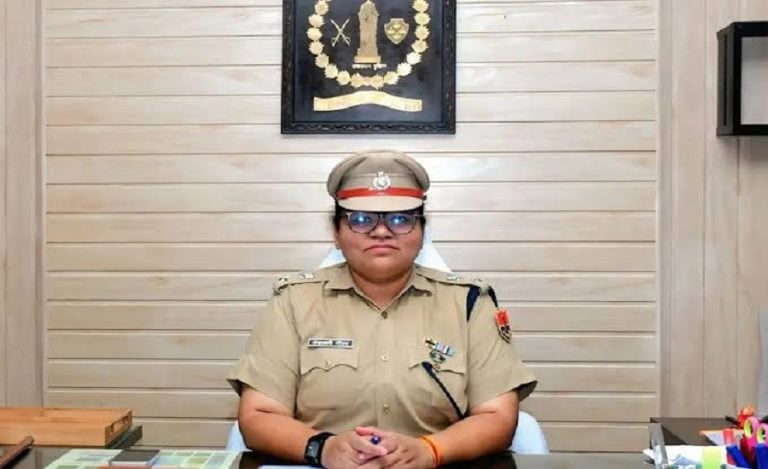
As the Chief Executive Officer of Ratlam Zila Panchayat and Additional Collector, the 2021-batch Madhya Pradesh cadre officer has designed a three-layered education model that begins with dignity, moves to better learning, and finally creates spaces where aspirations can grow. Instead of isolated interventions, Ratlam is witnessing an integrated education movement that connects infrastructure, technology and access into one continuous journey.
Also read: How IFS Prakash Gogineni Is Rewriting Tiger Protection in Similipal With AI, Intelligence and a Bold Genetic Rescue Plan
THE FIRST STEP WAS SIMPLE: GIVE EVERY CHILD A BENCH
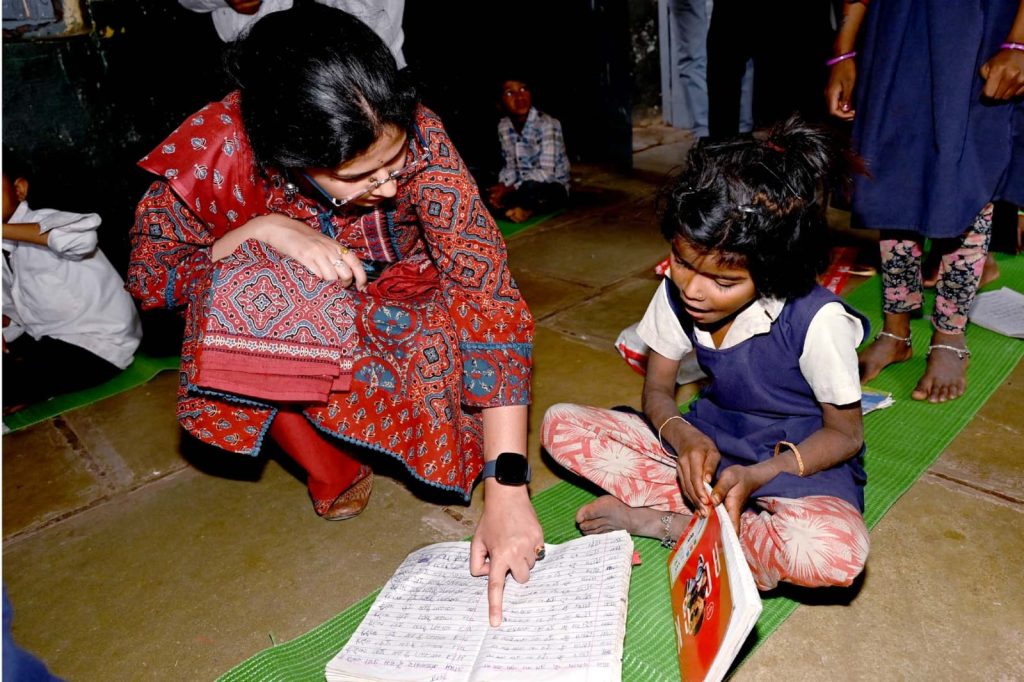
The district’s survey revealed an uncomfortable reality. Hundreds of primary schools lacked adequate classroom furniture, forcing children to spend hours studying on the floor.
That became the starting point of Gyanodaya – Shala Unnayan Abhiyan.
Rather than depending solely on government funds, the administration invited society to become part of the solution. Villagers began adopting their own schools. CSR partners joined in. MLA funds were pooled. Panchayats stepped forward to repair leaking roofs while donors selected schools directly through a transparent system supported by SOPs, Google Forms, authorised vendor lists and a public helpline.
The campaign aims to provide over 21,000 bench-desks across 1,011 government primary schools, benefiting more than 42,000 students.
The results are already visible. Around 200 schools have been equipped with benches, ensuring that children from Classes I to V no longer sit on classroom floors. Nearly 100 schools have undergone repairs, while rainwater harvesting structures have also been installed to conserve water and increase the life of school buildings.
“No student in these schools sits on the floor, anymore. They very respectfully sit on their benches,” Vaishali shared in an exclusive conversation with Indian Masterminds.
For her, infrastructure is not merely about buildings; it is about creating an environment where children feel valued before they even open a textbook.
BRIDGING THE KNOWLEDGE GAP THROUGH TECHNOLOGY
Once classrooms became more welcoming, the next question emerged. How could students in remote government schools receive the same quality of teaching as those with access to experienced educators?
That answer became E-Gyan Setu.
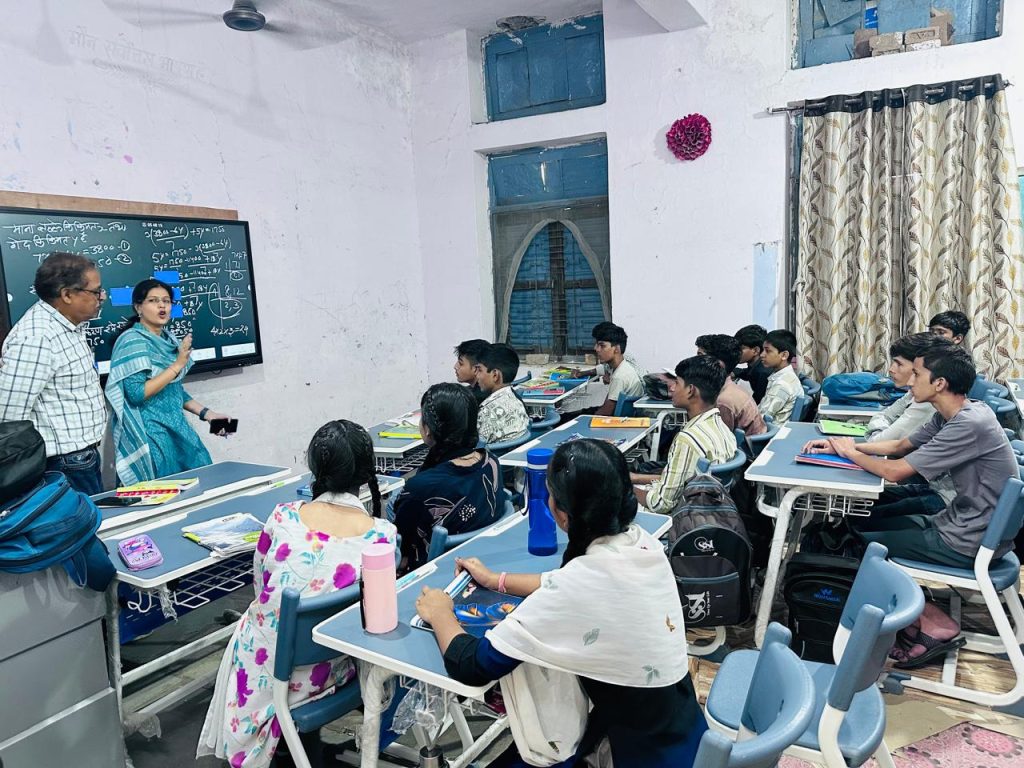
Instead of replacing teachers, the initiative strengthens them through carefully curated digital learning resources for Classes IX and X. A team of sixteen subject experts has developed video lectures, bridge courses, chapter-wise study material, revision modules, worksheets and AI-assisted learning content aligned with the curriculum.
Using existing smart classrooms and digital infrastructure, students now access lessons designed not just to complete the syllabus but also to close learning gaps. Fortnightly assessments help identify weak areas, allowing schools to provide timely remedial support.
The initiative currently operates in 100 government schools, with plans to expand across the district. Future plans include a dedicated recording studio and educational content in local languages like Malvi and Bhili, making digital education even more inclusive.
Explaining the idea behind the programme, she says, “We are bridging the knowledge gap. Conventional teaching has not been replaced completely, but we are supplementing teachers with additional learning material so that students are more involved in classrooms.”
Technology here is not replacing the teacher. It is multiplying the reach of good teaching.
A LIBRARY IN EVERY BLOCK
Education, Vaishali Jain believes, should not end with the school bell Recognising the lack of quiet study spaces for rural students, the administration has launched a Public Rural Library Initiative.
Unused government buildings are being transformed into modern study centres across Ratlam’s six Janpad Panchayats using Fifteenth Finance Commission grants.
Each library will offer comfortable seating, computers, internet access and a peaceful learning environment. Women from Self-Help Groups will manage these centres while running adjoining Didi Cafes, creating livelihood opportunities alongside educational infrastructure. Students will pay only a nominal hourly fee, ensuring affordability.
It is an initiative that supports school students today while preparing future civil servants, professionals and graduates tomorrow.
EDUCATION NEEDS TIME NOT HEADLINES
Vaishali Jain knows that meaningful educational reform cannot be measured overnight.
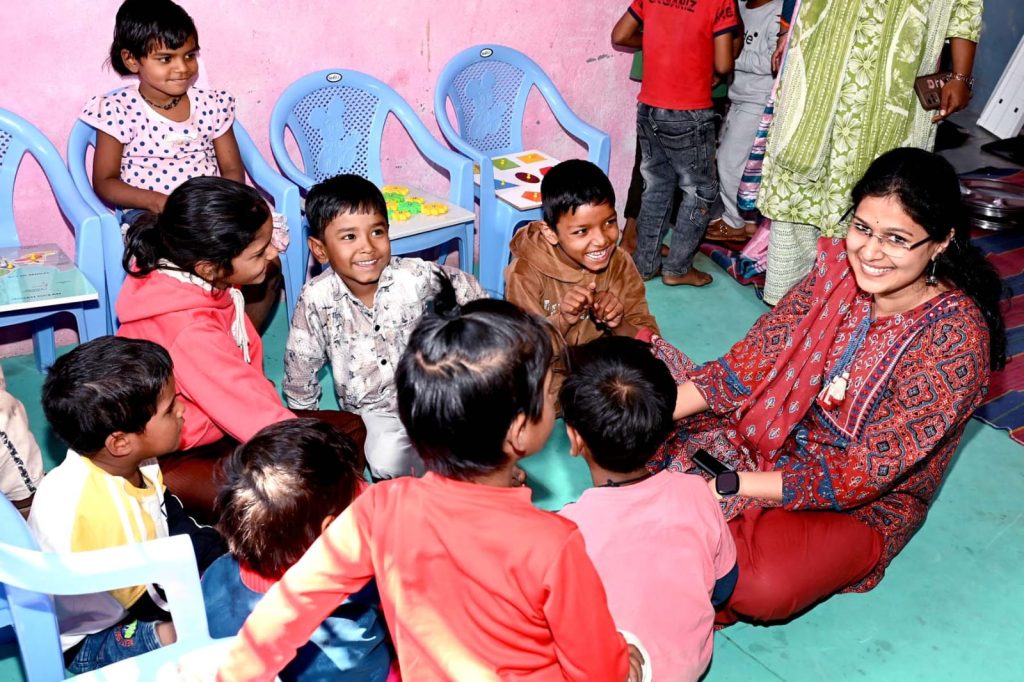
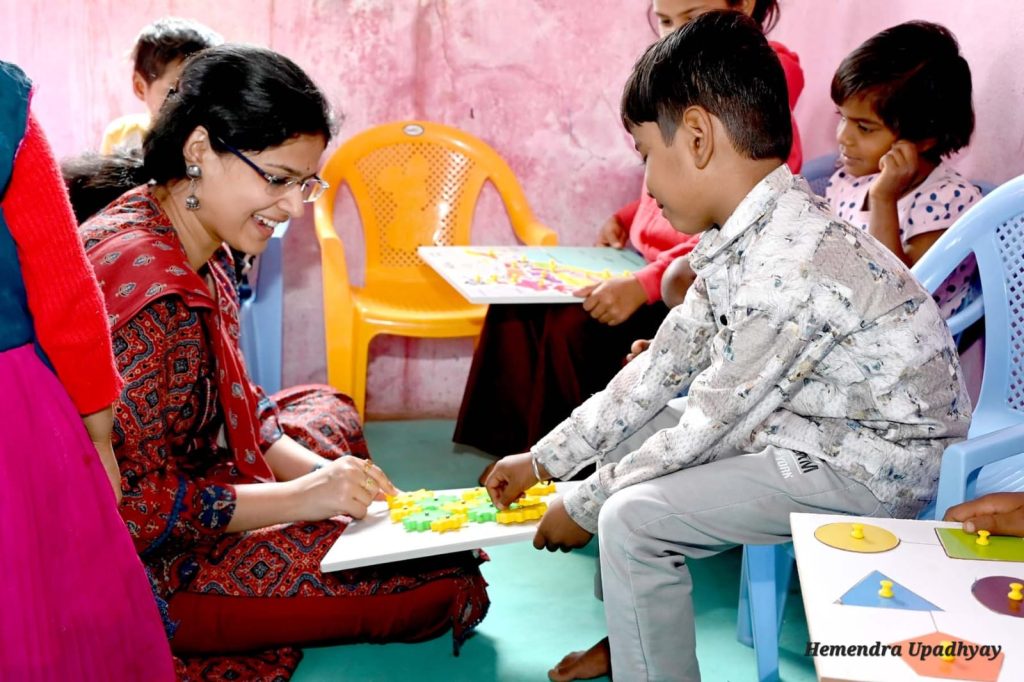
Working extensively in Ratlam’s tribal areas, her teams regularly meet parents, monitor attendance and encourage families to send children to school. Schools have been painted, classrooms improved, benches installed and digital learning introduced, all with one objective: making government schools places children genuinely want to attend.
As she told Indian Masterminds, “Education is something which needs consistent effort. You will be able to see the results after a year or two, maybe more than that.“
That patience defines her approach.
AN OFFICER WHO LOOKS BEYOND THE FILE
Even while focusing on education during her nine months in Ratlam, Vaishali Jain has continued addressing broader governance challenges.
She personally led a five-day housing camp that completed over 5,600 geotags, monitored stalled rural development works and revived abandoned projects through continuous field visits.
Earlier, as SDM in Rewa, she disposed of more than 9,000 revenue court cases by ensuring every petitioner was heard before leaving the courtroom.
One public grievance there led her to uncover nearly 200 inactive government bank accounts holding pending land acquisition compensation. After painstaking verification, around ₹100 crore was recovered for farmers awaiting payments, eventually helping the district trace nearly ₹200 crore in pending compensation.
That experience reinforced a belief she continues to carry.
“One complaint is not limited to that person only. The entire system can be changed for that particular kind of case.”
It is perhaps the philosophy that ties together everything she does. Because for IAS Vaishali Jain, governance is not about launching schemes.
It is about noticing what people have quietly accepted for years: a child sitting on the floor, a student without a place to study, a farmer waiting endlessly for compensation, and deciding that those should no longer be normal.
Also read: How IAS Shubham Bhaisare Brought Identity, Dignity and Welfare to the Forgotten in Tribal Rajasthan