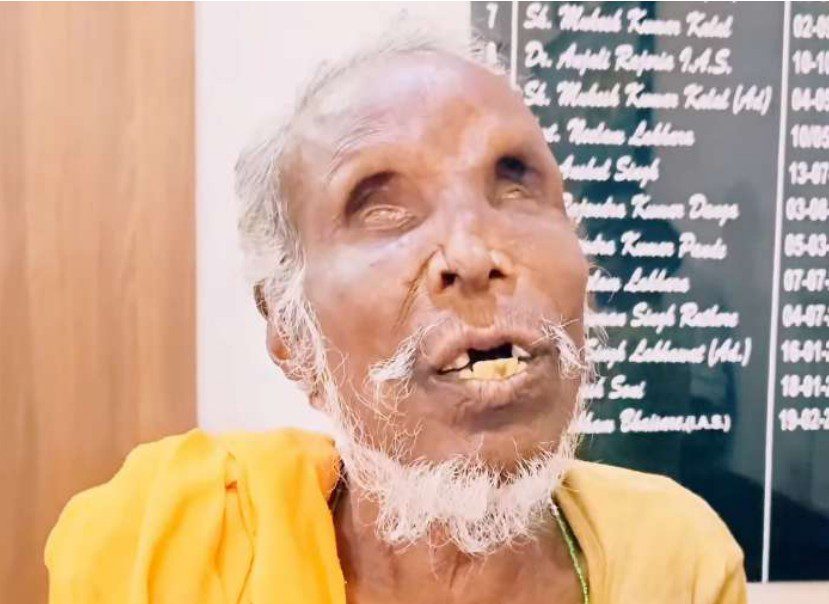
In a small tribal hamlet tucked away in Gogunda, Rajasthan, lived Homa Gameti, a man whose life had slowly narrowed into silence.
Leprosy had taken away all the fingers on his hands and feet. It had weakened his eyesight, too. But what hurt even more was something far less visible: for years, Homa had no identity in the eyes of the system.
No Aadhaar. And without Aadhaar, no pension. No Ayushman health card. No bank account. No welfare schemes.
Since 2017, several attempts had been made to register him. Every time, the same problem stopped everything: the Aadhaar system required at least one usable biometric. Homa had none.
For most, this would have been just another “pending file.” For Shubham Bhaisare, Sub-Divisional Magistrate of Gogunda, it became personal.
“Sometimes public service is not about how many people you reach. It is about ensuring that even the last person in the queue is not left behind,” Bhaisare shared in an exclusive conversation with Indian Masterminds.
That belief would set off a long journey.
Also read: How did IAS Shubham Bhaisare crack multiple exams within a few years?
A JOURNEY ACROSS SYSTEMS FOR ONE MAN
The administration first tried multiple Aadhaar centres in Udaipur. Each attempt failed. Then Homa was sent to the UIDAI office in Ahmedabad.
Again, rejection.
The final option was a special exemption from Delhi, a process impossible for a man from a remote tribal village who had never even used a telephone.
That is where Bhaisare stepped in.
He reached out to senior officers in the Ministry of Electronics and Information Technology and the Unique Identification Authority of India, pushing for compassion over procedure.
“Systems work best when they are guided by compassion,” Bhaisare says.
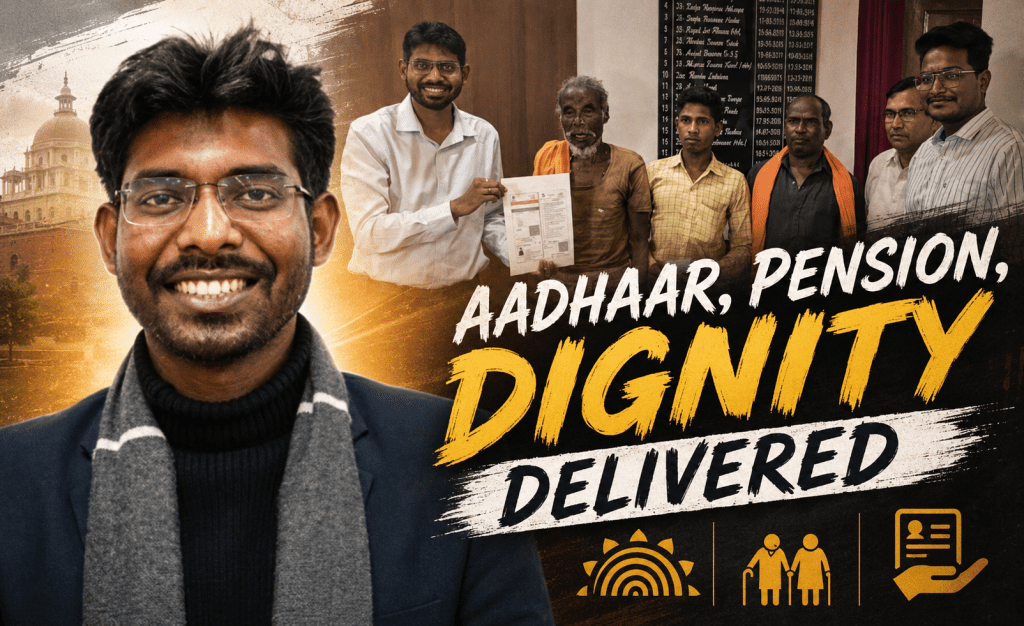
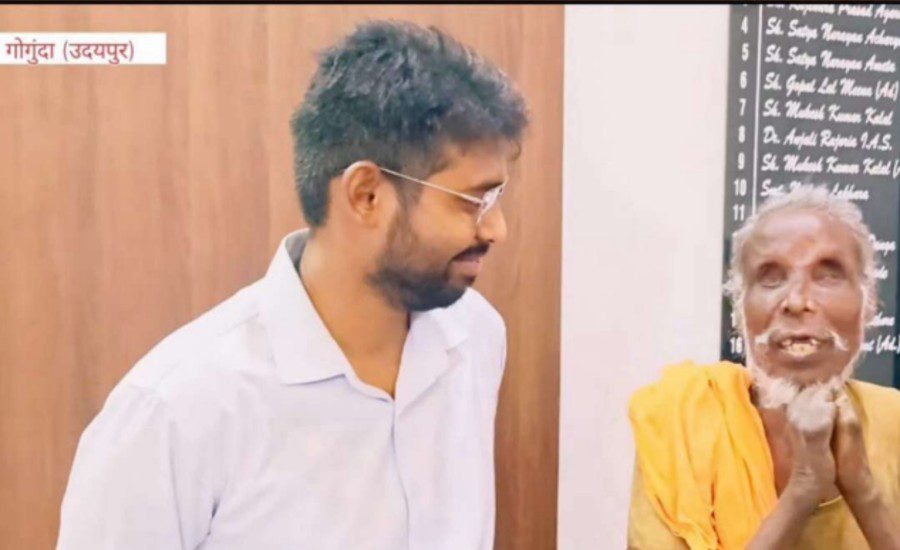
The exemption was approved. Homa did not have to travel to Delhi. His Aadhaar was finally generated in Udaipur itself.
But even that wasn’t simple. Since Homa lived in an area with almost no mobile connectivity, Bhaisare’s team often travelled a day in advance just to inform him about appointments and arrange transport.
And when Homa finally held his Aadhaar card, after years of rejection, his face said everything. It wasn’t just a document. It was recognition.
BUILDING ACCESS, NOT JUST SOLVING CASES
When Bhaisare joined Gogunda, the tehsil had only two Aadhaar centres. Sayra had none. He expanded the network across Gram Panchayats, making access easier for thousands.
But his work did not stop at Aadhaar. He saw another invisible crisis. Hundreds of Divyangjans in tribal Gogunda and Sayra were struggling to get their Unique Disability ID (UDID) cards: the key to disability pensions, free bus passes, and welfare support.
The process was exhausting: apply at e-Mitra, wait for medical appointments, travel to Maharana Bhupal Government Hospital in Udaipur, stand in long queues, return for approvals, and then wait again.
For someone elderly, visually impaired, or unable to walk, it was almost impossible. So Bhaisare redesigned the system.
DIVYATA CAMP: WELFARE AT THE DOORSTEP
Under his leadership, the administration launched Divyata Camp, a field-level single-window service model. Instead of making Divyangjans travel to hospitals, hospitals came to them.
Specialist doctors, such as orthopaedic and eye experts, were deputed from Maharana Bhupal Government Hospital. Medical examinations happened at the campsite. e-Mitra operators handled on-the-spot digital registrations. Backend approvals were coordinated immediately.
The goal was simple: same-day UDID issuance. And it worked.
In just four days — two in Gogunda and two in Sayra:
- 513 registrations were completed
- 406 eligible beneficiaries received UDID cards
- 400+ beneficiaries were linked to pensions and free lifetime Rajasthan Roadways bus passes
- 502 Aadhaar updations were completed
- Nearly 100 beneficiaries per day were covered
“The idea was simple: if the process itself becomes a barrier, the administration must change the process,” says Bhaisare.
For hundreds, what once took over a month was completed in a single day.
GIVING MOBILITY BACK TO THE ELDERLY
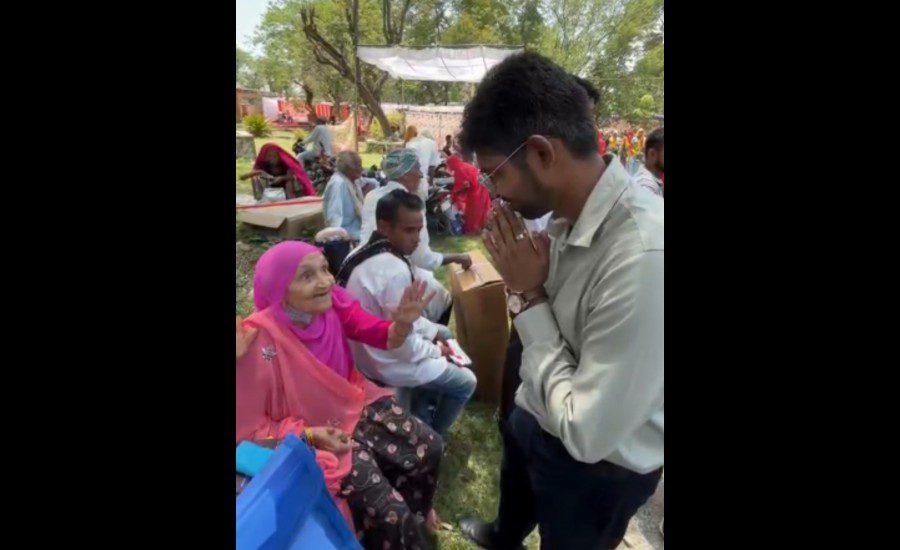
Bhaisare also turned his attention to elderly citizens under the Rashtriya Vayoshri Yojana.
Through six days of assessment camps between 24–29 November 2025, his team, in coordination with Artificial Limbs Manufacturing Corporation of India and the Social Justice Department, identified elderly citizens across 60 Gram Panchayats in Gogunda and Sayra.
The numbers were massive:
- 1,927 senior citizens identified
- 11,636 assistive devices approved
- ₹1.48 crore sanctioned
The list included:
- 3,362 knee braces
- 1,662 walking sticks
- 1,583 lumbar belts
- 794 hearing aids
- 1,220 spectacles
- 394 wheelchairs
- 721 commode chairs
- 312 dentures
So far, around 1,000 beneficiaries have already received their devices. For the rest, the collection has been arranged through ALIMCO centres.
WHAT GOVERNANCE LOOKS LIKE AT GROUND LEVEL
In administration, numbers often dominate reports. But in Gogunda, the real story is in the faces behind those numbers.
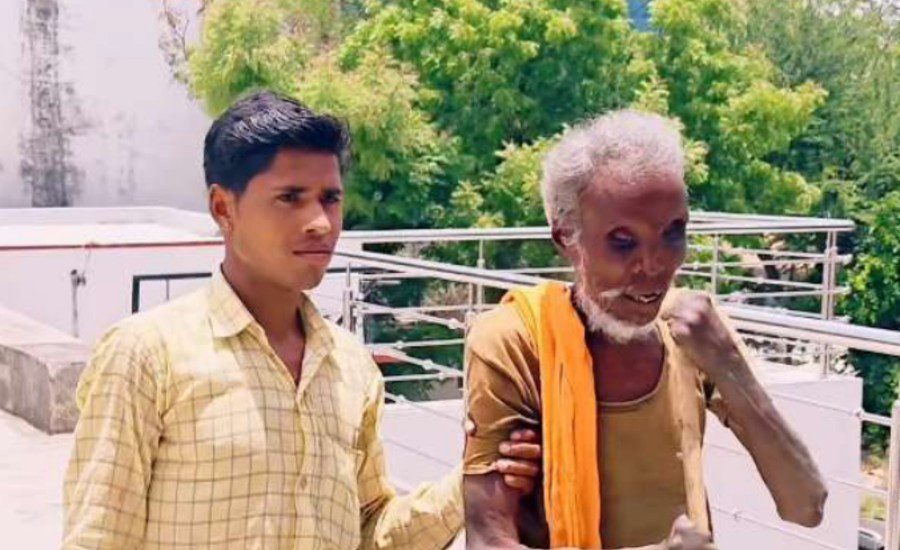
A tribal man, once excluded from the system, now has an identity. Hundreds of Divyangjans now have disability cards, pensions, and mobility support. Nearly two thousand elderly citizens now have assistive devices that can make daily life easier.
This is not about grand announcements. It is about fixing what was broken, simplifying what was complicated, and reaching people who had stopped expecting help.
And perhaps that is what Bhaisare means when he told Indian Masterminds, “The true satisfaction of public service lies in making sure the most forgotten citizen is still seen.”
In Gogunda, that idea is no longer just a line in a speech. It is now part of people’s lives.
Also read: IES, IFS, IRTS, and IAS, Trace Shubham’s Race on the UPSC Track