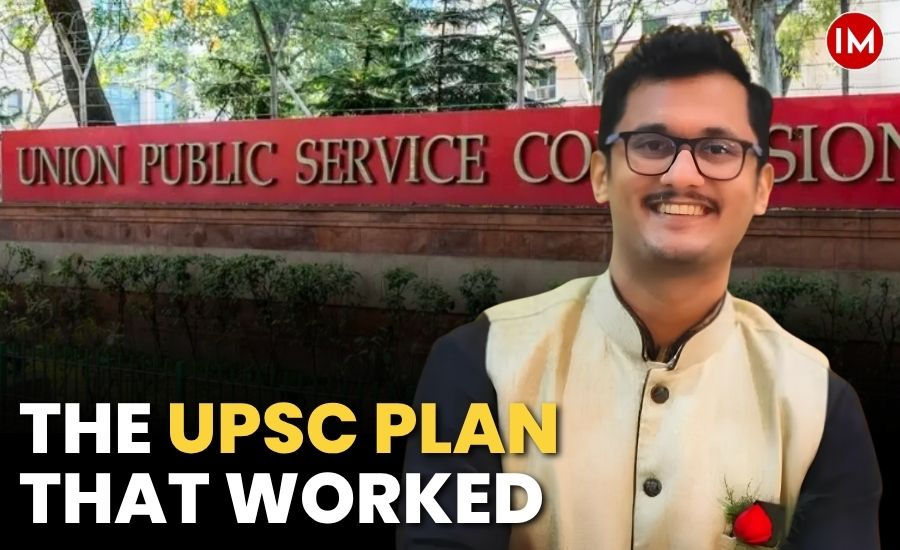
Every day, thousands of buses operated by the North Bengal State Transport Corporation (NBSTC) connect towns and villages across northern West Bengal. Overseeing this public transport network is IAS officer Subhankar Bala, who currently serves as the Deputy Managing Director of NBSTC.
For the 2021-batch IAS officer (West Bengal cadre), this responsibility is another milestone in a journey that began years ago in Jhargram, West Bengal. Long before he knew what the Union Public Service Commission (UPSC) was, a government officer had already inspired him to dream of a career in public service.
The Officer Who Changed His Perspective
Subhankar was studying in Class 7 when Maoist violence affected several parts of his district. During that period, he often saw the local Sub-Divisional Officer travelling to remote villages, interacting with residents, and working to restore normalcy.
Although he had no idea about the civil services at the time, he was deeply influenced by the officer’s work.
“I didn’t know what UPSC was then,” he told media. “But I realised that one person could make a real difference in people’s lives.”
That thought stayed with him even as he pursued engineering and later entered the corporate world.
From Engineering to UPSC
After completing his schooling, Subhankar earned a degree in Electronics and Communication Engineering from the National Institute of Technology (NIT), Warangal.
Like many engineering graduates, he joined the private sector and started working as an integrated circuit design engineer at Texas Instruments in Bengaluru. The job offered stability and good career prospects, but somewhere in the back of his mind remained the dream of serving people through administration.
In 2018, he decided to give UPSC a serious attempt.
Without enrolling in a coaching institute, he began preparing alongside his full-time job. Standard reference books, NCERTs, online lectures and freely available study material became his primary resources. After office hours, he studied for three to four hours every day.
Before making any major career decision, he wanted to understand the examination and evaluate whether self-study would work for him.
The strategy paid off. He cleared the preliminary examination in his very first attempt, giving him the confidence to continue without classroom coaching.
The Lesson That Changed Everything
While clearing prelims boosted his confidence, the mains examination proved much tougher.
Subhankar failed to make the final list. Looking back, he realised that he had not devoted enough time to the mains examination, especially his optional subject, Electrical Engineering.
His optional score was only 170 out of 500, making it clear where he needed to improve.
Determined to change the outcome, he resigned from his corporate job in 2019 and shifted to Delhi for six months to prepare full-time.
This time, he completely changed his strategy.
He focused extensively on his optional subject using NPTEL lectures, Engineering Services study material, previous years’ papers and rigorous practice. Alongside this, he joined a mock test series to improve answer writing—something he had overlooked in his first attempt.
His daily routine also became more structured. Mornings were dedicated to General Studies, afternoons to his optional subject, and evenings to current affairs and revision.
Rather than rushing through the syllabus, he concentrated on understanding concepts thoroughly, revising multiple times, and practising under timed conditions.
The effort produced remarkable results.
His optional score increased from 170 to 290—an improvement of more than 120 marks that significantly strengthened his final score. He secured All India Rank 79 in the UPSC Civil Services Examination and joined the Indian Administrative Service in the 2021 batch.
Over the years, he has served in different administrative roles in West Bengal. He is currently serving as the Deputy Managing Director of the North Bengal State Transport Corporation (NBSTC), West Bengal.
Five Tips to Crack UPSC Without Coaching
Based on his own experience, Subhankar believes coaching is not essential for success in the Civil Services Examination. According to him, disciplined preparation and smart planning matter far more.
1. Understand the Exam Before Spending Money
He advises aspirants not to rush into expensive coaching programmes. Start with the UPSC syllabus, previous years’ question papers and freely available guidance from successful candidates. Understand the demands of the examination before deciding what kind of support you actually need.
2. Turn the Internet Into Your Classroom
According to Subhankar, today’s aspirants have access to high-quality educational resources online. Platforms such as NPTEL, YouTube and open-source study material offer excellent content free of cost. The real challenge lies in selecting reliable sources and sticking to them consistently.
3. Identify Your Weakest Area
One of the biggest turning points in his own preparation was recognising where he was losing marks.
Instead of giving equal attention to every subject, he focused heavily on improving his optional paper. That single decision played a major role in improving his overall rank.
4. Prepare for the Long Journey
UPSC preparation requires consistency over many months.
Subhankar says maintaining motivation was one of the hardest parts because the examination cycle is long and results take time.
He recommends dividing study hours into smaller sessions rather than sitting continuously for long periods. During his preparation, he studied for around 10 to 11 hours daily, splitting them into three or four sessions and taking regular breaks after every two to two-and-a-half hours.
Reading the newspaper, making concise notes, revising regularly and spending 30 to 45 minutes exercising every day were fixed parts of his schedule.
He also advises aspirants to review their progress every month instead of worrying about daily fluctuations.
5. Create Your Own Study Ecosystem
Not everyone can move to Delhi or another coaching hub, but Subhankar believes that should never become a limitation.
He recommends creating a dedicated study space at home, keeping mobile phones away during study hours, reducing unnecessary social engagements and staying connected with serious aspirants through online communities. A disciplined environment can make a significant difference in long-term preparation.
A Dream That Came Full Circle
As a schoolboy, Subhankar Bala watched an administrator transform lives in his district. Years later, he entered the same service with the hope of creating a similar impact.
His journey also highlights how the UPSC preparation landscape has changed. With online resources now widely available, aspirants from small towns no longer need to depend entirely on coaching institutes.
For those preparing from home or balancing a job with studies, his message is clear:
“You don’t need a classroom to clear UPSC. What you need is a focused environment, a practical plan, disciplined preparation and the determination to keep moving forward, even when no one is watching.”