In the deep, rugged forests of Similipal Tiger Reserve, where dense sal forests stretch for miles and the boundaries touch Jharkhand and West Bengal, a quiet but fierce battle has been unfolding.
For decades, Similipal’s biggest enemy was not always the loss of habitat. It was something far older: ritual hunting. And when IFS officer Prakash Gogineni took charge as Field Director of Similipal Tiger Reserve, he knew conventional anti-poaching methods would not be enough.
What followed was a complete shift in strategy, one that mixed artificial intelligence, field intelligence, commando-style forest forces, and even tiger translocation.
The result? A dramatic fall in poaching and a visible rise in tiger numbers.
THE CHALLENGE: A FOREST SURROUNDED BY HUNTING TRADITIONS
Similipal sits in northern Odisha, surrounded by villages with long-standing traditions of mass hunting, especially among tribal communities. For generations, hunting was not just survival; it was ritual.
Over the years, anti-poaching drives had reduced the scale. But the damage continued.
“The prey base of the tiger reserve was getting affected, and the tiger population was not increasing as expected,” Gogineni shared in an exclusive conversation with Indian Masterminds.
That was the turning point. Instead of reacting after poaching happened, he decided to stop it before it began.
Read Also: Baby Gibbon, Broken Canopy, and the Woman Rewriting India’s Conservation Story
AI CAMERAS TURNED THE FOREST INTO A LIVE SURVEILLANCE GRID
Gogineni’s team mapped every path used by hunters to enter the forest. Every route. Every entry point. Every vulnerable pocket.
Then came the technology.
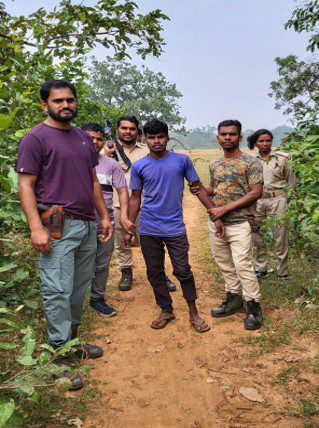
AI-powered cameras were installed at critical locations. These cameras sent real-time alerts directly to control rooms the moment movement was detected.
“Our strategy was to monitor every part of the forest in real time, wherever people had been entering,” Gogineni says.
But catching someone inside a forest spread across 2,750 sq km isn’t easy. That’s where the real breakthrough happened. The cameras didn’t just alert the department; they captured faces, weapons, and evidence.
“We unmask them. Who are these people? Which village do they belong to? Once we know that, the process starts,” he says.
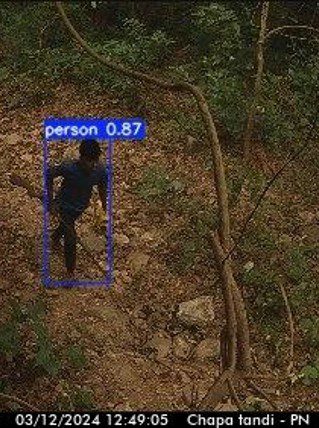
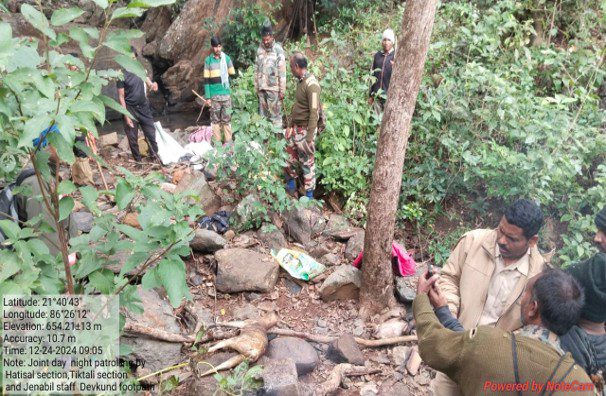
Using intelligence inputs, the forest department tracked suspects back to their villages, raided illegal gun holders, and dismantled gun-making units operating in the surrounding belt.
In just one-and-a-half years, over 200 people were arrested. More than 250 to 300 illegal guns were seized. And the impact was immediate.
According to internal assessment, 95% of poaching entries have now stopped. That number alone has changed Similipal’s conservation landscape.
A SEPARATE INTELLIGENCE WING INSIDE THE FOREST DEPARTMENT
Most forest departments rely heavily on external information networks. Gogineni built an internal intelligence wing. Dedicated staff now gather information on poacher movement, local arms networks, and hunting groups.
This intelligence-led targeting has made enforcement sharper and faster. Instead of broad patrols, teams now act with precision. And in forests like Similipal, that precision matters.
TURNING FOREST GUARDS INTO COMMANDOS
Another major shift came with the Special Tiger Protection Force (STPF). The STPF already existed. But Gogineni changed how it functioned.
Earlier, they operated much like regular forest guards. Under his watch, they were retrained in commando-style jungle operations. They were equipped with advanced weapons like INSAS rifles, Excalibur weapons, pump-action guns, and bulletproof jackets.
“We trained them to operate in thick forests irrespective of time or terrain,” he says.
The idea was simple: if armed poachers entered, the forest would respond with equal force. That psychological shift has mattered.
Today, the fear of being tracked or confronted has grown sharply.
BUILDING THE MACHINERY OF PROTECTION
Technology and enforcement need mobility. That was another weak point. Over the last two years, Similipal added more than 50 vehicles, taking its total protection fleet to 75 vehicles.
Road access and patrol mobility improved sharply. This matters in a reserve where response time can decide whether an animal lives or dies.
But Gogineni’s approach didn’t stop at machines. It included people.
Similipal now has nearly 1,000 personnel working across the reserve: watchers, temporary staff, ex-army personnel, and frontline forest workers. To keep them focused, the department spends around ₹1.8 crore every year on ration and welfare support.
“So, they can concentrate on work instead of worrying about basic needs,” Gogineni told Indian Masterminds.
That investment has strengthened morale and deepened field commitment.
THE BIGGER MISSION: FIXING SIMILIPAL’S TIGER GENETICS
Even after reducing poaching, a deeper problem remained. Tiger numbers were growing, but from a dangerously low base. In 2014, Similipal had only five tigers. By 2018, that rose to eight. By 2022, it reached 16. And now, there are more than 32 adult tigers.
On paper, that looks like progress. But Gogineni saw the hidden risk.
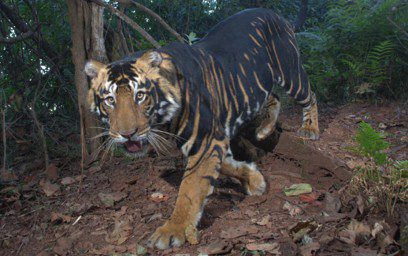
Because the population grew from such a small base, inbreeding had increased. Similipal’s famous melanistic tigers: rare black-striped tigers, were becoming more common, signalling reduced genetic diversity.
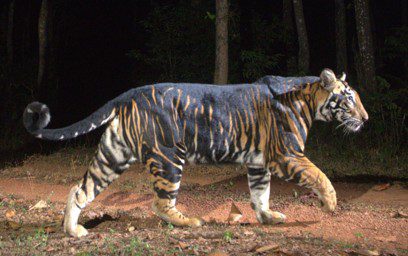
That could hurt the long-term health of the population. So Similipal began something few reserves attempt. Tiger translocation.
“We call it genetic rescue,” Gogineni says.
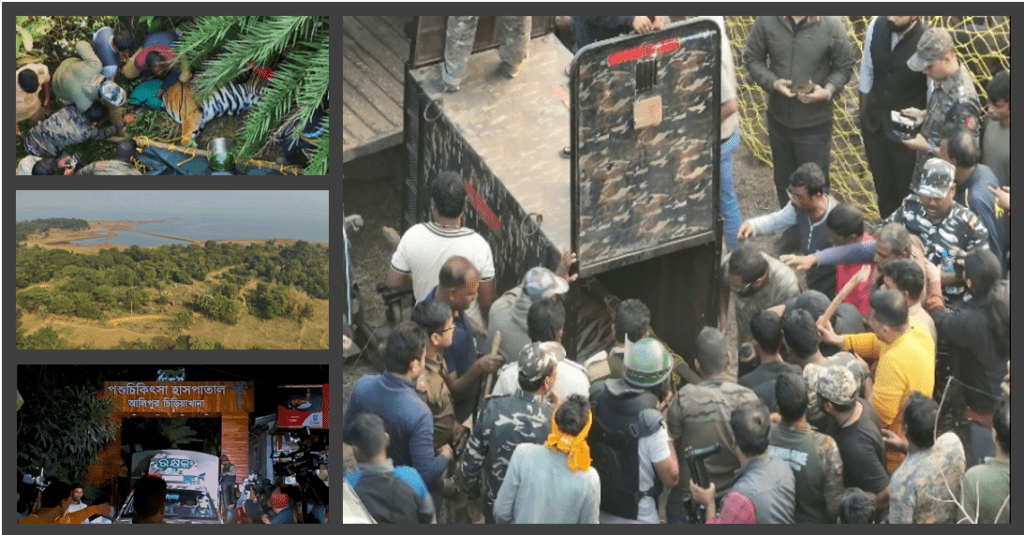
In 2024, two female tigers were brought from Tadoba Andhari Tiger Reserve. The task was far from easy. One tigress moved all the way into West Bengal after release and had to be brought back and resettled.
Months of tracking, management, and patience followed. Then came the breakthrough.
“The tigress we brought from Tadoba has now given cubs in Similipal,” Gogineni says.
For Similipal, this is more than breeding. It is a new bloodline. A stronger future.
A FOREST LEARNING TO FIGHT SMARTER
What Prakash Gogineni has built in Similipal is not just stronger enforcement. It is a system. One where AI watches silently. Intelligence works in the shadows. Commandos patrol deep forests. And science steps in where nature needs help.
The prey base is rising. Tiger breeding is improving. And one of India’s most complex tiger landscapes is changing course.
In Similipal, the jungle still holds its dangers. But now, it also holds a sharper defense.
Read Also: How Nikit Singh Cracked Civil Services, Wrote a Book, and Faced the Exam Hall Bleeding