“The oak fought the wind and was broken, the willow bent when it must and survived.” – Robert Jordan
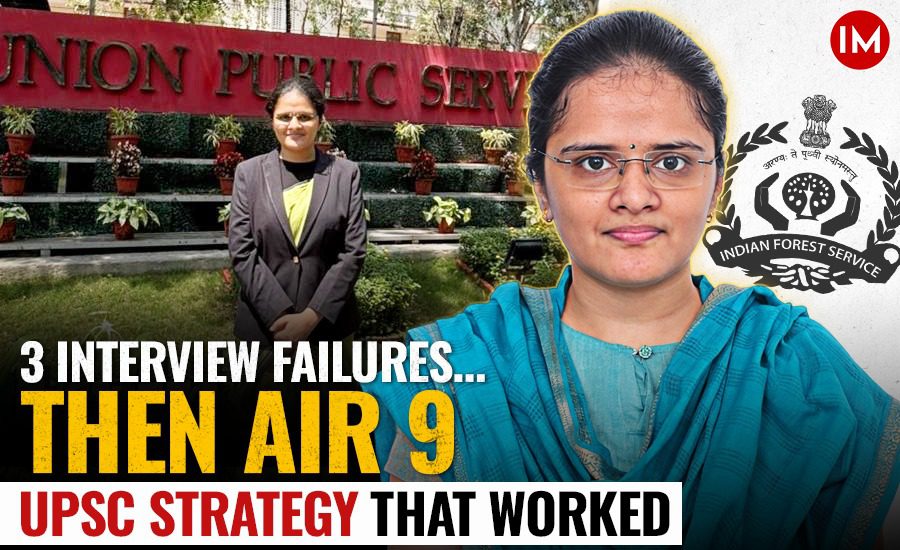
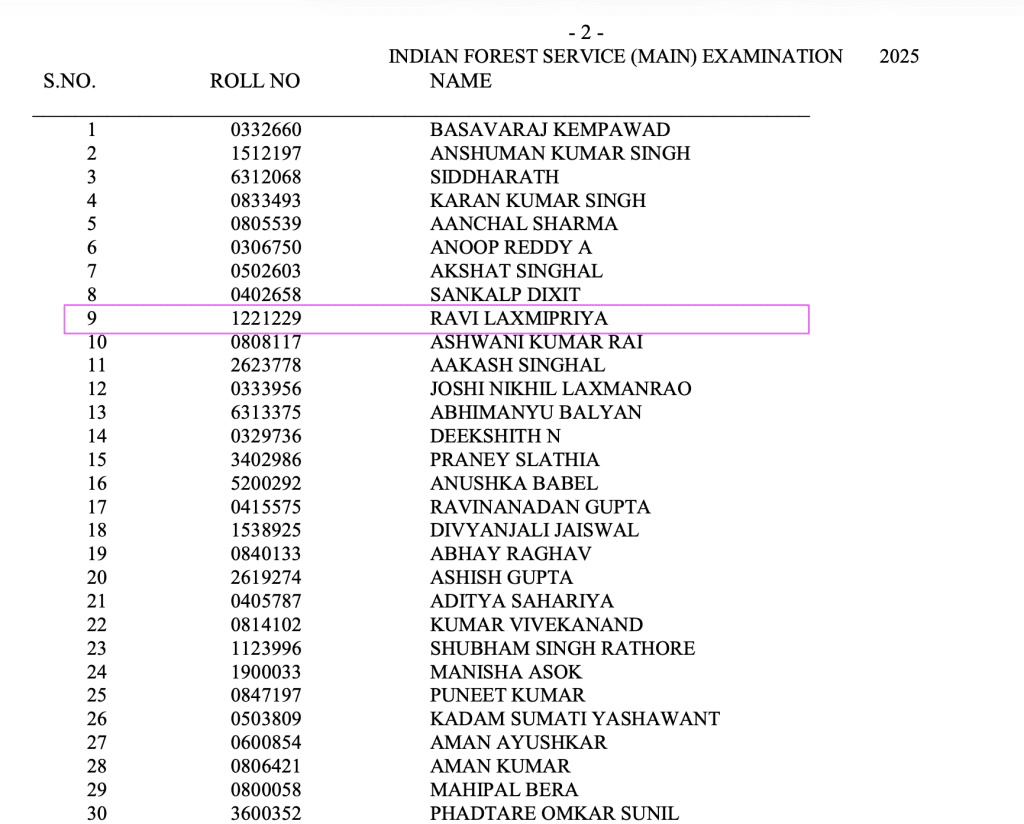
There are some success stories that inspire because of the rank achieved. And then there are stories that touch the heart because of the battles fought silently behind that success. Ravi Laxmipriya’s journey belongs to the second category.
Behind her All India Rank 9 in the UPSC Indian Forest Service (IFS) Examination 2025 lies a story filled with repeated failures, emotional isolation, self-doubt, resilience, and an unwavering determination to keep moving forward despite every setback.
For years, she stood at the doors of success, only to see it slip away repeatedly. Three interview failures in the Civil Services Examination could have broken anyone’s confidence. Many aspirants leave the journey midway after one or two unsuccessful attempts. But Ravi chose differently. She chose to stay. She chose to fight.
And ultimately, destiny rewarded her courage.
In an interview with Indian Masterminds, Laxmipriya opened up about her extraordinary UPSC journey, her struggles, preparation strategy, interview experience, and the lessons she learned through years of perseverance.
Journey So Far: A Long Road Filled with Determination
Ravi Laxmipriya secured All India Rank 9 in the UPSC Indian Forest Service (IFoS) Examination 2025 in her very first dedicated attempt at the Forest Service exam.
However, this achievement did not come overnight.
Before cracking IFS, she had already spent years preparing for the UPSC Civil Services Examination (CSE). She made five attempts at the UPSC CSE and reached the interview stage three times – in 2022, 2023, and 2024. Yet, despite consistently performing well in interviews, she could not make it to the final list due to low Mains scores.
For many aspirants, repeated interview failures become emotionally exhausting. After investing years of effort, reaching so close to success, and still falling short can be devastating. Ravi experienced that pain repeatedly.
But instead of giving up, she decided to reinvent her strategy.
That decision changed everything.
She said, “It was a long and challenging journey. I had to pick myself up after three consecutive interview failures in the Civil Services Examinations, but I chose to keep going and start again with more clarity and determination.”
Her Background: From Software Developer to UPSC Aspirant
Laxmipriya, hailing from Srikakulam in Andhra Pradesh, comes from a humble, supportive family background, with her father working in the banking sector with the State Bank of India. Raised in different parts of South India due to her father’s job, she experienced a diverse upbringing across Karnataka, Andhra Pradesh, and Tamil Nadu.
She completed her B.E. in Computer Science Engineering and secured campus placement at Verizon India, where she worked as a Software Developer for three years.
Although she had always dreamed of becoming a civil servant since childhood, she initially doubted whether she could handle the intense competition associated with UPSC.
Like many talented students, she chose the safer and more predictable career path first. However, somewhere deep inside, the dream never disappeared.
Around 2019, she began feeling a renewed urge to pursue UPSC seriously. She realized that if she genuinely worked hard, perhaps she too could succeed.
This realization marked the beginning of her UPSC journey.
She initially started preparing while continuing her corporate job. Her first UPSC attempt came in 2020. Eventually, in 2021, she made the difficult decision to leave her software job entirely and dedicate herself full-time to preparation.
It was a bold and uncertain step. But it was also the step that brought her closer to her dream.
The Biggest Struggle: Repeated Failures and Emotional Isolation
One of the most emotional aspects of her journey was the repeated cycle of near-success and disappointment.
She cleared interviews multiple times but could not improve her Mains scores. Every year followed the same exhausting cycle – interview preparation, followed immediately by Prelims and then Mains again.
There was no time to pause, reflect, or rebuild.
She admitted that there were moments when she felt completely alone.
Sometimes she missed the final selection by just four marks. In some years, even her strongest optional subject unexpectedly fetched low marks — lower than what she used to score in mock tests.
The unpredictability of UPSC deeply affected her emotionally.
She revealed that during those difficult years, she genuinely believed she was the only one suffering through such repeated failures.
The isolation became intense.
Yet, after finally succeeding, she realized something profound: many successful aspirants have stories similar to hers. The common factor among them was not extraordinary intelligence — it was the refusal to quit.
According to her, many talented aspirants leave the journey midway because of pressure, fear, societal expectations, or loneliness.
But those who continue despite everything eventually create history.
She said, “When I was going through all those attempts and failures, I used to feel that I was the only one facing such repeated setbacks. I felt nothing good would ever happen to me. But I have realized that persistence and never giving up are what truly matter. If not today, then someday success will come.”
Turning Point: Choosing IFS and Breaking the Loop
After years of being trapped in the repetitive UPSC CSE cycle, she decided to take a strategic break.
Her mentor advised her to step away temporarily from the regular Civil Services cycle and focus specifically on the Indian Forest Service Examination.
Initially, she was hesitant.
The IFS prelims cutoff is generally higher, and she had rarely crossed it before. Moreover, she had never specifically targeted the Forest Service examination.
But her mentors and friends encouraged her continuously.
They reminded her that after years of preparation, she already possessed sufficient knowledge and maturity to crack the exam if she approached it strategically.
This became the turning point of her journey.
For the first time, she got six uninterrupted months solely dedicated to preparation.
No interview distractions. No overlapping exam cycle. No constant rushing.
Just focused preparation.
And that focused preparation transformed her performance completely.
Preparation Strategy: Six Months of Focused and Structured Study
Laxmipriya’s preparation strategy for IFS exam was highly disciplined and structured.
Since her General Studies and English preparation were already strong because of years of UPSC CSE preparation, she concentrated primarily on mastering her optional subjects.
For IFS, she chose Forestry and Geology as optional.
This was particularly challenging because her earlier UPSC optional subject had been Sociology. Both Forestry and Geology were completely new domains for her.
Yet she embraced the challenge wholeheartedly.
She joined –
- Geology coaching at Planet Geology
- Forestry preparation using notes and materials from Vidyanshu Sir
- Test series at prestigeous coachings
She admitted that initially she knew almost nothing about Geology except that it was “the study of rocks.”
However, she followed a systematic study plan designed by her mentors.
The Role of Mentorship in Her Success
Ravi repeatedly emphasized the importance of proper guidance.
She specifically mentioned the support she received from mentors at Planet Geology, especially Apoorva Sir, Mayank Sir, and Lawrence Sir.
The structured timetable provided to her included:
- Monthly targets
- Chapter-wise planning
- Second reading schedules
- Third reading timelines
- Final revision plans
This systematic approach helped her stay organized.
Whenever she struggled with difficult topics, her mentors guided her patiently. Instead of getting stuck on one chapter, they advised her to move forward and revisit difficult concepts during later revisions.
This advice saved her enormous time and frustration.
One of the smartest decisions she made was avoiding excessive note-making.
Instead of preparing fresh handwritten notes from scratch, she directly annotated the printed study materials using sticky notes and short additions.
This strategy helped her complete the entire lecture series comprehensively – something she believes would not have been possible otherwise.
According to Ravi, many aspirants waste too much time creating elaborate notes and fail to complete the syllabus effectively.
Her focus remained on coverage, revision, and conceptual understanding.
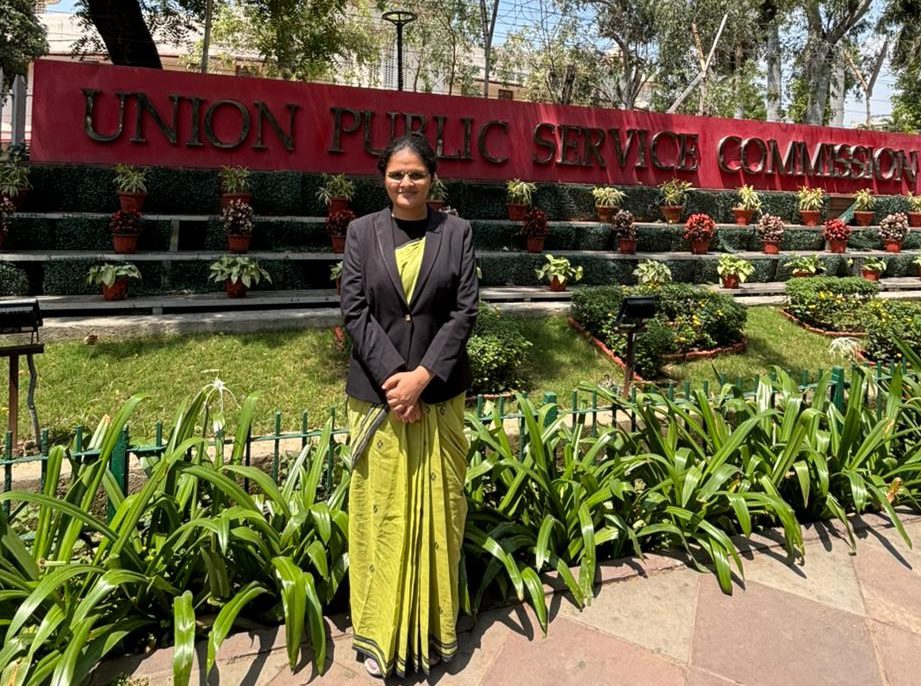
Interview Experience: Questions Asked in UPSC IFS Interview
Her interview was highly diverse and deeply analytical.
Because of her unique background – born in Andhra Pradesh, raised across Karnataka, and later settled in Chennai – the panel explored multiple dimensions of regional administration and governance.
Some major areas covered in her interview included:
Questions on State Comparisons
The panel asked her to compare:
- Andhra Pradesh
- Karnataka
- Tamil Nadu
Across various dimensions such as:
- Economy
- Geography
- Police administration
- Industrial sectors
- Service sectors
- Governance models
She was asked to discuss both strengths and weaknesses of each state.
Nuclear Technology and Kalpakkam Criticality Event
Chairperson Suman Sharma Ma’am questioned her extensively about:
- Nuclear technology
- Criticality events
- Kalpakkam developments
- India’s second and third stage nuclear programs
Since these topics were heavily discussed in current affairs during that period, the panel expected conceptual clarity and informed opinions.
Judicial Activism and Sabarimala Case
The interview also included questions on:
- Judicial activism
- Role of judges
- Review judgment in the Sabarimala case
- Personal opinion-based governance questions
Forestry and Red Panda Questions
One IAS officer on the panel asked detailed questions related to:
- Red Pandas
- Their unique characteristics
- DGFT orders related to Red Pandas
- Export quotas and tonnage allocations
Laxmipriya impressed the board by providing factual and precise answers.
Ethical and Situational Questions
One particularly interesting situational question asked her:
If illegal logging is carried out by a forest mafia and, separately, a tribal woman collects minor forest produce for survival, how should both situations be handled? Should both be treated equally under law?
This tested:
- Administrative ethics
- Compassion
- Legal understanding
- Practical governance ability
Technology and Forestry
Another panel member explored:
- Artificial Intelligence
- Bio-computing
- Applications of Computer Science in forestry administration
Her engineering background helped her answer confidently.
The Core Strategy to Crack UPSC
When asked about the most important ingredient for success in UPSC, she gave a deeply insightful answer.
According to her, success depends on two things:
- Discipline
- Right Direction
She believes many aspirants work hard but waste years because they lack proper direction.
Importantly, she clarified that “right guidance” does not necessarily mean expensive coaching.
Sometimes even one mentor, senior, or experienced aspirant can prevent years of mistakes by showing:
- What to focus on
- What to avoid
- Which traps waste time
- Which strategies actually work
In her words, learning from others’ mistakes is essential because making every mistake personally can consume precious years.
Message for UPSC Aspirants: “Never Give Up”
Ravi’s message to aspirants was emotional, honest, and deeply motivating.
She said that during failures, she often felt isolated and hopeless. She thought nothing good would ever happen to her.
But after success, she realized something important:
every successful aspirant has faced moments of darkness, fear, uncertainty, and loneliness.
The difference lies in persistence.
She observed that many brilliant aspirants leave preparation midway due to:
- Societal pressure
- Fear of failure
- Emotional exhaustion
- Lack of support
But those who continue despite repeated setbacks eventually achieve success.
“If we can keep ourselves motivated through the support of mentors, parents, and friends, success will definitely come someday. If not today, then one day for sure,” she said.
A Story That Gives Hope to Every Aspirant
Ravi Laxmipriya’s story is not merely about securing AIR 9 in UPSC IFoS 2025.
It is a story about surviving failure.
It is a story about standing up after disappointment again and again.
It is a story about trusting the process when results refuse to appear.
Most importantly, it is proof that success in UPSC is not reserved only for toppers who clear the exam in their first attempt. Sometimes success belongs to those who stay in the battle long enough, learn from their mistakes, seek the right guidance, and refuse to quit.
From a software developer at Verizon India to AIR 9 in the Indian Forest Service, Ravi Laxmipriya’s journey stands as a powerful reminder that persistence, discipline, and the right direction can eventually turn even years of struggle into a remarkable success story.