In every district, there comes a time when governance moves beyond files and meetings and begins to visibly transform people’s lives. It happens when administration becomes proactive rather than reactive, when public resources are used innovatively, and when development is guided by both vision and empathy.
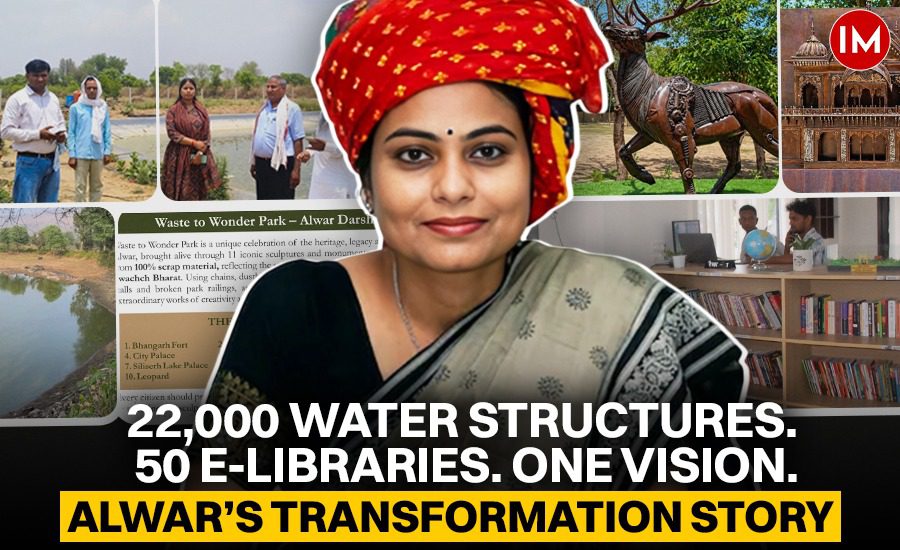
For Rajasthan’s Alwar, that transformation is being driven by 2016-batch IAS officer and District Collector Dr. Artika Shukla.
Recently, Dr. Shukla made headlines for launching the innovative Vidya Kunj Park Library, a unique initiative aimed at reviving reading habits among youth and creating public spaces where learning becomes a community experience. But the story of her administration extends far beyond a library in a park.
Over the past one-and-a-half years, Alwar has witnessed a series of ambitious and impactful interventions under her leadership. From constructing thousands of water harvesting structures and establishing digital libraries in government schools to protecting forest lands around Sariska, creating tourism assets from waste materials, improving sanitation rankings, and fostering industrial growth, her approach reflects a holistic vision of district development.
When Indian Masterminds spoke to Dr. Shukla, one thing became immediately evident: every initiative is rooted in a simple belief – that governance should directly improve the quality of life of ordinary citizens.
“We have been here for almost a year and a half, and during this period, we have focused on creating sustainable and people-centric development models. Whether it is water conservation, education, environment, or public spaces, our objective has been to ensure long-term impact,” she said.
Her administration’s work demonstrates how thoughtful leadership can convert local challenges into opportunities and inspire communities to become active participants in development.
Fighting Water Scarcity Through Massive Community Participation
Among Dr. Shukla’s most significant achievements has been her extensive work in water conservation, a critical issue in Rajasthan.
Read Also: From Screens to Stories: How Rajasthan’s First Park Library Is Helping a District Rediscover Reading
Speaking about the initiative, she revealed the remarkable scale at which the district administration has worked.
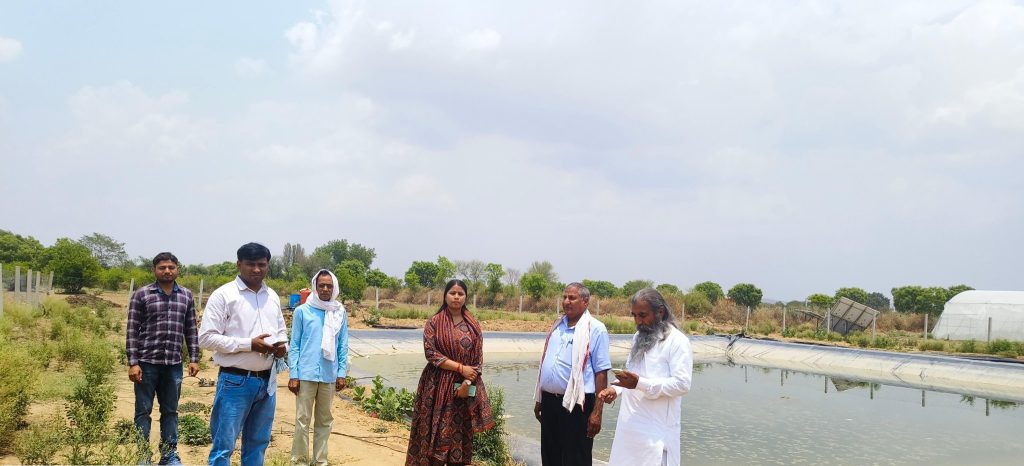
“We have focused extensively on water conservation. In the past year alone, we have constructed approximately 22,000 water harvesting structures, and these are high-quality structures,” she said.
The effort forms part of the ‘Jal Sanchay Jan Bhagidari’ Campaign, which brings together government departments, local communities, panchayats and development organizations to strengthen water security across the district.
The administration identified numerous locations where rainwater naturally accumulated and designed localized solutions accordingly.
“In villages where water tended to collect, we developed small ponds. In places where ponds were not feasible, we built structures such as magic pits and soak pits to ensure water conservation,” Dr. Shukla explained.
Given Alwar’s large geographical spread, the district administration is also documenting these interventions through a dedicated digital portal, ensuring transparency and long-term monitoring.
The results are already becoming visible.
“As a result of these efforts, we are observing a significant and positive improvement in groundwater levels,” she said.
Strengthening Water Infrastructure
Beyond small-scale harvesting structures, Dr. Shukla’s administration has also focused on larger infrastructure projects under the Ram Jal Link Project and the construction of RCC anicuts.
Working in partnership with corporate entities and social organizations, the district administration has established robust water recharge infrastructure, including major projects such as the Ruparel River Anicut.
These structures are helping recharge groundwater reserves while supporting irrigation across thousands of hectares of agricultural land, strengthening both water security and rural livelihoods.
Bringing Digital Learning to Government Schools
While water conservation addresses the district’s immediate survival needs, education remains central to its long-term future.
Under the banner of Alwar e-Vidya, Dr. Shukla has spearheaded a digital learning revolution in government schools.
“Throughout the year, we have also been working on establishing e-libraries. We installed computers in classrooms and guided children toward digital literacy,” she told Indian Masterminds.
The scale of implementation has been impressive. “More than 50 e-libraries have been established across Alwar district within the last year.”
Rather than waiting for large external funding, the administration adopted a practical and resourceful approach.
“We used departmental funds wherever available, and for the remaining requirements, we reached out to companies through CSR initiatives and partnerships. Essentially, the administration acted as a facilitator,” she explained.
The initiative has gone beyond merely installing computers.
Schools have been encouraged to create independent blogs, improve campus environments, establish green zones and upgrade sanitation facilities, transforming educational institutions into more engaging learning spaces.
Ensuring No Child Is Left Behind
Dr. Shukla’s educational reforms have also emphasized inclusivity.
Through Project Pehchaan, a specialized initiative under the digital education umbrella, disabled students are being trained in digital skills and technology-based learning.
The program seeks to ensure that children with disabilities are not left behind in the digital era and are equipped with the skills needed for future opportunities.
The initiative reflects a broader philosophy underpinning her administration: development is meaningful only when it includes everyone.
Transforming Waste Into a Symbol of Civic Pride
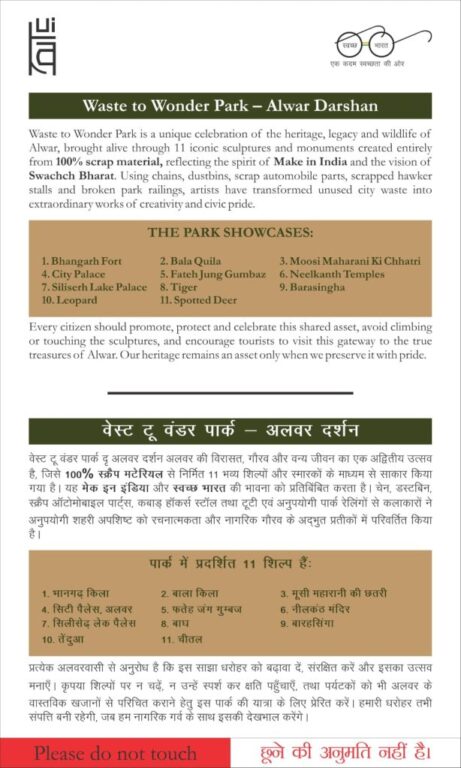
One of the most visually striking initiatives undertaken under Dr. Shukla’s leadership is the newly inaugurated Alwar Darshan Park.
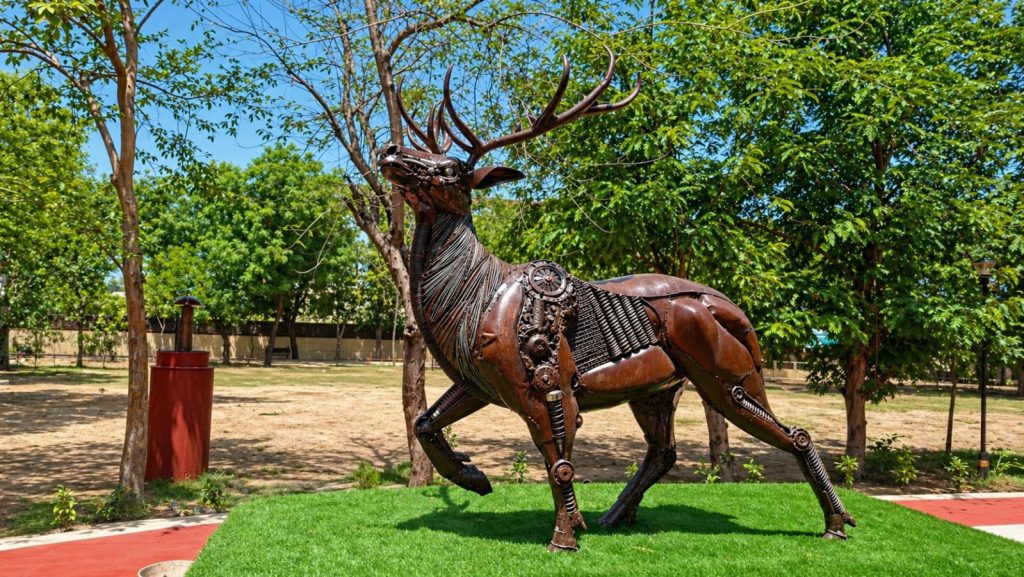
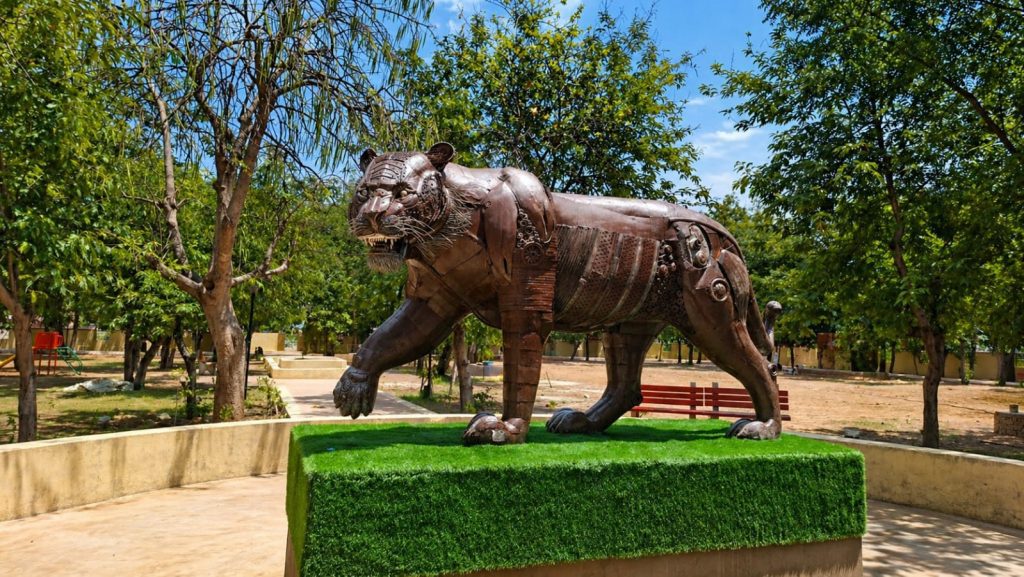
Built entirely from discarded scrap materials, the park has quickly emerged as a unique urban attraction while promoting sustainability and local identity.
“We have created a park called Alwar Darshan Park. It has been constructed entirely out of waste materials—using items that people typically discard,” she said.
The idea originated from Alwar’s strong metalworking industry.
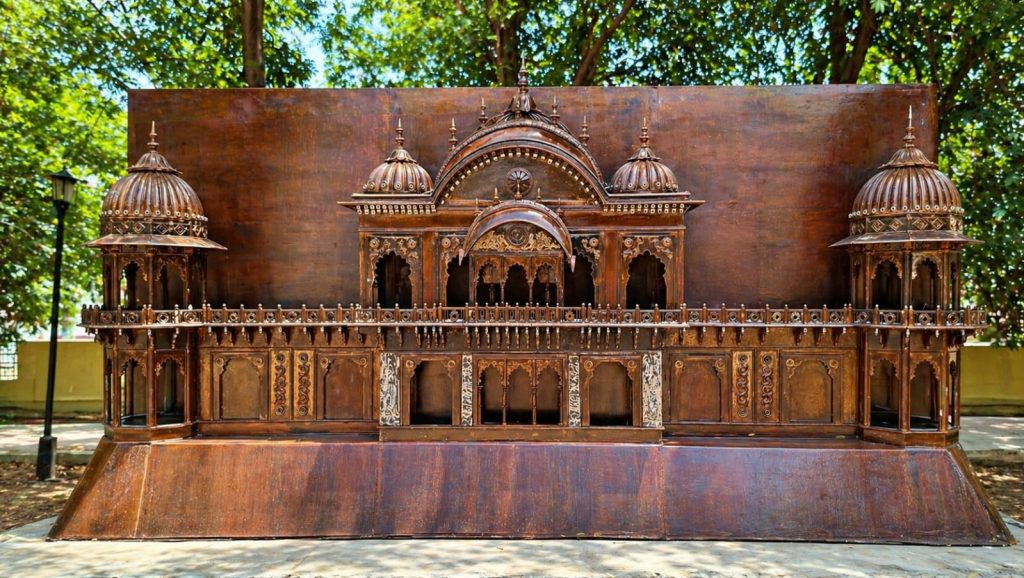
The administration collected discarded metal scraps from roadsides, municipal waste streams and industrial sources before inviting proposals from experienced contractors.
“We researched similar projects implemented in cities like Indore, Bhopal and Delhi. They shared their expertise with us, and we adopted a similar model here,” Dr. Shukla explained.
The result is a creative public space featuring eleven artistic replicas of Alwar’s most iconic landmarks and symbols.
“There are temples, palaces, lakes and even tigers represented in the park,” she said.
Located within the existing Surya Nagar park in Alwar city, the project transforms waste into art while simultaneously celebrating the district’s cultural heritage.
Inaugurated on April 30, the park stands as a powerful example of how innovation and sustainability can coexist in public infrastructure.
Protecting Sariska’s Ecological Future
Environmental protection forms another cornerstone of Dr. Shukla’s governance model.
Her administration successfully identified and secured nearly 50,000 bighas of forest land around the Sariska region, protecting crucial ecological zones from encroachment.
The move strengthens the buffer areas surrounding the tiger reserve and contributes significantly to long-term wildlife conservation efforts.
By securing these lands, the administration has helped preserve critical habitats while maintaining ecological balance in one of Rajasthan’s most important wildlife landscapes.
Boosting Eco-Tourism and Achieving Ramsar Recognition
Environmental conservation under Dr. Shukla has also been linked to economic development.
Her administration has promoted eco-tourism around the Sariska region, helping generate local opportunities while encouraging sustainable tourism practices.
A major achievement came with Siliserh Lake receiving Ramsar site recognition, bringing international attention to the ecological significance of the area.
The recognition strengthens conservation efforts while positioning Alwar as an important destination for environmentally conscious tourism.
Creating Energy-Conscious Citizens
Recognizing that sustainability begins with awareness, Dr. Shukla launched Energy Clubs in government schools across the district.
Through painting competitions, awareness rallies, exhibitions and interactive activities, students are being educated about energy conservation and responsible consumption.
The initiative has received appreciation at the Rajasthan Energy Conservation Awards and is helping create a generation of environmentally conscious citizens.
Rather than treating sustainability as a policy issue alone, the administration has integrated it into everyday learning experiences for children.
Cleanliness That Delivered Measurable Results
Another area where Alwar has witnessed notable progress is sanitation and urban cleanliness.
Under Dr. Shukla’s leadership, systematic waste management and cleanliness monitoring mechanisms were strengthened across the district.
The results were reflected in national rankings.
Alwar climbed to the 4th position in Rajasthan and achieved the 54th rank nationally under the Swachh Survekshan framework.
These rankings reflect sustained efforts in waste collection, public participation, sanitation infrastructure and administrative monitoring.
Creating Opportunities Through Industrial Growth
Alongside social development and environmental initiatives, Dr. Shukla’s administration has also focused on economic growth.
Alwar is already a significant industrial hub with the presence of international manufacturing companies, including Japanese and Korean firms.
The district administration has actively engaged with investors and industries to facilitate business operations, encourage investments and generate employment opportunities for local residents.
By balancing industrial growth with environmental and social priorities, the administration is working toward a development model that is both sustainable and inclusive.
Governance That Connects Every Sector
What makes Dr. Shukla’s work in Alwar noteworthy is not any single project but the breadth of her vision.
Water conservation strengthens agriculture. Digital libraries prepare students for the future. Inclusive education empowers vulnerable groups. Forest protection safeguards biodiversity. Eco-tourism creates livelihoods. Cleanliness improves public health. Industrial facilitation generates jobs.
Each initiative complements the other. Reflecting on the district’s journey, Dr. Shukla remains focused on the larger objective.
“Our role is to act as facilitators and ensure that development reaches every section of society. When communities participate and institutions work together, meaningful change becomes possible.”
In an era where administrative success is often measured through individual schemes, Alwar presents a different story—one where governance is viewed as an interconnected ecosystem.
And at the centre of that transformation stands Dr. Artika Shukla, quietly demonstrating how determined leadership, innovative thinking and community participation can together reshape the future of an entire district.
Read Also: From Medical Student to Transforming Alwar: The Journey of IAS Artika Shukla