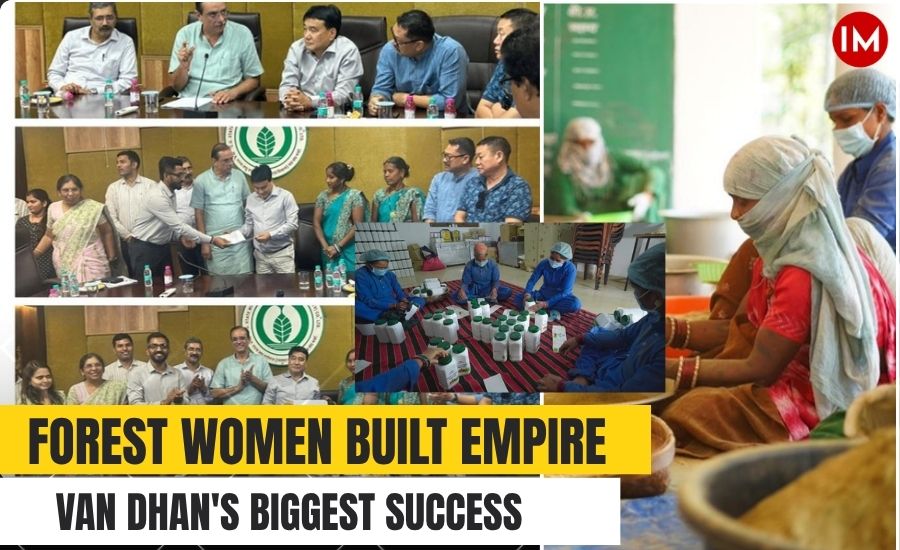
Deep inside the lush, biodiversity-rich forests of Chhattisgarh‘s Katghora Forest Division, a quiet transformation is changing lives and redefining rural entrepreneurship. What was once a group of tribal women dependent on seasonal wage labour has today emerged as one of the state’s most successful women-led enterprises, generating crores in business, creating livelihoods for hundreds, and becoming a model for tribal empowerment across the country.
At the heart of this transformation is the Van Dhan Vikas Kendra (VDVK) at Donganala village in Korba district. Established under the State Government’s flagship Van Dhan Vikas Kendra scheme, the centre has enabled tribal women to convert locally available forest produce into high-value herbal products, creating sustainable livelihoods while preserving traditional knowledge of medicinal plants.
The success of the Haribol Self-Help Group (SHG), which operates the centre, is not merely a story of financial growth. It is a story of confidence, leadership, community participation and women’s empowerment. With a cumulative turnover of over ₹26.11 crore between 2020 and March 2026, the centre has become one of the best-performing Van Dhan Vikas Kendras in Chhattisgarh and an inspiring example of how grassroots institutions can transform rural economies.
Today, the initiative directly and indirectly supports the livelihoods of more than 100 people and continues to expand its impact across the region.
To learn more about the initiative and its impact, Indian Masterminds interacted with 2016-batch Indian Forest Service (IFS) officer Kumar Nishant, currently posted as Divisional Forest Officer (DFO), Katghora.
Understanding the Van Dhan Vikas Kendra Initiative
The Van Dhan Vikas Kendra scheme was launched to strengthen the livelihoods of tribal communities by promoting value addition to minor forest produce. Rather than selling raw forest products at low prices, tribal collectors are trained to process, package and market value-added products, ensuring better incomes and long-term economic sustainability.
Under the leadership of Chief Minister Vishnu Deo Sai and with active support from the Forest Department, the initiative has focused on creating entrepreneurial opportunities for tribal communities while ensuring that the economic benefits of forest resources remain with local people.
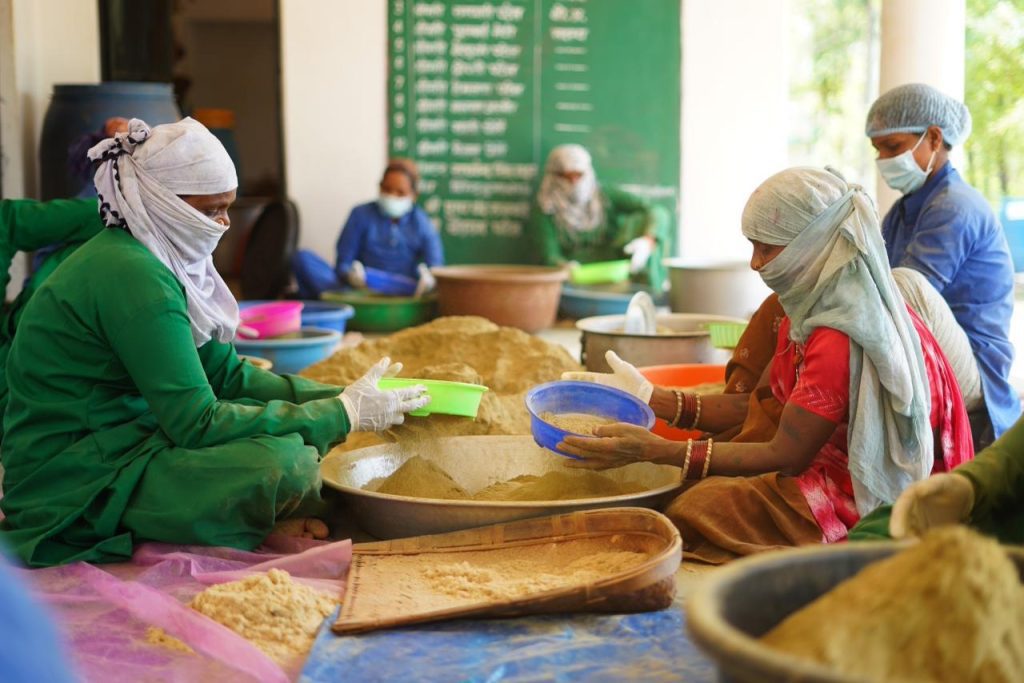
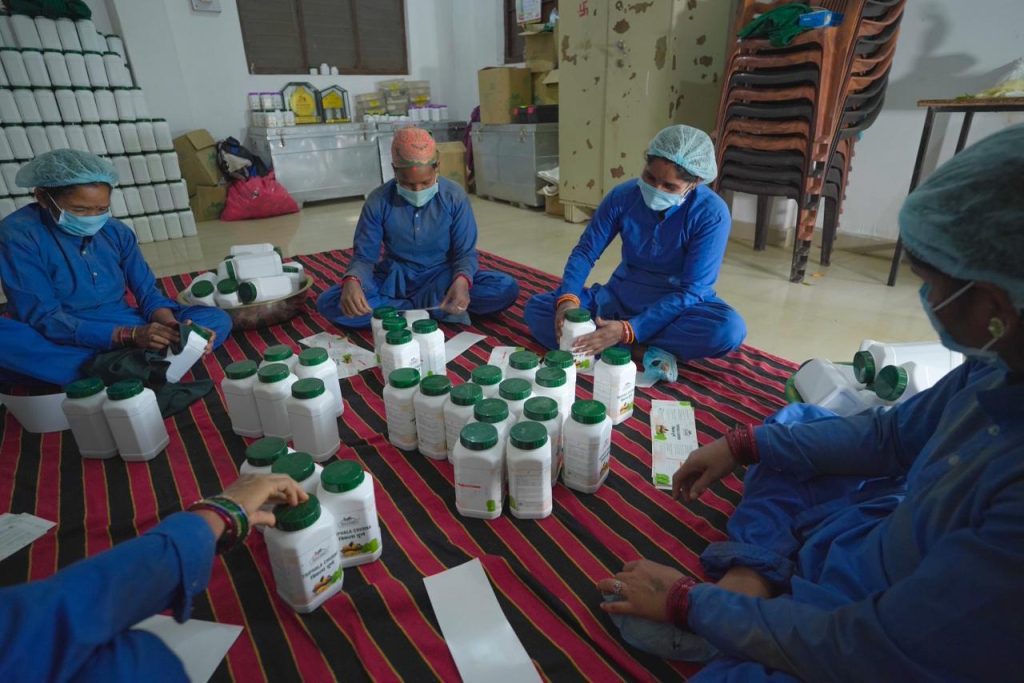
In Donganala, the programme brought together tribal women and provided them with specialised training in the scientific processing of medicinal plants and minor forest produce. Through technical support from Ayurvedic experts and the Chhattisgarh State Minor Forest Produce (Trading and Development) Cooperative Federation Ltd., the women learned product formulation, quality control, packaging, branding and marketing.
Armed with these skills, they began manufacturing a range of herbal products including Triphala Powder, Ashwagandha Powder, Herbal Face Pack, Herbal Hair Powder and Herbal Tooth Powder.
What started as a small livelihood initiative soon evolved into a thriving rural enterprise.
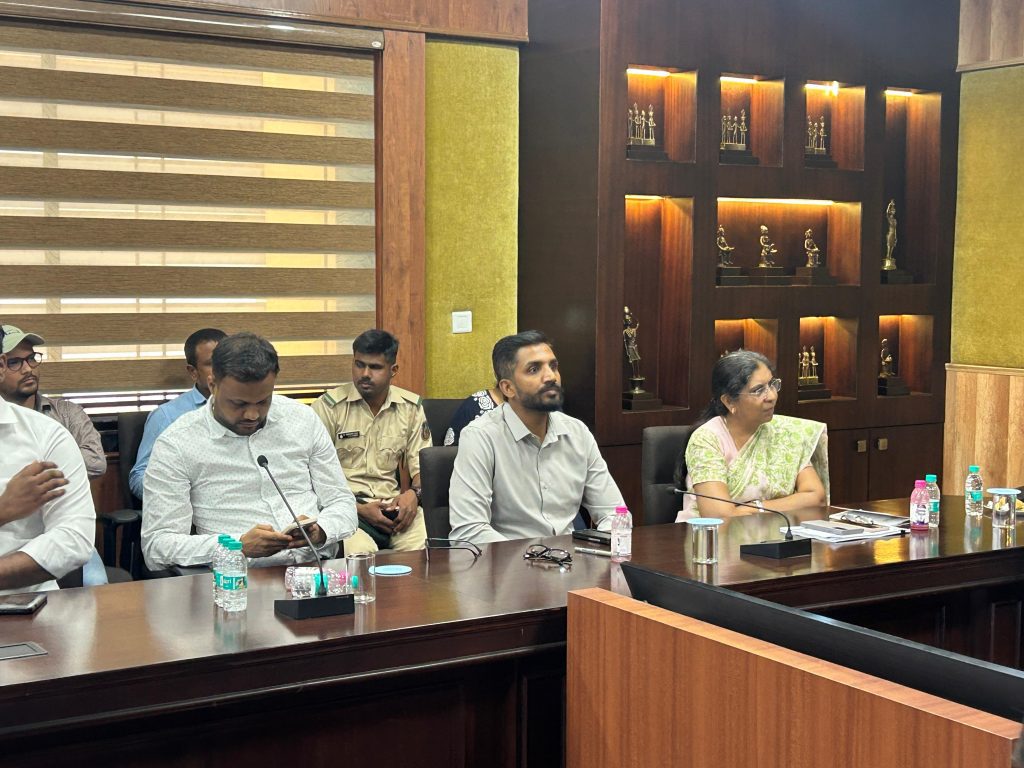
The Journey of Haribol SHG: From 12 Women to a Multi-Crore Enterprise
The Haribol Self-Help Group began with just 12 tribal women. Most of them came from economically modest backgrounds and relied heavily on daily wage labour to support their families.
The initial objective was simple: provide sustainable livelihood opportunities through value addition of locally available forest resources.
Over time, the women mastered the art of herbal product manufacturing and steadily built a reputation for quality. Their products gained acceptance in local markets and gradually attracted larger institutional buyers.
As demand increased, the enterprise expanded beyond the original group. More women from nearby villages joined various stages of production, packaging, cleaning and logistics. What began as a small self-help group eventually evolved into a livelihood ecosystem supporting more than 100 people directly and indirectly.
The centre’s remarkable growth culminated in a cumulative turnover of ₹26.11 crore between 2020 and March 2026 – an extraordinary achievement for a women-led enterprise operating from a tribal rural area.
The Breakthrough That Changed Everything
A major turning point came when the group received a bulk supply order from the AYUSH Department.
The contract, worth approximately ₹2 to ₹2.5 crore, represented both an opportunity and a challenge. The timeline was extremely tight and required round-the-clock production.
Speaking about this defining moment, Divisional Forest Officer (DFO), Katghora, Kumar Nishant, explained:
“The AYUSH Department team visited the centre and was highly impressed with the quality standards being maintained. They awarded a contract worth nearly ₹2 to ₹2.5 crore. The timeline was very challenging, but the women worked day and night to complete the order. Their dedication far exceeded anything we could have expected.”
The women rose to the occasion.
Working tirelessly, they successfully fulfilled the order within the stipulated timeframe while maintaining stringent quality standards. Every product passed the required tests and certifications. The effort paid off.
The group earned nearly ₹20 lakh as its share from the order, significantly enhancing its financial position and market credibility.
Encouraged by this success, the centre later secured another order worth approximately ₹18 lakh, reinforcing its growing reputation in the herbal products sector.
Building Excellence Through Training and Certification
According to DFO Kumar Nishant, one of the key reasons behind the centre’s success was its emphasis on quality and compliance.
“For the last few years, we have focused heavily on training our SHGs and equipping them with modern machinery. We also ensured that all required certifications for food and medicinal products were obtained. The products underwent rigorous testing and were found to meet all prescribed standards, including international benchmarks.”
The Forest Department facilitated certification processes, quality testing, procurement support and infrastructure development.
This ensured that the women could focus on production while receiving institutional support for regulatory compliance and market access.
‘We Removed the Bottlenecks’: The Forest Department as a Facilitator
While the women drove the enterprise through their hard work and determination, the Forest Department played a critical enabling role.
Rather than controlling operations, officials focused on removing administrative hurdles and empowering the women to take ownership of the business.
Explaining this approach, Kumar Nishant said, “We acted as facilitators. The women are the ones achieving the results. Our role was to eliminate bottlenecks and reduce red tape. Whether it was obtaining certifications, arranging raw materials, ensuring quality packaging or resolving infrastructure issues, we worked to make the process smooth for them.”
He recalled instances where urgent interventions were needed.
“During peak production periods, even a power outage could affect operations. Whenever such issues arose, we coordinated with district authorities and ensured swift action so that production was not disrupted.”
The department also facilitated procurement of machinery, quality packaging materials and access to better markets.
The Power of Market Linkages
Many rural enterprises struggle not because of poor production capacity, but because they lack access to reliable markets.
The Donganala centre succeeded where many others fail.
According to Kumar Nishant, establishing strong market linkages was the single biggest differentiator.
“Many groups have the capability to produce good products, but they fail because they cannot access markets. Through the MoU between the Forest Department and the AYUSH Department, we created a ready-made market for these products. Once the women knew there was demand for what they were producing, they worked relentlessly to meet that demand.”
This combination of assured markets, quality production and strong leadership enabled the centre to scale rapidly.
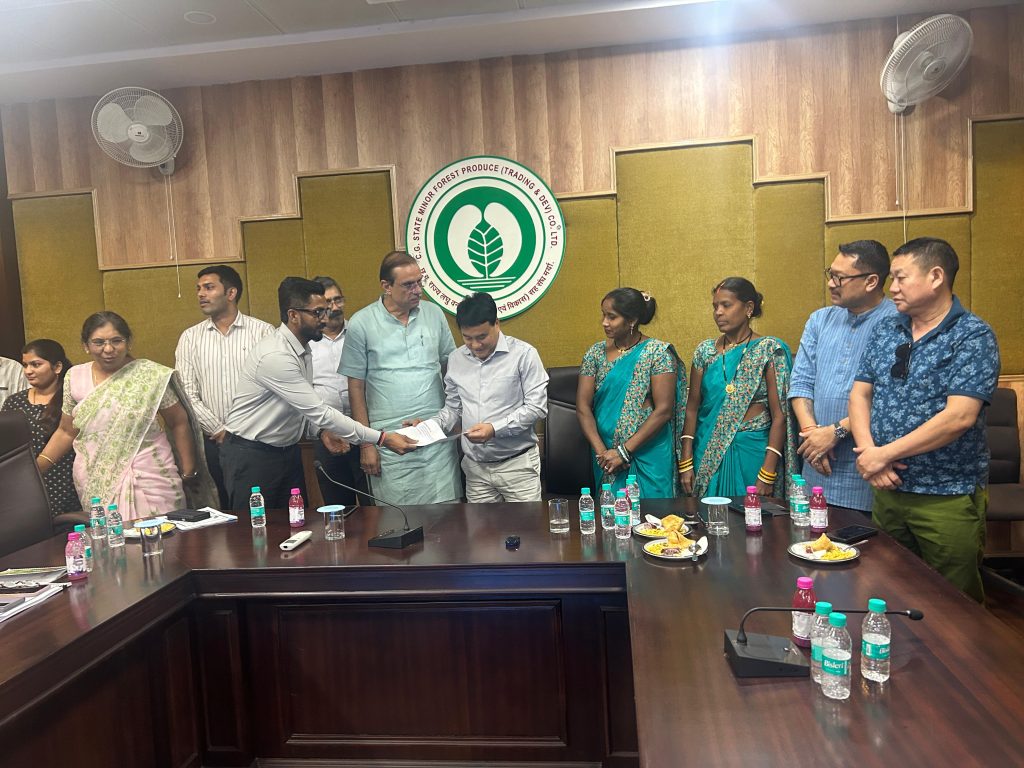
A Centre of Excellence in Herbal Processing
IFS Nishant believes that the Donganala centre has evolved beyond a conventional self-help group.
“What makes them unique is that they have essentially created their own centre of excellence for medicinal herb processing. They possess deep expertise, strong market linkages and tremendous dedication. Their understanding of herbal products is exceptional.”
The centre’s greatest advantage lies in its access to abundant minor forest produce.
Most raw materials are sourced locally, reducing dependence on external suppliers and ensuring sustainable operations.
The women have spent years working with medicinal plants and have developed significant practical expertise in herbal processing.
Leadership at the Grassroots
Every successful community initiative requires strong local leadership. In Donganala, that leadership emerged from within the community itself.
IFS Nishant credits much of the group’s success to the leadership of Saroj Didi and her team.
“They have an excellent team. Saroj Didi is a remarkable leader who has played a major role in bringing the women together and ensuring that work is completed efficiently.”
The women not only managed production but also organised labour, coordinated operations and brought additional women into the enterprise whenever demand increased.
This sense of ownership has been central to the centre’s growth.
Impact on Livelihoods and Social Transformation
The success of the enterprise has translated directly into improved quality of life for participating families.
During the financial year 2024-25 alone, the Haribol SHG earned approximately ₹38.90 lakh through profits and commissions.
Each member now earns nearly ₹1.70 lakh annually, a significant increase compared to their previous income levels.
The additional earnings have enabled families to:
- Improve household living standards
- Invest in children’s education
- Access better healthcare services
- Strengthen household financial security
- Reduce dependence on seasonal labour
However, the impact extends far beyond economics.
The programme has enhanced women’s confidence, leadership abilities and decision-making power. Many members now actively participate in community affairs and household financial planning.
For women who once had limited economic opportunities, the transformation has been profound.
Expanding the Model: New Opportunities on the Horizon
Building on the success of the herbal products enterprise, the Katghora Forest Division is now expanding similar livelihood initiatives.
One successful example involves the production of eco-friendly leaf plates using forest leaves. The initiative currently generates annual sales worth approximately ₹12-13 lakh.
Support from organisations such as NTPC has further strengthened these efforts through the provision of machinery and infrastructure.
Meanwhile, plans are underway to develop facilities for extracting oil from forest produce such as Sal seeds and Mahua seeds, creating additional income opportunities for tribal communities.
“The potential is enormous,” Kumar Nishant said. “We do not want to limit them. By creating more infrastructure and giving them operational autonomy, we can bring many more women into these enterprises.”
Recognition at the National Level
The remarkable achievements of the Haribol SHG have earned recognition far beyond Korba district.
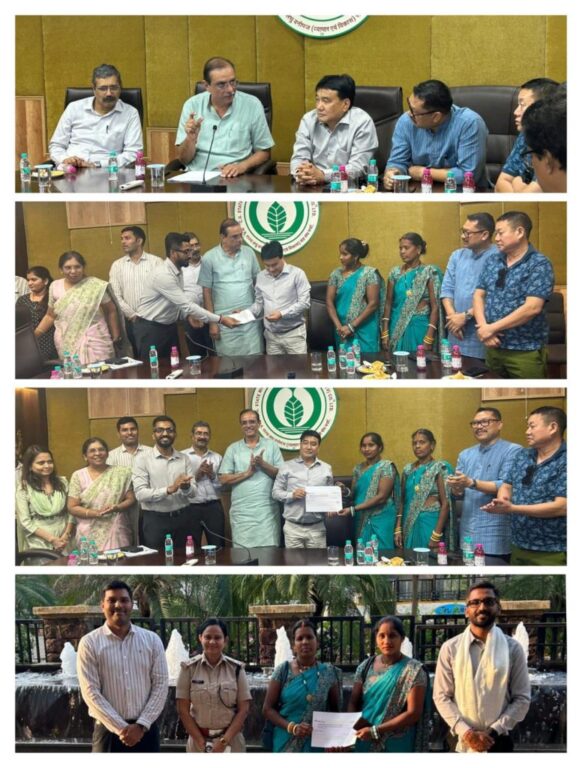
The group has been honoured by TRIFED and the Government of Chhattisgarh for its outstanding contribution to herbal processing, tribal livelihoods and women’s empowerment.
Their journey stands as a testament to what can be achieved when community participation, government support, market access and local leadership come together.
A Model for Rural India
The story of Donganala’s Van Dhan Vikas Kendra demonstrates that meaningful rural transformation does not always require large industries or massive investments. Sometimes, it begins with recognising the value of local resources and investing in local people.
What started with 12 tribal women has today become a thriving enterprise with a turnover exceeding ₹26 crore, generating livelihoods for more than 100 people and creating a pathway for sustainable economic development.
As forests continue to sustain communities across India, the Donganala model offers a powerful lesson: when tribal women are equipped with skills, resources, market access and trust, they do not merely participate in development—they lead it.
In the heart of Chhattisgarh’s forests, the women of Haribol SHG are proving exactly that.